
World and European champion, writer, activist. The man who became a global symbol wearing the jersey of the multicultural French national team, today insists on examining the dark sides of that same national narrative.
He was one of the most iconic defenders in the history of football. In 142 appearances for the tricolor, he has scored both goals in total in the unforgettable semi-final of the 1998 World Cup, which ensured him eternal glory. Today, however, it is playing a "full attack" against racism and inequality. After retiring from football, in 2008, he founded the Lilian Thuram Foundation – Education Against Racism, for Equality. In his book "White Thought" (La Pensée blanche), published in Greek by Antipodes Publications, he attempts to deconstruct the idea of white supremacy and to highlight the historical mechanisms that constructed and maintained racial inequalities.
On the occasion of his arrival in Cyprus and his presence at the 5th Limassol International Book Fair, Lilian Thuram analyzes the systemic and structural character of racism in "F" and refers to the importance of collective assertiveness and equality.
–When did you realize that the racism you were experiencing was not an isolated incident, but part of a wider social phenomenon? From the very first time. I was born in Guadeloupe and arrived in Paris when I was nine years old. In my class, in the last grade of elementary school, a child called me "dirty black". When I returned home, I told my mother about it. She explained to me that this was the case: racism existed and could not be changed. What she wanted to tell me was that racism is systemic and exists everywhere in society. So, from my first experience, I understood that it was a reality that I would sooner or later be confronted with.
- In "White Thought" you analyze the way in which a historically constructed perception of racial superiority was transformed into a dominant value system. What, in your opinion, is the most dangerous manifestation of it today? Violence. Racism is directed against people who are considered inferior and continues to manifest itself in violent ways. However, it is not always a visible violence. It can be subtle, not perceived by those who have not experienced or recognized racism. Last night, for example, I was with my niece. She told me that she had gone with friends to a restaurant and that they had been treated badly. She was very upset. I told her that when something like this happens, we have to find the courage to go and explain to people what happened. We went to the restaurant together and spoke to the owners. Their first reaction was to refuse to listen to me. That is precisely the problem: we do not want to be confronted with the violence of racism. My niece, however, had suffered it and had every right to defend herself.
- Beyond these everyday events, how is racism linked to the most extreme forms of violence and economic exploitation? Violence inflicted on people is not always visible, especially to those who do not understand what racism means. There is violence that can even reach murder. A few days ago in France, a white man took a gun and fired en masse at black people. One person lost his life and there were many injured. Racism is here, visible and real. However, there is another form of racism, equally real, which is difficult to perceive. We live in a world where we can now communicate via Zoom, have mobile phones and batteries, but we rarely think about what is behind their production. You will see this other form of violence, for example, if you go to the Congo. There, capitalism creates conditions for the exploitation of people and the seizure of raw materials. This is also one of the main mechanisms that sustain racism. That is why I insist that, when we talk about racism, we must also question the economic system that needs and maintains it.
– In several countries there is a strengthening of the far right. Do you think that racism is making a comeback or that, in practice, it has never ceased to be a structural element of our societies? Racism has shaped and continues to shape our societies for centuries. It is a component of the modern world, something that becomes obvious if we examine, for example, the way we tell history. People all over the world are fascinated by the United States. Isn't that right? It is considered a model country, with a dominant culture. However, this country has a terrible story to tell. They say that the continent was discovered by Christopher Columbus. This is a big lie. There were already people there. Those who arrived then exterminated 90% of the indigenous population. The model country, therefore, was built on the ashes of a genocide. There was population replacement, which is also linked to the forcible transfer of men and women from Africa to be used as slaves. Another population replacement followed with the arrival of Europeans and in the end we ended up thinking that this is a country of whites.
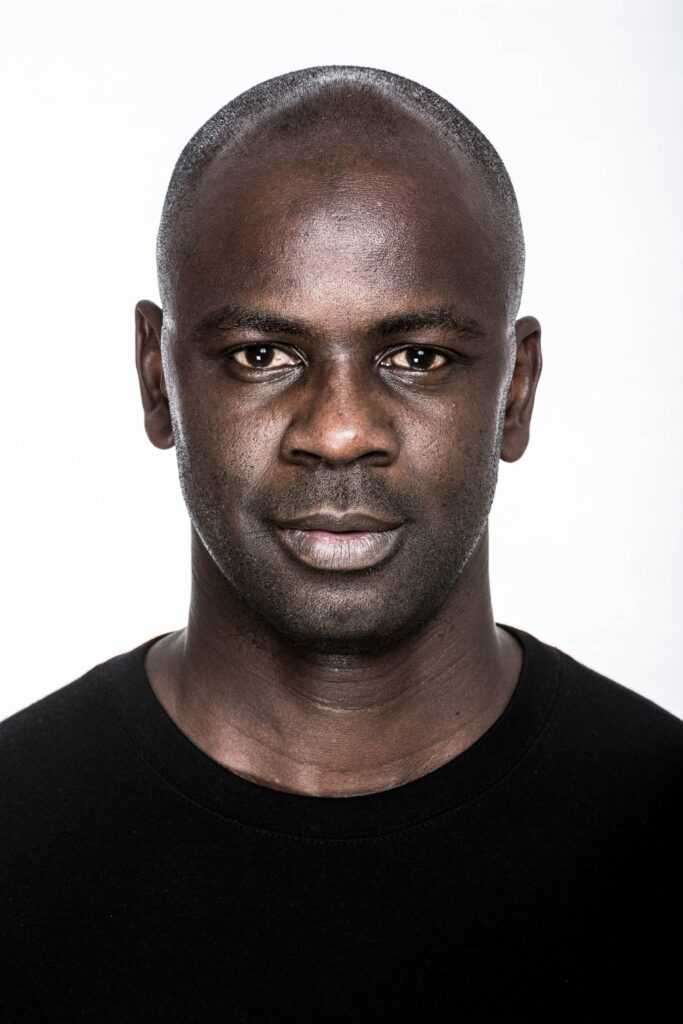
"My mother was a cleaner. A black woman working as a cleaner is acceptable. What bothers is a black woman who wants to advance professionally, to become an executive, a lawyer, a doctor or to claim a high political position." © DR
-How does Europe's colonial history affect the way we perceive Western values today? This narrative shapes the way we approach world history: the colonial expansions of the West, the plundering and exploitation of people and lands. My own country, France, colonized many regions of the world. Its colonial activity ended in the 1960s. That is, just yesterday. I often think that my grandfather was born in 1908, just 60 years after the abolition of slavery in France. My mother was born in 1947, a year in which my country, France, was still colonizing other countries. A year later, in 1948, apartheid was imposed in South Africa. The same countries that accepted and supported apartheid also contributed to the formation of the Universal Declaration of Human Rights. Therefore, this declaration is, above all, a declaration of the rights of the white man. Do you know what I mean? Apartheid was finally ended only in the early 1990s. Therefore, racism has always been present.
- How do you explain the resurgence of racism in today's societies? The current resurgence of racism, which we see as something new, is linked to the fact that non-white people have now been integrated into Western societies and are claiming high-quality jobs. This is what becomes unbearable: their success and claiming positions beyond the lower rungs of the professional hierarchy. As long as they remained there, there was no particular problem. My mother was a cleaner. A black woman working as a cleaner is acceptable. What bothers is a black woman who wants to advance professionally, become an executive, a lawyer, a doctor or claim a high political position.
– Can the universality of human rights be put into practice when the value of human life and international solidarity are not recognized equally for all? There is a will to expand this concept and I think it is very important that it exists. However, we must be aware that it is not yet a reality and that we need to work to make it a reality. I am French and the motto of my country is "Freedom, Equality, Fraternity". This does not mean that these values have been fully realised. It means, however, that there is the will to make them a reality. That is why we must stand by those who challenge inequalities, so that these values can one day acquire meaningful content.
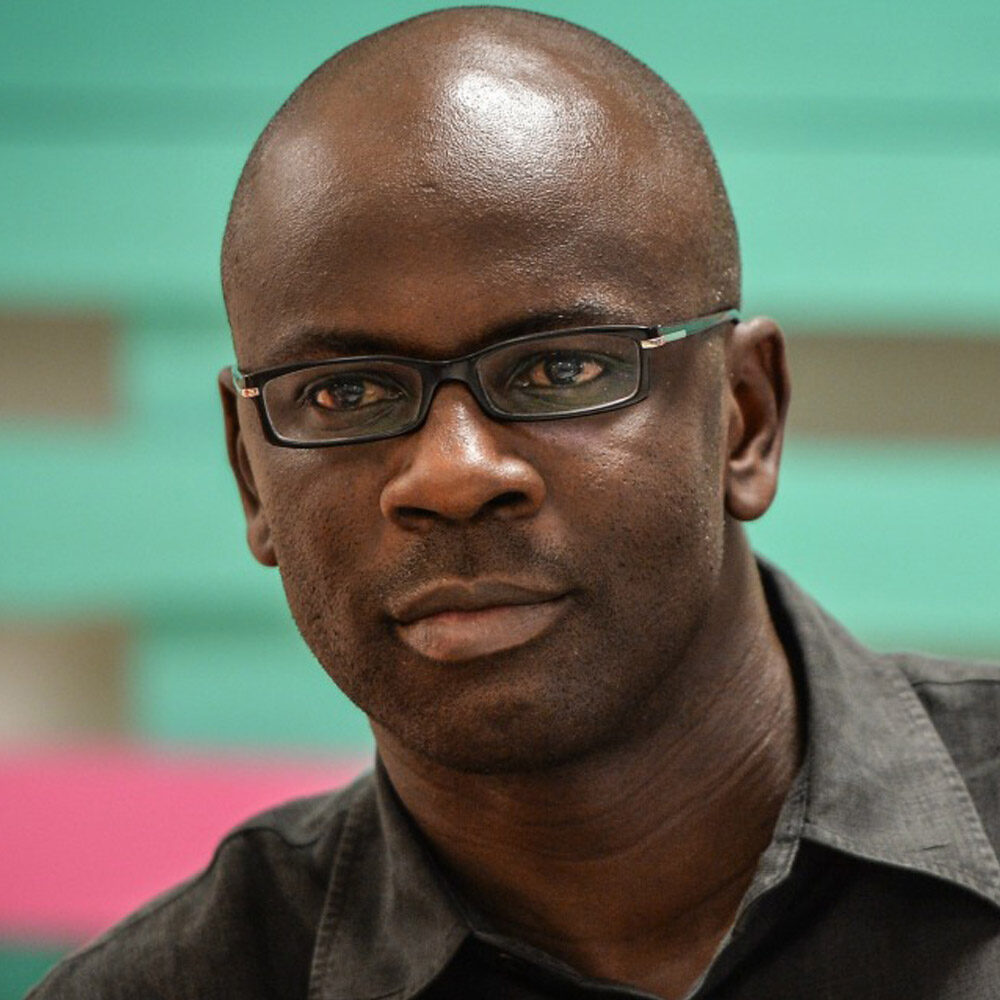
"I would liken the Western world to a narcissistically disturbed person: he invents stories about himself, he exerts violence on others, but at the same time he demands their admiration and wants to be considered superior." © AFP
-Has liberal Europe really reconciled itself with its colonial history or is it still avoiding a meaningful confrontation with its past? The hardest thing for a person is to find the courage to look in the mirror and face himself. This is especially difficult for the Western man. I would liken the Western world to a narcissistically disturbed person: he invents stories about himself, exerts violence on others, but at the same time demands their admiration and wants to be considered superior. But he cannot face himself, because then the world he has built would collapse. The West has cultivated the image that it is the light of the world and the cradle of civilization. But there is another reality: the Western world has exercised extreme violence against other populations, but also at home. That is why we must tell the story of these forms of violence in order to delegitimize it. After all, racism is a form of violence. The West has essentially legitimized the idea that violence is acceptable. As long as we continue to reproduce, incite and glorify it, we are actually glorifying the death of others. And yet, men who committed massacres in the colonies are still considered great and honored to this day. It's unbelievable.
–If we examine colonialism, can we recognize its consequences in modern forms of economic exploitation as well? It is difficult to confront the colonial history of the West, because this forces us to examine its continuation: what followed and what is happening today. Then we realize that violence has not disappeared. I return to the example of the USA as for many it is a symbol of the success of the Western world. U.S. companies are privatizing and seizing water resources in other countries, capturing water to cool data storage facilities. Thus, local communities are deprived of access to a valuable natural resource. We live in a paranoid world! I recently learned that a company attempted to privatize an entire river! Can you imagine? This is another side of the Western world. When I talk about the West, I'm not referring to people, to you or to me. I am referring to the economic system that has prevailed: capitalism and economic liberalism. Global warming is directly linked to this model. We must understand the violence it produces. And this is one of the reasons why we find it difficult to examine the past: because, if we really do, we will be forced to see clearly what is happening today.
- During the protests in France, many were quick to blame incidents of violence on immigrants, Muslims and foreigners. How do you comment on this attitude? It is, first of all, a narrative of the far right and we need to be very careful when we reproduce it. I wonder why we adopt what he says so easily, forgetting that they are not necessarily facts or express everyone's position. There are many people who do not reproduce such slanderous stereotypes. But since the question arises, I will answer. I firmly believe that the greatest form of violence in today's France is the degradation of public services. People took to the streets because they can't take it anymore. Poverty is spreading: more than ten million people live in poverty and over four million in inadequate housing. Hospitals and schools are being degraded. This is the real violence. And there is another form of violence that is silenced: tax evasion by the powerful, at a time when the super-rich are getting richer and the gap with the poorest is widening.
– Why is the image of the foreigner as a threat politically cultivated and what purpose does it serve? The image of the stranger as a threat is nothing new. But when the foreigner is not in the crosshairs, then the poor man takes his place. The perception is cultivated that the poor are the ones who create the problems. It is a disorientation mechanism. In all eras there was a class struggle in society. In order to prevent this conflict, so that the majority does not turn against the richest, claiming a fairer redistribution of wealth, the image of the poor as the one responsible for the problems, as someone who supposedly exploits the system, is constructed. Exactly the same mechanism is activated when the stranger is targeted. It is presented as the source of the problems, while the real cause lies in the unfair distribution of wealth between those who possess it and the majority of society.
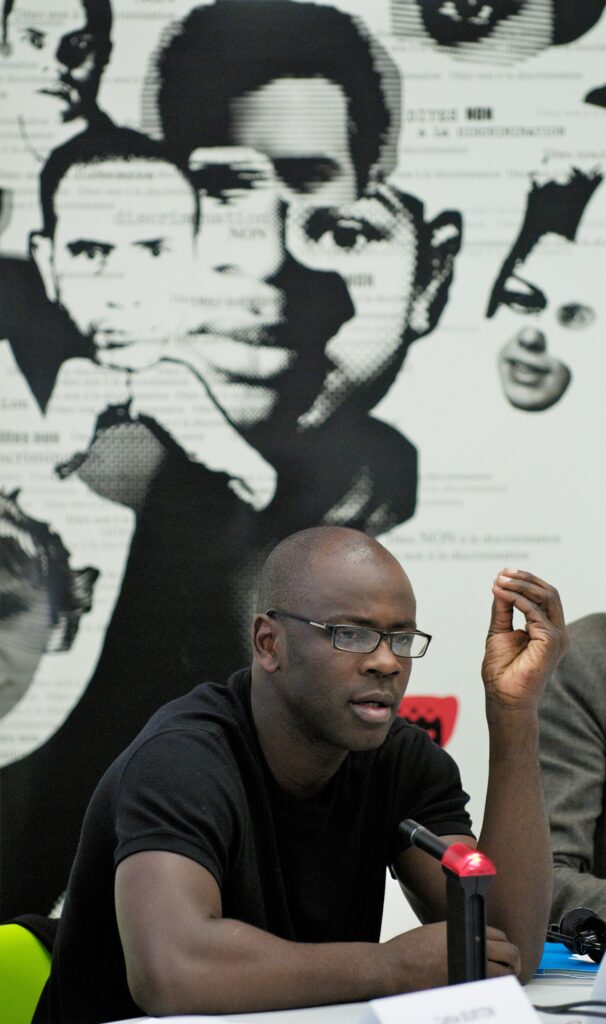
"I believe that recognition should serve something. And, if it has to serve something, it is to try to make society better." © Conseil de l’Europe
–Do you think that celebrity implies obligations to society? I believe that recognition should serve something. And, if it has to serve something, it is to try to make society better. This, however, is not only an obligation of celebrities. What is imperative, whether you are famous or not, is to seriously consider what society you want to live in. And we need to encourage people to reflect on that.
–Winning the World Cup in 1998 highlighted the French national team as a symbol of a multicultural and united France. How long has this vision lasted over time? When a triumph occurs, whether in football or any other field, all people want to feel part of it. Triumph boosts, in a way, their self-esteem. They want to be on the side of the winners. Our victory was decisive for many people, who until then had been deprived of the right to feel French. At that moment, some children began to feel that they really belonged to their country. They grew up, had children of their own and now they are raising them by telling them: once they did not consider us French, but today we are. I found it very beautiful and positive that, in the recent demonstrations in France, many children demonstrated holding the French flag. What we are experiencing today is also linked to the attitude of this generation. They want to show how French they feel and demand equality. They no longer accept to remain on the sidelines and not claim anything, as previous generations did.
– Football is a sport starring people of different origins and social backgrounds. How much is the sport itself responsible for protecting them against discrimination? Most footballers come from a poor social and economic background. Many have experienced discrimination since childhood, either because of the color of their skin or because of their religion or economic status. As they grow older, they will have to find the courage to talk about their own journey, but also about the difficulties their families faced. In this way, the voices of people who once lived in poverty will also be heard in the public debate. This is exactly what our society lacks: we never listen to the poor. If we gave them the opportunity to have a public platform, perhaps we would live in a more just society.
- Shouldn't sporting, economic and political institutions do more to tackle discrimination? As a rule, institutions exist to protect the existing order. In football, what they seek is to preserve the image and commercial appeal of the sport by presenting things as if everything is going well. They fear that if they start talking openly about the problems, some fans may turn away from football, resulting in a reduction in its revenue. Thus, many avoid facing the reality of racist violence in football head-on. It is always easier and preferable to deny that there is a problem. That is why the protagonists themselves must take the floor. Often, they are the ones who can pressure the institutions and force them to change things.INFO Lilian Thuram will be on Saturday, November 21 at 10am. at the Main Stage of the 5th Limassol International Book Fair and will participate in an open public discussion with the arts and culture expert of the Center for Social Innovation, Vangelis Gettos. Afterwards, he will sign copies of his book and meet his readers.
* Warm thanks to Vangelis Gettos for his valuable contribution to the realization of the interview.
Elefthera, 15.11.2026
