
Construction hurdles, environmental concerns and demands for additional crossings cast doubt on its wider significance
Billed as a make or break meeting for the future of Cyprus negotiations, the meeting on Monday between the island’s two leaders and UN envoy Maria Angela Holguin led to an agreement to open two new crossing points, and an agreed new trilateral with the UNSG. But with a crossing point at Kambos-Karavostasi months, if not years away, can this really be defined as progress?
The crossing point, which emerged in talks as an alternative to the stalled Kokkina route, faces an arduous path towards construction, while the second new checkpoint linking the southernmost Turkish Cypriot village of Louroujina to Lympia less than 400m away is a more realistic prospect.
However, leaders President Nikos Christodoulides and Tufan Erhurman agree the two would open simultaneously.
Kambos crossing faces lengthy delays
Karavostasi is an old port town whose rusting jetty still leads into Morphou Bay, and will become linked to the remote village of Kambos in the Troodos foothills.
It is the first agreement to open new crossing points since November 2018, when Apliki and Deryneia opened together as the eighth and ninth.
Louroujina’s community council had said the village’s crossing point could open within 10 days, however the Kambos route is expected to be far more time consuming.
Kambos mukhtar Ioannis Papadopoulos told the Cyprus Mail that “the track itself is four metres wide and would need to reach seven to carry traffic in both directions; considering the present state of the road network I cannot see the crossing opening any time before the end of the next year.”
“Much of the road that requires work has been abandoned since 1974 and left to the elements since then, its only use now is as a firebreak”.
Greek Cypriot negotiator Menelaos Menelaou acknowledged “the terrain at Kambos will demand significantly more work” than Louroujina and said the specifications would be discussed with the technical committees early next week.
But, he did suggest that if Kambos proves “disproportionately long to build, a more immediate solution could be considered for the other crossing.”
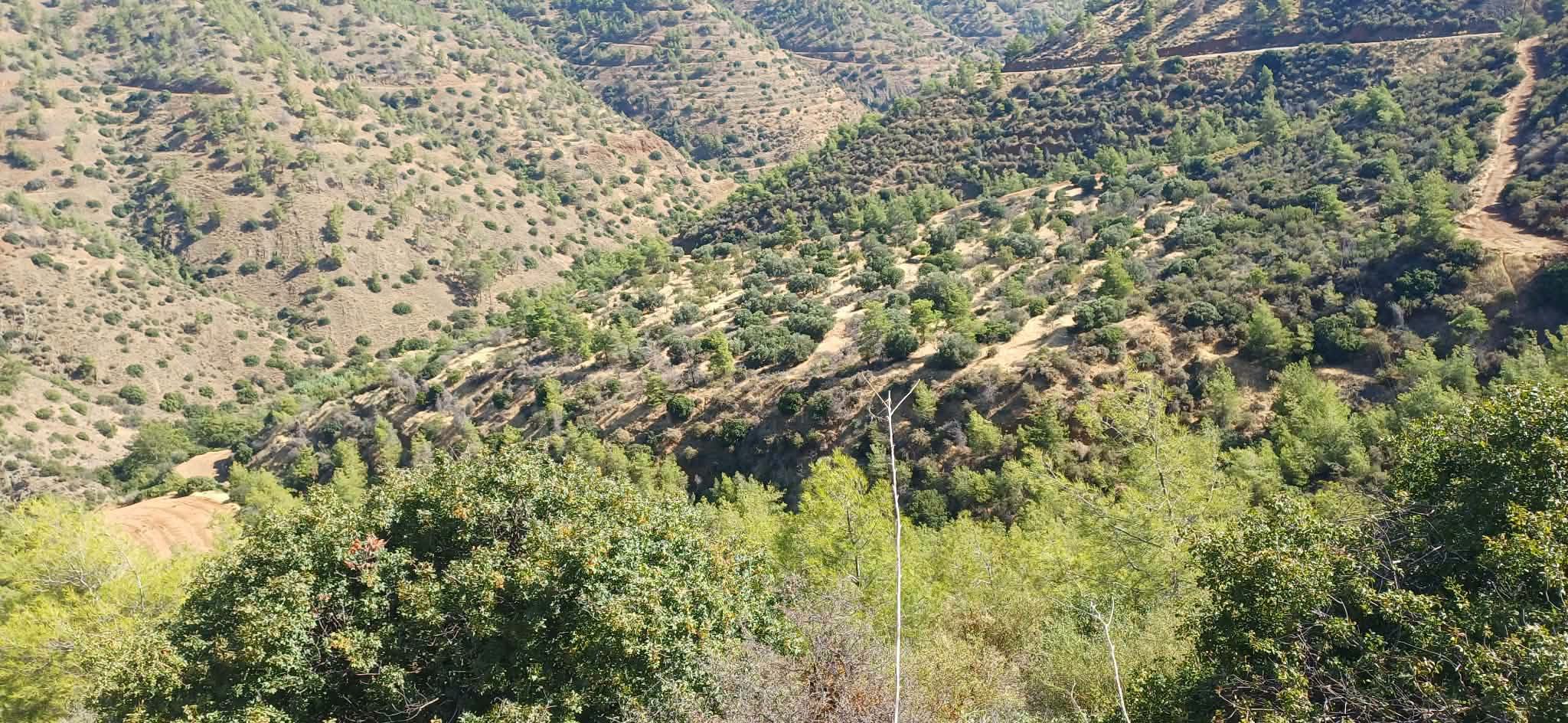
A fire break will have to be widened to allow access to the new crossing
“There may well be political considerations behind the decision to open one crossing point over another, but the more pressing issue is that Cyprus’ accession to the Schengen area depends on finding a genuine solution to the status quo. With the Green Line as it currently stands, that simply will not happen,” Professor of International Conflict Analysis at the University of Warwick Neophytos Loizides told the Cyprus Mail. “What Cyprus needs at present is a smart border, using technology that is already available.”
The Greek Cypriot side of the technical committee will meet this week, with a full meeting expected the following week to set out an organisational chart of the work.
Kokkina communities object to alternative route
The route was admitted to not be the most immediate path forward and had surfaced during talks as an alternative to Kokkina, the Turkish Cypriot enclave on the northwest coast that has an admittedly symbolic nature to the Turkish military due to TMT resistance against National Guard forces in 1964.
Polis Chrysochous municipality and Tylliria communities jointly lambasted the Kambos proposal, saying the plan contradicted assurances given by Christodoulides, who they claim had promised in private meetings not to agree to any new crossing unless Kokkina was included.
“We will not accept Kokkina being sidelined or replaced as part of any other arrangement,” they said, describing Kambos as no equivalent for “a region with different needs.”
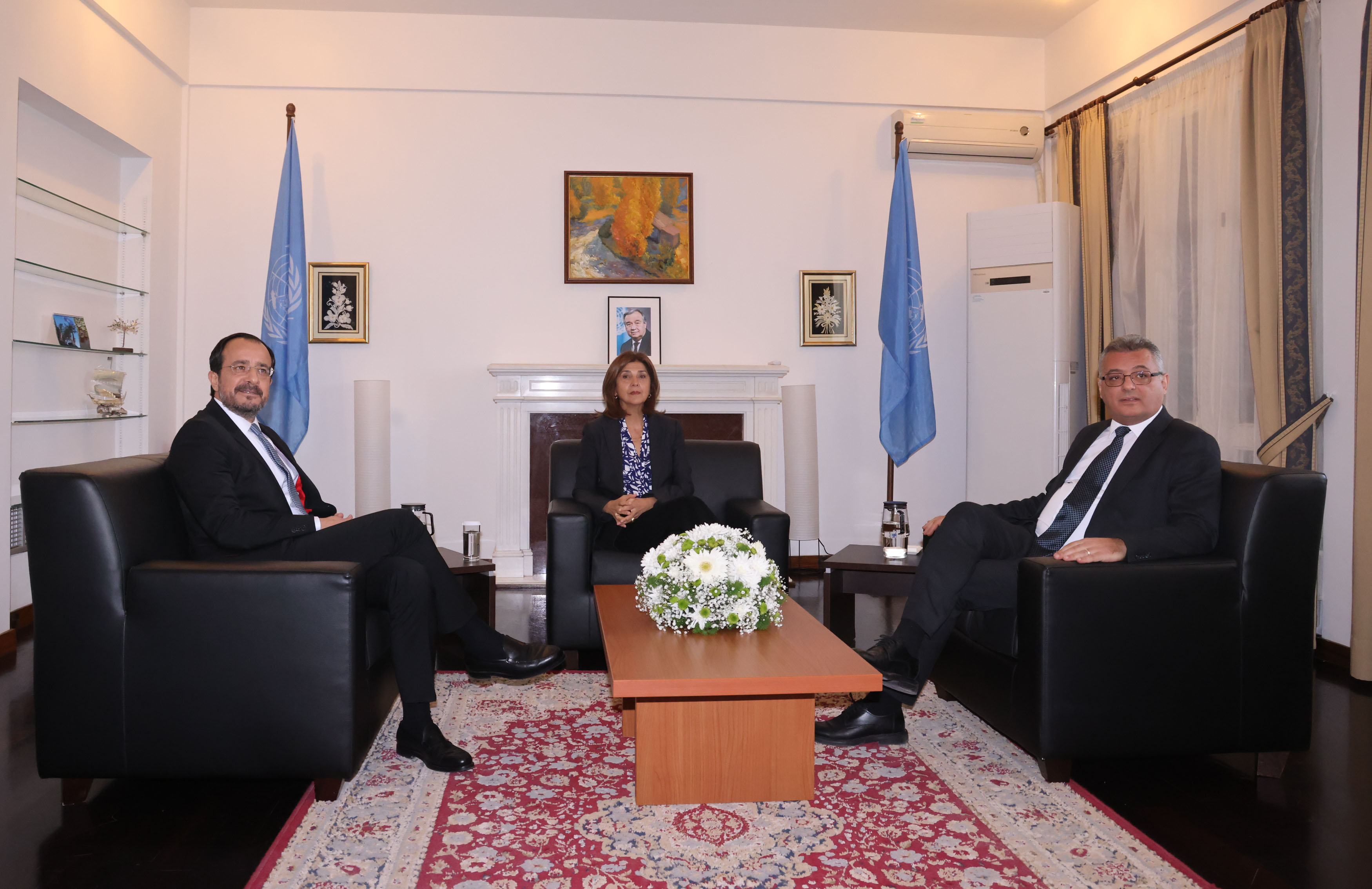 The two leaders at Monday’s meeting with the UN’s Holguin
Nikos Kleanthous, who chairs the Tylliria community council cluster, said that “there can be no new agreement on crossing points that bypasses Kokkina.” He stressed that Kambos and Tylliria should be not competing against each other.
“We have no quarrel with the people of Kato Pyrgos [which would link to Kokkina], we have always maintained strong relations and support their demand for a crossing just as much as our own, the two proposals are not mutually exclusive,” he said.
Whether Kokkina was ever formally an option is itself contested, though Christodoulides has maintained that it remains among his much touted 19 proposals which were finally submitted to the UN on Monday.
Speaking to the Cyprus Mail, one political analyst suggested the choice of Kambos, with its lengthy construction process, was in fact “a delaying tactic by the Greek Cypriot side to avoid committing to the openings before the 2028 presidential election”, with Christodoulides seen as “unwilling to alienate more nationalistic factions such as Elam he will require to secure the presidency”.
Environmental concerns and regional imbalance
Environmental concerns have also been raised as the area falls within the Paphos state forest and is home to the island’s endemic mouflon.
The environment department and the game and fauna service confirmed to the Cyprus Mail that they have not been consulted, however as no detailed plan exists for the crossing, and the technical committee has yet to meet to define the work required, there is as yet nothing for either body to assess.
Papadopoulos rejected the suggestion that the repairs would cause serious environmental damage.
“At no point in our discussions with the government or the negotiating team were we informed there would be any environmental issue with having our road that was lost during the Turkish invasion being repaired,” he said.
“We are talking about extending the road network by a few metres and I do not feel this will dramatically affect the mouflon, which have been roaming around Kambos since time immemorial.”
Papadopoulos said the village’s inclusion in Natura 2000 was the result of decisions by civil servants who “did not even know where Kambos was”.
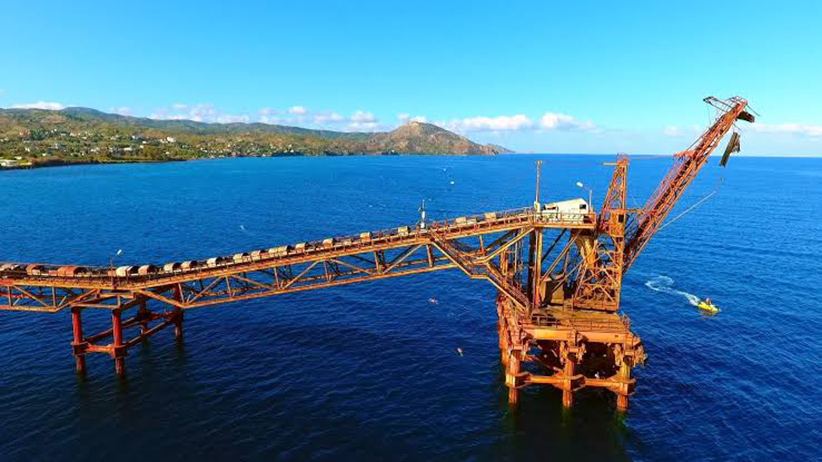 The old jetty at Karavostasi
About five to six kilometres of the old road in government-controlled areas pass through state forest, he said, and a further three to four run alongside private plots.
Papadopoulos said that the village, isolated between Tylliria and western sector of the Green Line, only has around 160 residents, and had formally requested a checkpoint in August.
“The hope was that we could revitalise the community if people could make a less circular route to Nicosia.”
The decision though leaves an imbalance as of the nine checkpoints in operation, three lie in the west, at Limnitis (linking Kato Pyrgos to Karavostasi); at Lefka and Apliki; and at Astromeritis and Zodeia. The inclusion of Kambos would add a fourth in west, and a second arriving in Karavostasi.
The capital, Nicosia, only possesses three, where an estimated 70 per cent of all recorded crossings take place, mostly at the perennially congested Ayios Dhometios.
Nicosia congestion and other crossings remain unresolved
Nicosia mayor Charalambos Prountzos, told the Cyprus Mail that it has “consistently said an additional crossing in Nicosia is required, only one fifth of Ayios Dhometios lies in the government-controlled areas; it’s unfair on the neighbourhood to carry the weight of such congestion, and the city’s eastern sector requires an opening”.
Turkish Cypriot mayor Mehmet Harmanci has likewise voiced his disappointment.
“The fact that the vast majority of vehicular crossings in Nicosia are still funnelled through a single crossing point, Ayios Dhometios, inevitably leads to persistent, long queues,” he said.
He acknowledged the two agreed crossings as “positive steps” but “insufficient to alleviate the heavy congestion in and around Nicosia.”
Mia Milia, on the table since March 2025, would undoubtedly ease pressure on Ayios Dhometios and carry Green Line trade from the industrial district in the occupied north.
The Greek Cypriot side ties the crossing to the Athienou, Pyroi and Aglandjia route, which would serve more than 5,000 Athienou residents.
Erhurman has equated that route to a road across the buffer zone from Arsos to Pyla, which Turkish Cypriots say would spare Turkish Cypriot residents of Pyla a detour through the British base at Dhekelia, and was itself initially proposed for opening Limnitis.
That proposed road was part of an understanding reached in late 2023 after Turkish Cypriot forces attacked UN peacekeepers who had halted construction work there.
The compromise brokered by then UN Special Representative Colin Stewart included a checkpoint, Green Line Regulation controls, a ban on military and commercial use, 400 residential plots and photovoltaic parks.
Implementation began in October 2023, but was suspended within days and has been frozen since.
Athienou’s council unanimously expressed “strong disappointment” over the failure to open the Pyroi crossing, “which has remained closed for 52 years”, saying it would cut journeys from Larnaca to Nicosia from 45 to 60 minutes to eight to ten.
Mayor Kyriakos Kareklas told the Cyprus Mail that though there are assurances that the Athienou crossing is “still on the table for the trilateral,” he struggled to understand Christodoulides’ reasoning.
“Nicosia is the capital, it’s been divided since even before the invasion, clearly the focus should be here, but instead they proposed Kambos with a population of less than 200; it’s ridiculous”.
