
The dismantling of a network allegedly planning the assassination of an Israeli executive of a company based in Greece, under Iranian guidance, announced yesterday, Tuesday, November 17, highlights, according to an opinion piece published in the Times of Israel, an increasingly serious security vacuum in Southeastern Europe.
The case, which was uncovered following cooperation between the intelligence services of Greece and North Macedonia, adds to a series of operations attributed to Tehran which, according to analysts, increasingly rely on recruiting criminal organizations to carry out attacks abroad.
The security services of the two countries had been cooperating since early 2026, with the National Security Service of North Macedonia (ANB) and the National Intelligence Service (EYP) contributing to dismantling the network.
Five citizens of North Macedonia were arrested, four in Skopje and one in Greece, who was later extradited to the neighbouring country, while a sixth suspect remains at large.
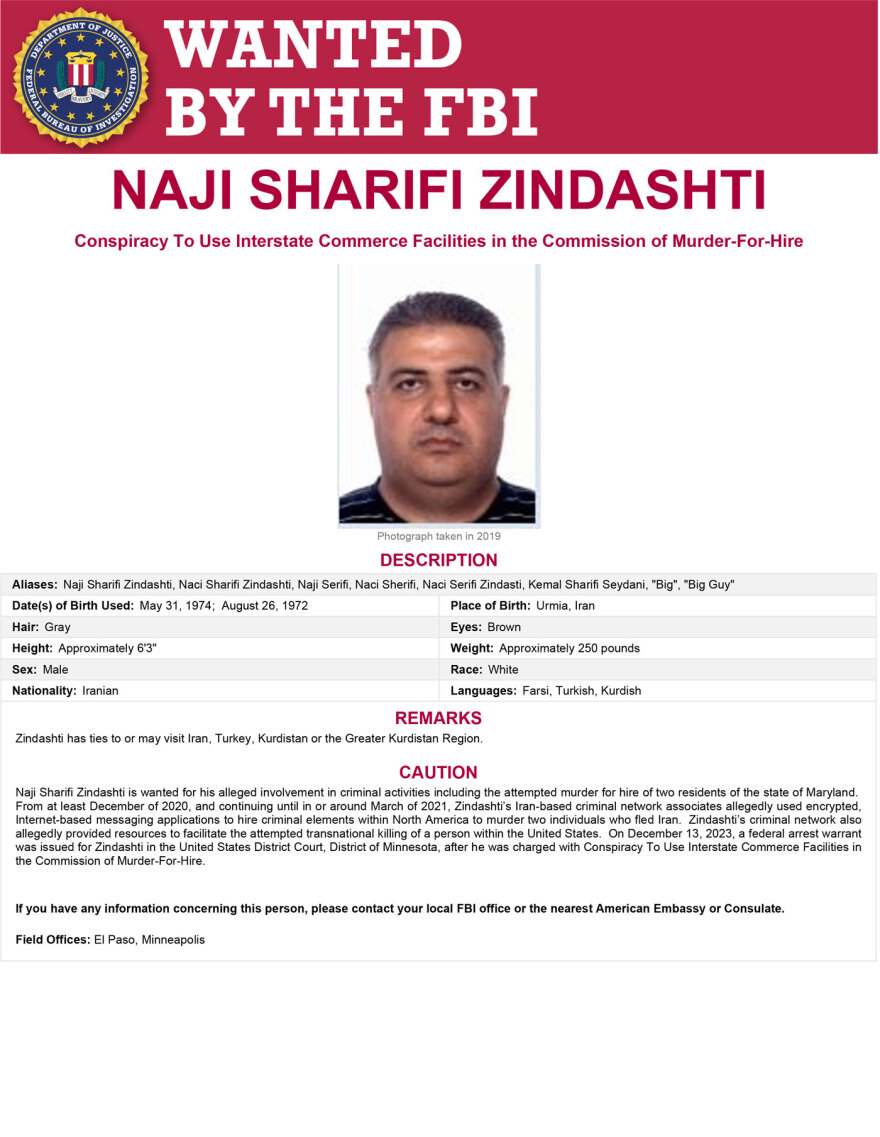
According to the information presented, the group operated under the direct orders of Iranian national Endriss Jahangiri Mavaneh, who is described as an associate of the Iranian regime and is connected to the notorious drug lord Naji Sharifi Zidasti.

The target was the assassination of an Israeli executive of a company operating in Greece, with the network members having already carried out preparatory actions and organized the necessary logistical support.
During searches of the facilities and premises used by the suspects, authorities located and seized weapons, ammunition, handwritten notes, and maps marking specific locations linked to the attack's planning.
The roots of Iran's presence in the Balkans and the Bosnian War
According to the Times of Israel columnist, this particular case is not treated in its analysis as an isolated incident, but as the latest manifestation of an Iranian presence in the Balkans, rooted in networks established more than three decades ago.
The initial penetration of Iranian mechanisms into the area is placed during the Bosnian war, between 1992 and 1995. During that period, according to data cited by the Israeli outlet, units of the Iranian Revolutionary Guards (IRGC) used Balkan trafficking networks to deliver about 14,000 tons of weapons to Bosnian Muslim forces via Croatia from May 1994 to January 1996.
The smuggling routes developed during the war reportedly allowed Tehran to build long-term connections with intelligence and organized crime networks. In the same view, regional authorities never managed to fully dismantle these structures, resulting in some networks still serving as potential tools for Iranian businesses.

Israelis in Greece and Cyprus and the growing threat
The geographical significance of the Balkans for Iranian activity gains particular weight due to the growing presence of Israelis in Greece and Cyprus.
According to the data presented in the article, nearly 20,000 Israelis now consider Cyprus their place of residence. At the same time, between 2021 and 2024, 3,851 property transfers and sales contracts involving Israeli buyers were recorded, just in the areas of Larnaca, Paphos, and Limassol.
In Greece, more than 10,000 Israelis are estimated to have settled after 2023, as part of the wave of departures from Israel.
The presence of these populations in areas of the European Union and NATO, according to the Times of Israel analysis, creates additional security challenges, as Iranian intelligence services reportedly view Southeastern Europe as a region where they can conduct operations through third parties.
A central feature of this strategy is the use of criminal organizations as intermediaries to make it difficult to directly link an attack to Tehran.
This particular model appears to be expanding to the European level. Researchers have recorded 54 Iranian operations abroad between 2021 and 2024, of which 16 involved individuals involved criminal activity.
In the United Kingdom alone, the internal security agency MI5 has recorded 25 attack plans linked to Iran targeting residents of the country since January 2022. Related investigations have led to more than 50 arrests over the past 12 months, according to the data cited by the columnist.
Why the Balkans are strategically important for the West
Beyond the immediate danger to civilians, Southeastern Europe holds particular strategic importance for Western defense.
The Balkan countries control critical land and air corridors connecting the Eastern Mediterranean with Central Europe, while military installations in Greece and Cyprus support significant Western defense activities.
At the same time, the presence of strong criminal networks in countries like North Macedonia creates, according to the analysis, fertile ground for recruiting local collaborators from foreign intelligence services.
The November 2026 case is presented as a characteristic example of this method, while despite the effectiveness shown by Mossad and its partner security services in individual operations, the absence of a permanent, institutionalized mechanism for information exchange creates dangerous gaps.
These gaps, as assessed in the analysis, can be exploited by networks operating simultaneously in more than one country.
The proposal for a permanent cooperation center with Mossad in Nicosia
To address these weaknesses, the Times of Israel columnist proposes the creation of a permanent regional intelligence mechanism based in Nicosia, called the Balkan Counter-Proxy Fusion Cell.
This is a proposed cooperation structure, with a key coordinating role for Mossad and the participation of specialized liaison officers from the intelligence services of Greece, Cyprus, and North Macedonia, as well as selected services from Albania, Serbia, and Bulgaria.
The aim of the proposed structure would be to transform occasional cooperation between services into a continuous coordination system for threat detection.

In this context, the outlet proposes maintaining a joint watchlist of individuals allegedly connected to criminal networks supporting Iranian operations.
The proposed cooperation would also include the utilization and correlation of travel, financial, and communication data, based on jointly agreed protocols, with the aim of speeding up the identification of suspects and coordinating the competent authorities. According to the proposal, participating services could respond to indications of imminent threats within hours instead of months.At the same time, regular participation of personnel in joint training programs is foreseen, with an emphasis on identifying criminal networks operating on behalf of foreign states and mapping their connections.
Joint operational teams against criminal networks
Beyond coordinating intelligence services, the analysis recommends the creation of joint teams to dismantle criminal networks allegedly acting as intermediaries for Iran.
These groups, under the proposed name Joint Proxy Disruption Units, would focus on figures like Naji Sharif Zidasti and their local associates.
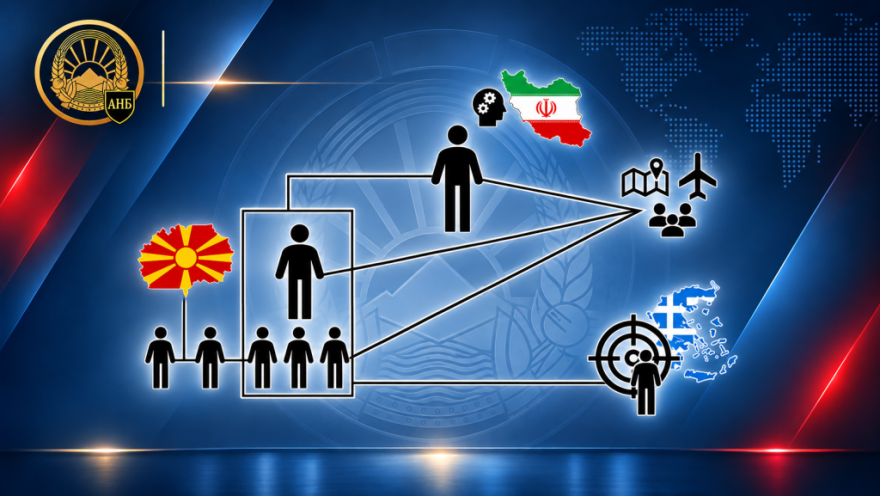
The chart of the National Security Service of North Macedonia on the network operating under orders from Iran targeting individuals in Greece
The Times of Israel's proposal includes creating a joint database on financial flows, real estate, and logistical support networks allegedly being exploited by Iranian mechanisms.
Based on this information, the countries involved could coordinate legal actions to freeze assets, impose travel restrictions, and arrest suspects, in accordance with their respective national legal frameworks.
Under the proposed model, Mossad would provide technical and intelligence support, while the services and competent authorities of the Balkan countries would handle arrests within their territory.
According to the reasoning of the analysis, this division of responsibilities would increase the cost of using criminal collaborators for Tehran, while simultaneously limiting its ability to deny any involvement in attacks carried out by third parties.
The "Balkan Shield" plan with artificial intelligence
A third proposal concerns the creation of a preventive security mechanism, called the Balkan Periphery Shield, aimed at identifying threats before they arise.
The plan would combine rapid response teams with artificial intelligence systems to detect unusual activities at border crossings, maritime movements, and economic transactions between Iran, Turkey, and countries in the region.
At the same time, it proposes the creation of a permanent threat simulation team, involving Mossad and Balkan security services. This group, proposed as the Mossad-Balkan Red Cell, would conduct quarterly exercises based on hypothetical scenarios of Iranian networks operating through third parties.
The aim would be to assess the readiness of local services, use realistic data in exercises, and improve early warning indicators.
According to the analysis, timely detection of suspicious movements before the involved individuals reach Greek or Cypriot territory could help prevent attacks at an early stage, rather than authorities making arrests after an assassination plot has already been organized.
protothema.gr
