Filenews 24/11

The presence and activity of the Police were intense last night across Cyprus, conducting organized patrols at key points in urban areas, aiming to prevent serious criminal acts, ensure public order, and increase the public's sense of security.
As a result of the preventive police operations, one person was arrested for the offense of illegal stay on the territory of the Republic of Cyprus.
As part of these operations, during the night, 482 drivers and 162 passengers were stopped and checked. Thirteen inspections of premises were conducted simultaneously, aiming to address violation phenomena.
During traffic checks carried out, 284 complaints were made concerning various traffic violations, while eight cases of traffic violations were also under investigation.
Of the complaints filed, 134 concerned speeding, while during police investigations, five vehicles were seized.
A total of 112 alcohol tests were conducted, resulting in one complaint, as well as five preliminary drug tests, with three positive results.
Policing operations to prevent and suppress crime continue daily, with an increased/enhanced police presence, targeted checks, and immediate operational action, aiming to enhance citizens' sense of security/protect citizens and ensure public order.
* * * * * *
The Russian-language recognized digital outlet The Insider gives new dimensions to the revelation about the alleged network of agents operating in Cyprus.
Through publications on his website, as well as on an account he maintains on a chat platform, the site reveals the identities of two agents.
These are two men involved in espionage activities who, according to what ANT1 revealed last Friday, were removed from the Russian Embassy following actions by the Cypriot Intelligence Service.
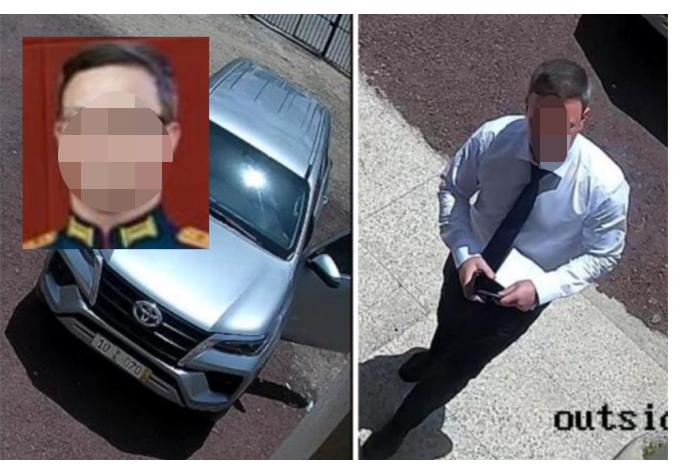
According to the recognized Russian-language website, both worked at the Russian Embassy in Cyprus as attachés, which is considered a lower diplomatic rank.
Insider specifically refers to A. S. and N. S. The former is said to be an officer of the GRU, the military intelligence service. As for the latter, according to The Insider, he was spotted outside the Russian embassy in Nicosia filming Russian citizens with his mobile phone.

Russian citizens participated in a rally under the slogan "Noon against Putin" during the presidential elections on March 17, 2024. In fact, the website also publishes a related photo in which, according to the report's authors, N.S. is shown at work on Cypriot soil.
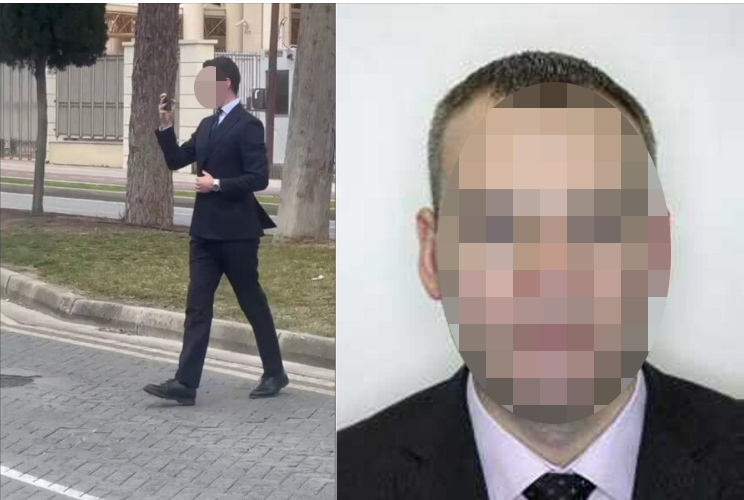
In another article, the Russian-language outlet claims that both were until recently on the list of diplomats serving at the Russian Embassy, but their names are not included in the updated relevant list. This is recorded as supporting evidence by the authors of the article.
According to what ANT1 brought to light, the two Russian agents had contacts with Cypriot citizens who, due to their duties, have access to classified information.
The alleged Russian agents, according to what came to light last Friday from the television station, were collecting classified information on matters directly concerning the national security of the Republic of Cyprus and the European Union.
According to the report, their goal was access to technology in violation of EU sanctions. Indeed, according to the revelation, the actions of the aforementioned individuals were recorded during a sensitive period, specifically during the six-month Cypriot Presidency of the Council of the European Union.
Ultimately, the two individuals are said to have left Cyprus at the beginning of last week, "at the request of the Cypriot security authorities." ANT1 reported that its information was presented to an officer of the Republic's security service and has not been denied. The latter even mentioned that "this is not the first time the KGB has ended espionage activities involving agents of foreign Secret Services."
After what came to light by the television station, there was a report by Politico
* * * * * *
The Limassol CID is investigating yet another complaint of rape of a foreign domestic helper, whose members proceeded with the arrest of a foreign man. The suspect was brought before the Limassol Court on Sunday, which ordered his detention for a period of eight days.
According to the domestic helper's complaint, she was in a relationship with the suspect, whom she had met when he had gone to the house where she worked, in order to carry out painting work. As she told the police, in recent days the foreign national contacted her and suggested they meet. In fact, he reportedly called a taxi to get to the residence where she lives.
There, according to the complainant's claims, the suspect allegedly grabbed her by the hand and led her to his bedroom, where, according to the woman, he had sexual contact with her against her consent. Subsequently, the suspect is said to have called her a taxi again, with which the woman returned to her place of residence.
Two days later, the complainant filed a complaint with the Police, and she also underwent a forensic examination. The suspect was wanted and arrested the day before yesterday. He was subsequently brought before the Court, which ordered his eight-day detention. It is noted that this is a person who resides illegally in the Republic.
* * * * * *
A 26-month prison sentence, with immediate effect and without suspension, was imposed today, Monday, November 23, by the Nicosia District Court on 21-year-old E.K., for the fatal traffic accident that occurred on November 17, 2024, in Engomi, with the victim being 20-year-old Eirini Kontogeorgiou from Greece. There were a total of seven people in the fatal vehicle, one of whom was in the luggage compartment, while the driver was under the influence of alcohol and had reached a speed of 85 kilometers per hour at a roundabout with a permitted limit of 30.
Judge D.M. Georgiadou rejected the defense's request to suspend the prison sentence, ruling that the seriousness of the offenses, the tragic outcome, and the need to prevent such behaviour make immediate serving of the sentence inevitable.
As specifically noted in the decision, after going out for fun, "one wrong choice followed another," with the tragic consequence of the loss of a young student at the start of her adult life, who had come to Cyprus for studies, "with dreams and ambitions for her later life."
"Dangerous and reckless driving"
The Court ruled that the defendant's behavior could not be attributed to a momentary oversight but constituted a sequence of dangerous actions and omissions.
According to the reasoning of the decision, "the road behavior of Defendant 1 in the present case demonstrates that the accident was caused by a chain of actions and omissions of his," which, according to the Court, constituted "dangerous and reckless driving, with a strong element of recklessness and disregard for the safety of others."
According to the facts presented before the Court, the young man, having previously consumed alcohol, took on the task of driving a five-seater rental car carrying seven people. During the final alcohol test, readings of 55 and 57 μg% were recorded, compared to the permitted limit of 9 μg%.
At the same time, police investigations revealed that the vehicle was traveling at a speed of 85 kilometers per hour before the collision, while at the time of impact the speed was estimated at 72 kilometers per hour.
The Court considered, among other things, driving under the influence of alcohol, excessive speed, carrying excess passengers, violation of traffic signals, and the fact that the driver was not covered by an insurance policy.
Moreover, the decision emphasizes that "this case clearly counts among the very serious cases of fatal accidents," due to the accumulation of aggravating factors.
The fatal accident and the passenger in the trunk
The accident occurred around 03:22 in the early hours of November 17, 2024, when the group of seven young people was returning from a nightclub in Nicosia.
The car had been rented by the second defendant, N. M., who allowed the 21-year-old to drive it.
According to the facts of the verdict, the second defendant was sitting in the passenger seat, the unfortunate Eirini was in the back seat, behind the passenger, two more people were in the other back seats, and a seventh person was in the luggage compartment.
The driver, upon reaching the roundabout in the area, lost control of the vehicle, causing it to first collide with the sidewalk line and then the perimeter of the 'Dias' complex.
20-year-old Eirini was fatally injured and taken to Nicosia General Hospital, where her death was confirmed at 03:52. According to the autopsy findings, her death was caused by a severe traumatic brain injury.
The passenger and the second defendant were also injured in the accident.
"The prison sentence cannot be avoided"
Rejecting the possibility of imposing a different sentence, the Court pointed out that mitigating factors "are not such as to shape the type of sentence to be imposed and the prison sentence cannot be avoided."
Furthermore, examining the defense's request for suspension, the judge emphasized that "any suspension of the prison sentence would not reflect the objective seriousness of the offense," weakening the element of deterrence.
In conclusion, it ruled that "there is no flexibility to suspend the prison sentence imposed on the Accused, which must be carried out immediately."
In addition to the 26-month prison sentence, the driver was given ten penalty points on his driving license and deprived of the right to possess or obtain a driver's license for a period of three months from his release.
The court imposed monetary fines totalling €1,100 and six penalty points on the second defendant, N. M., for offenses involving the failure to use a seat belt, violation of passenger seat rules, and handing over the vehicle to a driver without the required insurance coverage.
* * * * * *
Unpaid drinks and financial disputes related to work carried out at the premises appear to be behind the arson of the beer hall in Pallouriotissa, which resulted in about 50 patrons being at risk of being burned alive.
According to reports, the 34-year-old fugitive is said to have visited the beer hall and consumed drinks without agreeing to pay, claiming that the money should have been deducted from an outstanding debt owed to him.
The owners of the premises reportedly disagreed with this payment method, making it clear to him that "this is not how things are going." According to the same sources, the 34-year-old wished, instead of receiving payment for tasks he had completed, to be able to visit the beer hall and consume free drinks. The disagreement that arose is being investigated by the authorities as a possible motive for the arson.
It is recalled that Mohamed Joulakaki, 34 years old, is wanted in connection with the case, who has yet to be located by the authorities.
The possibility of criminal prosecution for the emergency exit remains open
At the same time, the security conditions of the premises are also under scrutiny by the authorities, with the possibility of criminal charges being brought for the locked emergency exit, which could not be used by patrons during the fire's outbreak.
As the Fire Service spokesperson, Andreas Kettis, had pointed out, the locked exit essentially rendered the escape staircase useless, while if the fire had spread to the first floor, the consequences could have been tragic.
According to information, the Police will investigate, in cooperation with the Fire Service, whether criminal liability arises for this specific omission.
As clarified by a competent source, the fact that no charges have been filed so far does not rule out their initiation at a later stage. The Fire Service's report will be decisive for further handling, as if its findings reveal evidence constituting criminal offenses, procedures will be initiated to initiate prosecutions.
About 50 patrons took refuge on the verandas
It is recalled that the fire broke out around 2:45 a.m. on Saturday, November 21, at the entrance of a building on Pallouriotissa Street, on the first floor of which the beer hall operates.
Examinations at the scene revealed that the fire was deliberately set using flammable material, while the thick smoke spread toward the first floor, where about 50 people were present.
Patrons were forced to take refuge on the property's terraces to protect themselves, while a man who tried to extinguish the fire suffered burns and was taken to Nicosia General Hospital, where, according to the latest published update, he was hospitalized in serious condition.
* * * * * *
The Supreme Court makes serious accusations about the non-compliance of the competent state authorities with a court decision, having ruled the detention of an Indian national at the Prohibited Migrants Detention Facility (HOKAM) in the Limnes illegal and ordered his immediate release.
By decision dated November 18, 2026, Judge Ioannidis accepted the application for the issuance of a privileged Habeas Corpus warrant, finding that the applicant remained in custody despite the fact that the Administrative Court had annulled, as of October 21, 2026, his detention and deportation orders.
In its decision, the Supreme Court emphasizes in particularly strong language the importance of the administration's compliance with judicial decisions, noting that non-compliance undermines the independent Judiciary and undermines the Rule of Law. As he points out, the judicial protection of citizens risks remaining merely recorded in legislation if court decisions are not implemented immediately and fully.
The case concerns an Indian national who entered Cyprus legally on August 25, 2023, with an entry permit as a laborer. He is married to a compatriot who legally resides and works in Cyprus as a domestic helper, while the couple had a child in September 2024, who was born in Larnaca.
The man was arrested on July 8, 2026, for illegal residence in the Republic, and on the same day, detention and deportation orders were issued. He challenged them before the Administrative Court, which on October 21, 2026, annulled both decrees.
The Administrative Court had found that the competent authorities did not take into account the applicant's family situation and the best interests of his minor child, despite being aware of the existence of the family. Specifically, it judged that the assistance of the Social Welfare Services was necessary, which did not appear to have been secured during the issuance of the decrees.
Despite the annulment decision, the applicant was not released. For this reason, on October 30, 2026, he appealed to the Supreme Court, requesting the issuance of a Habeas Corpus warrant, arguing that continuing his detention was illegal.
During the proceedings before the Supreme Court, the representative of the Attorney General stated that she had informed the competent authorities immediately after the Administrative Court's decision that they were obliged to comply and release the applicant. However, as he mentioned, he later learned that this had not happened. In fact, he admitted that from October 21 to 26, 2026, the detention was illegal.
The Republic side subsequently argued that new detention and deportation orders had been issued on October 26 and that these were served to the applicant on October 27, at the detention facilities in the Limnes. According to the authorities' claim, the applicant refused to collect them.
However, he categorically denied that any performance had taken place. In an affidavit, he stated that on October 27, he was sleeping in his room and that no police officer or other officer visited him to hand over documents or ask him to sign anything. He added that he does not know either Greek or English, in which the new decrees were drafted.
His position was confirmed by an affidavit by a fellow inmate, who stated that no one visited the applicant.
The Supreme Court identified significant gaps in the Republic's testimony. Specifically, he noted that the official of the Migration Department, who claimed, through a sworn statement, that the service was made, did not clarify from which source he obtained the relevant information, and had no personal knowledge of the incident.
Furthermore, the Court pointed out that none of the persons alleged to have served the orders submitted an affidavit to confirm the authorities' claim.
At the same time, rejecting the Republic's argument that sworn statements should have been submitted by the applicant's fellow inmates, the judge ruled that this approach did not constitute a legal argument, pointing out the contradiction in requesting additional testimony from the applicant while the testimony of the individuals who allegedly served it was absent.
In conclusion, the Supreme Court ruled that the new decrees, issued five days after the annulment decision, were never served on the applicant and, therefore, were not communicated with their notification to become enforceable administrative acts.
"I conclude that the applicant is being held illegally," the judge states emphatically, issuing the requested preferential warrant and ordering the competent authorities of the Republic of Cyprus to release him immediately.
At the same time, it awarded the costs of the judicial proceedings in favour of the applicant, while ordering that the interpreter's expenses be paid by the Republic of Cyprus.
* * * * * *
A man, aged 60 at the time in question, lost his right leg from an amputation below the knee following gangrene, in a medical malpractice case that reached the Court of Appeal. The doctor found responsible for the delay in addressing his condition tried to overturn the initial decision, but the judges unanimously rejected his appeal, upholding compensation of €314,612.38, plus interest and expenses.
The decision was issued on November 20, 2026, by the Court of Appeal, with judges D. Kitsios, M.G. Pikis, and M. Drousiotis. The doctor's appeal against the patient was unanimously rejected, while additional costs of €4,000, plus VAT, were awarded against the appellant.
According to the facts of the case, the patient, aged 60 at the time in question, experienced severe abdominal pain on September 4, 2011, and was taken to Limassol General Hospital, where he underwent various tests, including an ultrasound. Doctors suspected possible cholecystitis, meaning gallstones, and discharged him, advising him to return if the pain continued.
The next day, as abdominal pains persisted, accompanied by vomiting and sweating, he was transferred to the appellant's private clinic. The doctor examined him and gave instructions for him to stay in the clinic, administering medication, antibiotics, and an IV.
On the morning of September 6, however, the patient continued to suffer from severe abdominal pain, and began to experience pain and numbness in his right leg, whose sole was frozen. Later that same day, the attending physician called a neurologist to examine him. During the joint examination by the two doctors, vascular underfunction was found in the lower limbs, especially the right one, which was pale, slightly bruised, and relatively cold.
It was then decided that the patient would be examined by a vascular surgeon, who was called to the clinic. Despite the administration of antithrombotic therapy, the condition showed no improvement. The patient continued to suffer from severe pain in his abdomen and right leg, as well as vomiting. According to the findings of the first-instance court, the vascular surgeon did not come for an examination that night, while the attending physician was not at the clinic to re-examine the patient. In fact, he left it to the patient's relatives to contact the vascular surgeon, hoping they would be able to persuade him to come immediately.
The patient spent the night in unbearable pain and constant vomiting. On the morning of September 7th, he was finally examined by the vascular surgeon in the presence of the attending physician, and it was decided that he would be immediately transferred by ambulance to Limassol General Hospital.
There, he was admitted to the Intensive Care Unit, where, following a CT scan, a large clot eight centimeters long was found in the right common iliac artery, along with findings indicative of small intestine ischemia. The patient underwent emergency surgery, during which the clot was removed and enterectomy was performed due to ischemia in part of the small intestine.
Despite the operations, the right lower limb remained ischemic, with findings indicating that the condition of the leg had become irreversible. Therefore, it was decided to amputate the right leg, which took place the following morning.
The patient took legal action seeking compensation, claiming that the doctor showed negligence during his hospitalization in his clinic, as he failed to perform the necessary tests and failed to address the symptoms he was experiencing in time. He also claimed that he took on his care without being able to provide the required care.
The trial court accepted the patient's testimony, rejected the doctor's testimony as unreliable, and accepted the application of the evidentiary rule "Res Ipsa Loquitur," according to which, under specific conditions, the events themselves of an event can constitute an indication of negligence, shifting the burden of providing a satisfactory explanation to the defendant.
Based on the first-instance decision, €200,000 was awarded as general damages, €16,212.38 as special damages, €96,000 for loss of earnings, and €2,400 for future analysis expenses, in addition to the prescribed interest and attorney's fees.
Before the Court of Appeal, the doctor advanced six grounds for appeal, challenging, among other things, the admissibility of hearsay testimony, the application of the Res Ipsa Loquitur rule, the existence of a causal link between his behavior and the amputation, as well as the evaluation of the testimony by the trial court.
The Court of Appeal rejected the claims, ruling that the patient had personal perception of a significant part of the events he described and that the initial admissibility of the relevant testimony was permissible under the law. At the same time, he agreed that the circumstances justified the application of the Res Ipsa Loquitur rule, as the patient was under the care and supervision of the doctor, without knowing how the situation that led to the amputation had developed.
The Court of Appeal attached particular importance to the issue of causation. He acknowledged that a specific report from the first-instance Court, according to which timely referral of the patient to a suitable medical center could have saved his intestine and leg, was not supported by scientific evidence. However, it held that this did not negate the broader conclusion about causation.
Specifically, the Court of Appeal ruled that, even if it could not be proven by the traditional causal criterion that the amputation would not have occurred without the doctor's negligence, it was proven that his conduct had a material contribution to the damage or, at the very least, had significantly increased the risk of its occurrence.
As noted in the decision, the doctor suspected the possibility of thrombosis but did not proceed with the necessary actions in time to address it. At the same time, the patient remained in the clinic without tests being performed for the initial suspicion of a gallbladder problem, while the symptoms in the right leg worsened. The Court emphasized that, once the seriousness of the situation was established, the harm had become irreversible.
The Court of Appeal therefore ruled that the doctor's conduct materially contributed to causing the gangrene and the subsequent amputation, pointing out that the doctor failed to prove that the damage was caused by some other cause and not by his own actions or omissions.
In conclusion, the Court of Appeal found all six grounds of appeal unfounded, unanimously rejected the appeal, and upheld the original decision in its entirety. At the same time, he ordered the payment of additional court costs amounting to €4,000, plus VAT, by the doctor for the benefit of the patient.
