
Solutions to the seemingly insoluble problem of traffic congestion always revolve around public transport. But what if – just for the sake of argument – it’s impossible to solve through public transport?
Our cities are too small to justify a train or subway (or probably even tram) service, and building a bus network to replace private cars is a tall order. Are there other systemic changes we could carry out instead, or in addition to?
A well-informed source, speaking anonymously, sat down with the Cyprus Mail to discuss the issue – and began with three important caveats.
First, there are no ‘magic bullets’ – no single measure that can solve the problem. The answer is to “work on all fronts”, implementing small but significant measures like one-way streets, ‘smart’ traffic lights, and so on.
Second, the population of Cyprus has spiked enormously in the past few years. The most recent census, in 2021, showed an increase of 200,000 compared to 20 years earlier – and the new arrivals (largely from Ukraine and Israel) of the past five years have driven it up even further.
This is a huge, unprecedented change that translates to many more cars on the roads, and has overwhelmed traffic engineers working with often-outdated city plans.
Third, despite the naysayers, progress is being made. A network of bus lanes is slowly being established. Bus stops are being upgraded. In Limassol, in particular, public-works projects worth around €500,000,000 are due to be implemented in the next three to five years.
Limassol
Limassol is a special case – and in fact, our source makes clear that what follows doesn’t really apply to Limassol.
In Nicosia, and increasingly Larnaca, “the demand graph rises sharply early in the morning, and then drops after everybody is at work… In Limassol, something different happens. In Limassol, what we have is that the demand rises at 7.30am and stays there till 6pm! Because the system is totally full.”
A complicating factor is the quality-of-life issue. Limassol is home to many well-paid expats who live there, in part, because they can head to the beach on a Saturday morning, walk in the hills in the afternoon and dine at a restaurant in the evening – a lifestyle that requires a private car. Preserving that quality of life is almost as important, in its way, as solving the traffic problem.
The situation in Limassol would certainly be helped by the changes mentioned below. But only major infrastructure works will solve the gridlock.
Working from home
Working from home is among the most obvious changes we could make, as a society, to ease traffic on the roads – though our source doesn’t think it can be imposed from above, it’s a question of incentives being offered to encourage employers.
Many companies have already normalised remote working, “the Big Four accounting firms all do it… It’s one of the measures that will help. It might not solve the problem, but it will reduce it”.
A related point: even now, demand for office space in already-congested city centres remains high – and, judging by the number of office blocks going up, permits are being freely granted.
This is something planning authorities should be looking into – and confirms another point made by our source, that reducing congestion requires co-ordination between many different departments.
Changing school hours
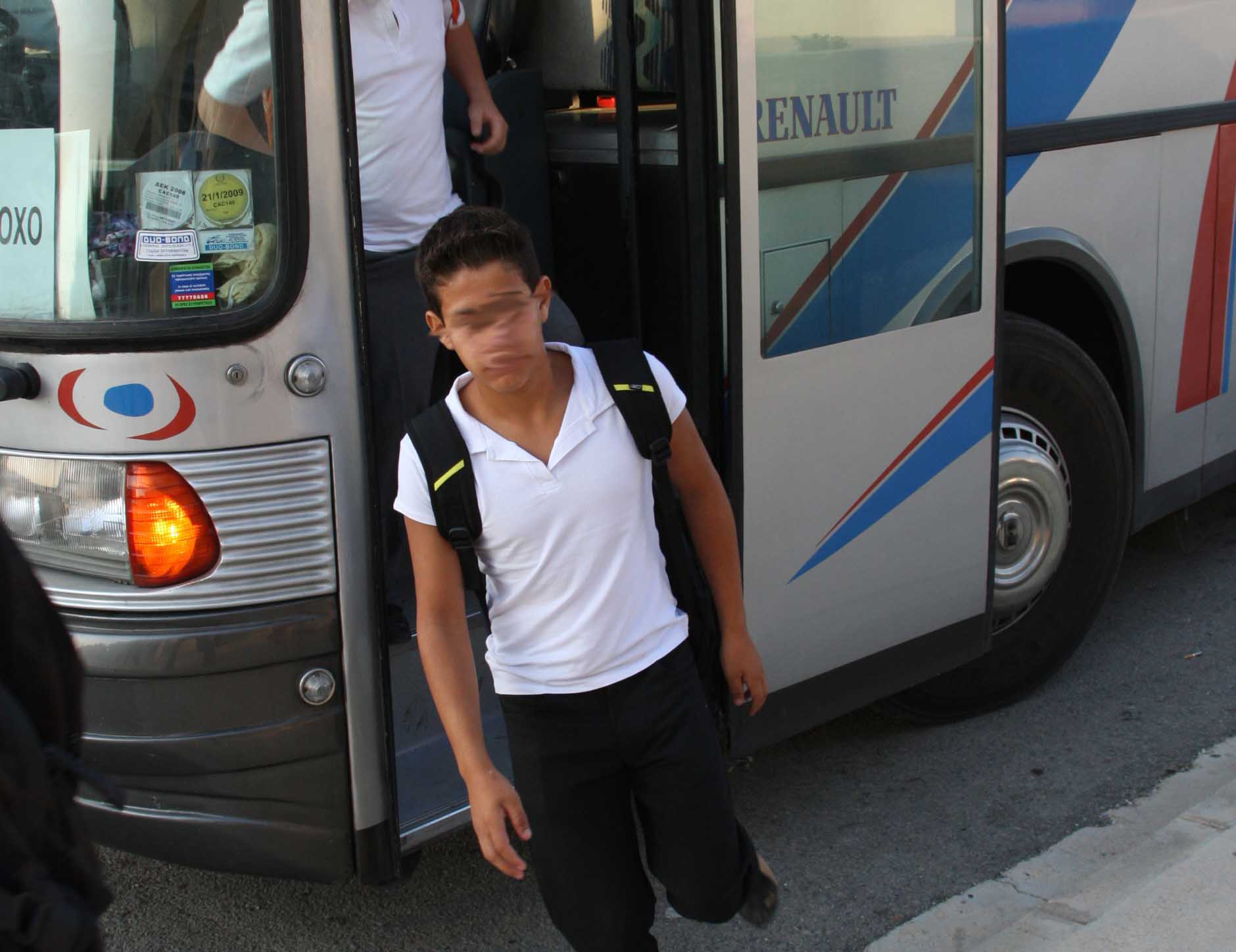
The most meaningful systemic adjustment would perhaps be a change to school schedules – a change, says our source, that could mean “taking 10,000 or 15,000 cars off the streets during morning rush hour”.
At the moment, heavily subsidised bus runs (as little as €30 a year) transport around 23,000 students to public schools every day – just under half the total number, which is around 50-60,000.
“Right now, all schools start at the same time. We have a limited number of buses and, most importantly, we have a very limited number of bus drivers…
“The buses taking students to school are full at the moment,” meaning thousands of parents have to drive their kids to school on the way to the office – even though, in most cases, school starts much earlier, meaning those parents wouldn’t ordinarily be on the road at that time.
“If [the government] manages to shift the time that students arrive at school by 45 minutes,” says our source, “that means they could implement a second round of school busing,” which would cover almost all schoolkids and free their parents to drive to work later.
A proposal to this effect has been made by the education ministry, but – as so often in Cyprus – appears to be languishing somewhere in limbo.
Third-country nationals as bus drivers
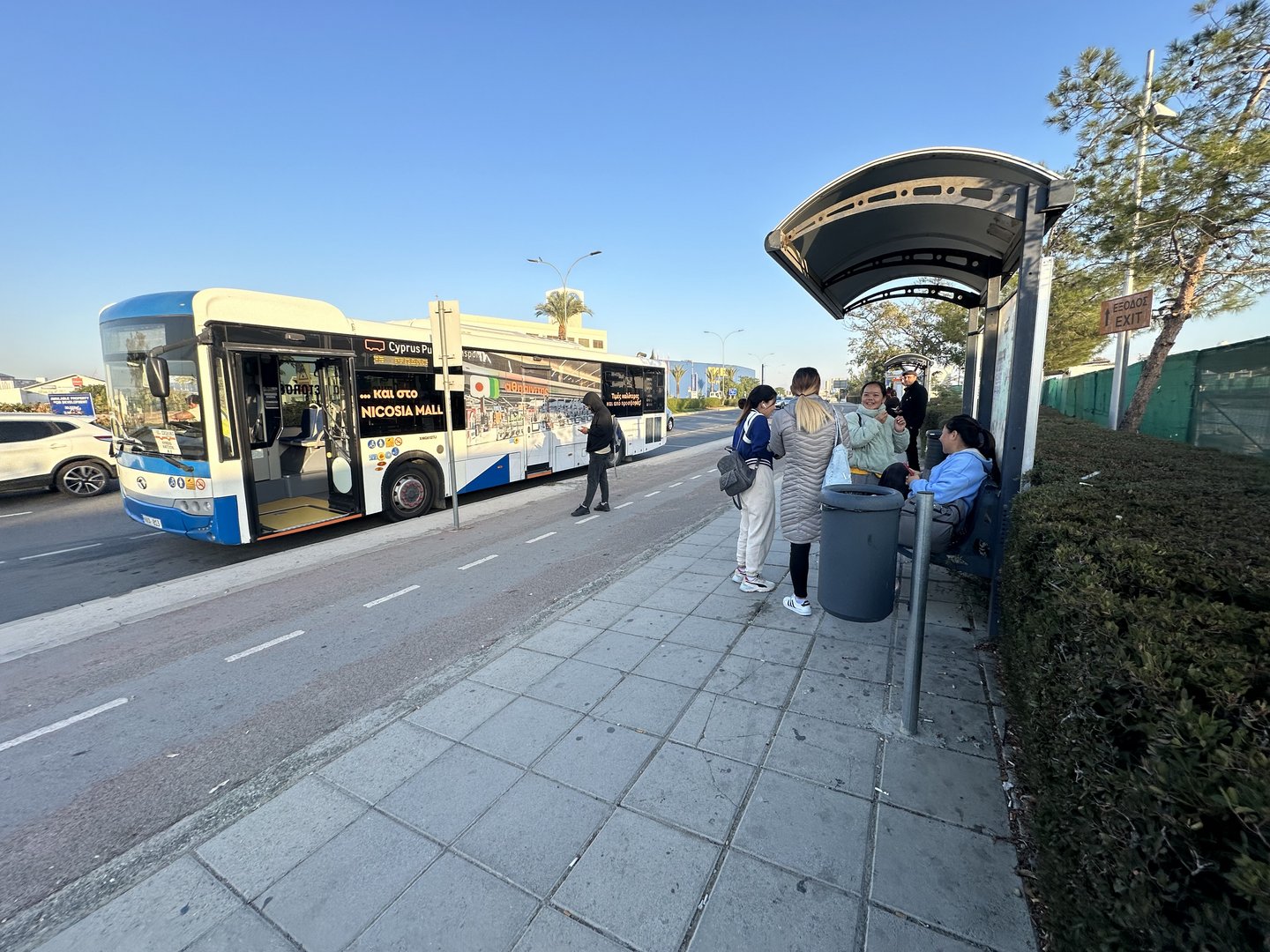
A related proposal, which would help with public transport in general, is to deal with the shortage of bus drivers by opening up the sector to third-country nationals.
Unfortunately, this appears to be a non-starter. “European law is very, very strict,” explains our source. “You need to have a European work permit, you need to be in Europe at least six months before you can apply for a professional bus driver’s licence, and so on.”
Add the fact that a bus company would have to pay for the driver’s airline ticket and accommodation, and the whole thing becomes unworkable. The labour ministry recently arranged more than 80 permits for one company to import drivers. In the end, they brought fewer than 10.
A congestion charge
The more drastic measures are those that would effectively force drivers to use public transport – the most obvious being a congestion charge. Several cities already use this, notably London which has charged a fee for driving in the city centre since 2003.
There’s no doubt a congestion charge would take cars off the streets (the price of petrol might do it too, if it keeps going up) – and in fact, unlike other measures, it wouldn’t have the undesired effect of new cars replacing the displaced cars, all the people who previously stayed home to avoid the rush and venture out when they see traffic easing. Having to pay money is a powerful disincentive.
The trouble is that a congestion charge hits poor people hardest, and is deeply unfair in general – unless, of course, a city has such an excellent public transport system that taking the bus is as easy, cheap and efficient as going by car.
Can public transport ever become so efficient in Cyprus? This is where we came in.
