
JOHN VICKERS - THE LEGEND OF CYPRIOT RADIO - TELLS UNKNOWN STORIES ABOUT DEDICATIONS TO ''REQUEST TIME'' - WHAT HE REVEALS ABOUT GEORGE MICHAEL AND ''MIDNIGHT EXPRESS'' - Filenews 17/10 by Theodora Nikolaou
His recent award, along with his long-time collaborator Vicky Bishara, at the 5th RIK "Honour Awards" for the legendary show "Request Time", was the occasion for a flashback to the past. Back when radio was not just a means of information, but perhaps the only channel of communication and expression of young people. And this was made possible through the thousands of dedications that reached the radio in letters and letters. Some fell in love, others broke up. But everyone had fun with the foreign music that John and Vicky were the first to play in our country. When the microphones of the show were turned on, the whole of Cyprus was listening.
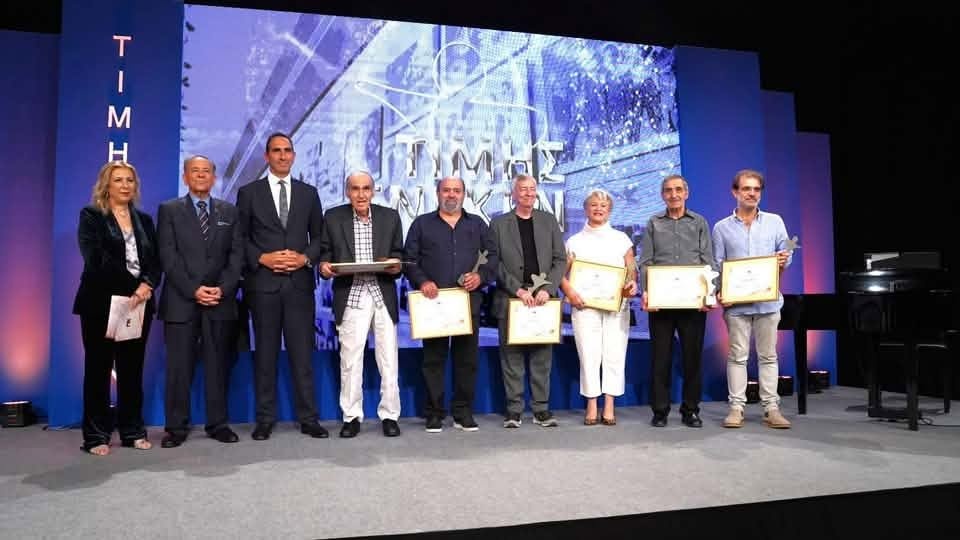
How a random pop concert in Lysi in 1972 led him to the microphone of RIK, the 17-year course of "Request Time" with Vicky Bishara and the unknown stories behind the thousands of letters
The arrival on the island out of love and the fatal announcement
John Vickers' relationship with radio and Cyprus was not the result of a predetermined plan. "Many things in life happen completely by chance. Whatever we want to do, whatever we think we are doing", he confesses, speaking to "F" after the recent honorary distinction.
Born in England in 1949, he discovered pop music and the phenomenon of the Beatles at the age of 13. At the age of 16 he learned the guitar and began writing his own songs. He studied French and Italian literature at the University of Leicester, where he met his first wife, the Greek Cypriot Lia. "At that time, we had the luxury of studying what interested us, without the stress of professional rehabilitation. I studied languages because I liked them. I didn't know what I was going to do next," he says.
In July 1972 he arrived in Cyprus out of love and without yet having specific plans. All he knew was that he didn't want to be a teacher—although his neighbors in Limassol, upon learning that a young Englishman had moved to the neighborhood, rushed to send their children to him for English lessons.
The entry into RIK was done in an almost cinematic way. In September 1972, Vickers saw an advertisement in the newspaper for a pop music festival in what is now occupied Lysis. He went with his guitar and sang. The organizer, impressed, introduced him to the English presenter of the concert, who worked at RIK.
He was preparing to leave the station and as he was told they were looking for an Englishman with a deep knowledge of music. They suggested that he go through a trial. He took the so-called voice test, took the position, and on October 1, 1972, he made his first solo show. "I was scared. It wasn't my dream to do radio, it just happened," he says, recalling that time.
On the occasion of his award by RIK for the legendary "Request Time", the man who sealed the nights of an entire generation unravels in "F" the tangle of memories of a life straight out of a novel
The golden age of "Request Time"
A few months later, the Lebanese journalist Vicky Bihara entered the studio. This is how one of the most famous twins of the Cypriot airwaves and the legendary show "Request Time" was born. At a time when RIK had only two channels and free radio was non-existent, a show that spoke English and Arabic managed to become number one.
Initially, the program was aimed at the surrounding countries of the region such as Lebanon, Egypt, Israel, Syria and Turkey. But when the war broke out in Lebanon, mail from abroad was abruptly interrupted. "I knew that many Cypriots listened to us and sent us letters, but we were not allowed to broadcast them, as there was another program for domestic listeners," Vickers recalls. "I then suggested that we open the show for Cypriots. So, within a few months, "Request Time" became the show that all the students, soldiers and youth of the island listened to."
Success - according to him - was based on authenticity and spontaneity. Vickers stubbornly refused to read ready-made texts, as his colleagues did on Greek-language shows. He preferred to read alive the letters with the dedications of the listeners.
But the essence of the program was the music. Foreign music. Mostly English and American. At a time when there was no internet, he used his own money to pay friends who worked at Cyprus Airways to bring him the latest records from London and play the songs first. After all, as he says, many people still tell him today that they learned foreign music from that show.
So, for 17 whole years (1972-1989), the show kept company with the young people of Cyprus and the surrounding area every night, while receiving hundreds of letters a day.
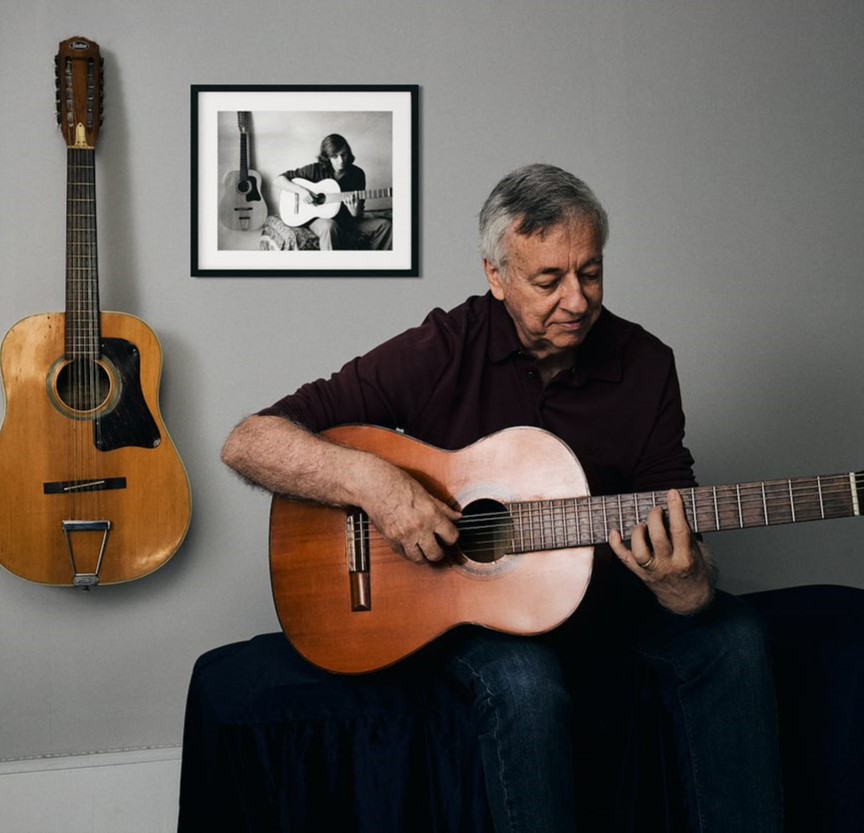
Stories behind the dedications: From "Dora" toBilly from "Midnight Express"
Behind every dedication was a human story. Among the thousands of letters, Vickers remembers an avid listener, let's call her "Dora", who sent letters with dedications to John every week with a lot of love. So one day, a letter arrived with the indication "URGENT". It was from Dora and wrote in a panic: "Please don't play the letter I sent you about Giannis, because we broke up and now I'm with George!".
The most shocking story, however, came after 1974. Among the letters, a letter arrived from an American named Billy, who told them that he was a prisoner in a Turkish prison and wrote characteristically that "if you have a little money, everything happens in here", asking for a song. The show played the track and the story was forgotten.
Years later, in 1977, Vickers found himself in a cinema in Athens to watch the film "Midnight Express", which was banned in Cyprus. "Watching the film, I realized that the protagonist, Billy Hayes, the man who escaped from Turkish prisons and wrote the book of the same name, was the same Billy who had sent us the letter to RIK. Unfortunately, this letter has been lost," says John.
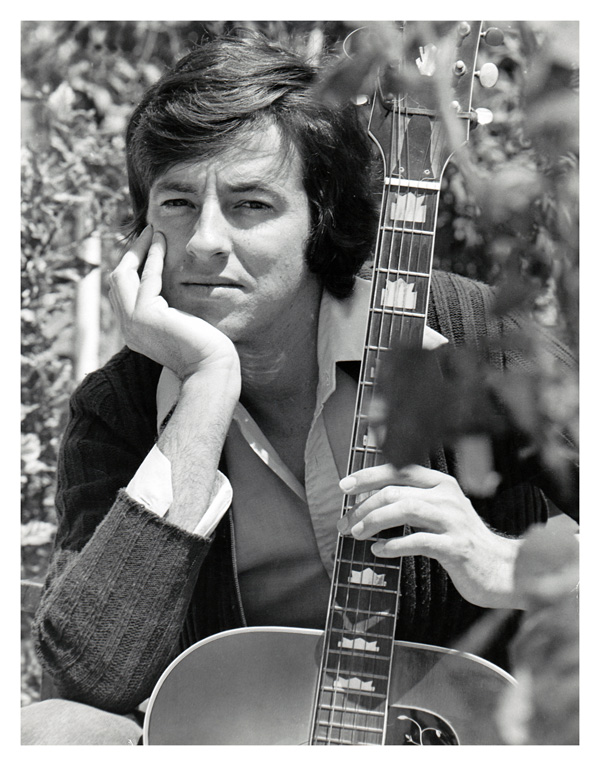
The black summer of 1974
John Vickers' memories of the coup and invasion remain fresh. On July 15, his father-in-law woke him up to the news that Makarios was dead. A few days later, on the evening of July 19, his director, Lana der Parthogh, asked him to go to RIK to deliver the English-language news bulletin and play classical music.
"I did it with a soldier with a gun in the studio," he describes. "Due to the curfew, I was forced to sleep on the studio floor. I left the next morning, July 20th, at 6 para. Everything was quiet. I put the BBC in the car and suddenly I heard that the Turks had invaded Cyprus. I had just left the only radio station in the country, where no one knew anything. And immediately after, the gusts started," he recounts.
Although he was only 24 years old and a British passport holder, he never thought of leaving the island. "Maybe I hadn't fully realized the danger because we were in Limassol, but the main thing was that I couldn't leave my family. So, I stayed and 54 years later I'm still here."
John Vickers came full circle in radio in 1989, leaving behind a vast cultural legacy. "RIK gave me the first step in radio, later in theater and television, while all this led me to journalism. I am grateful for everything," he says.
The interview with Giorgos Kyriakou Panagiotou
John Vickers' journalistic career began in 1973 with his music column in the Cyprus Mail newspaper. In 1979 he switched to Cyprus Weekly, where his column became a full page, and later worked as a correspondent for the newspaper in Limassol.
He was editor-in-chief of publications such as Hermes International, Cyprus Review, Time Out magazine, as well as the international magazine Odyssey. At the same time, he directed the EuroMed Info Centre in Brussels where he lived for four years, while from 2011 until today he continues to offer his services as editor-in-chief of the economic and commercial magazine GOLD.
In his rich journalistic archive, the interview he secured in June 1984 from George Michael stands out.
Vickers spotted the world-famous artist in a Limassol hotel when he made his first hits with the band Wham.
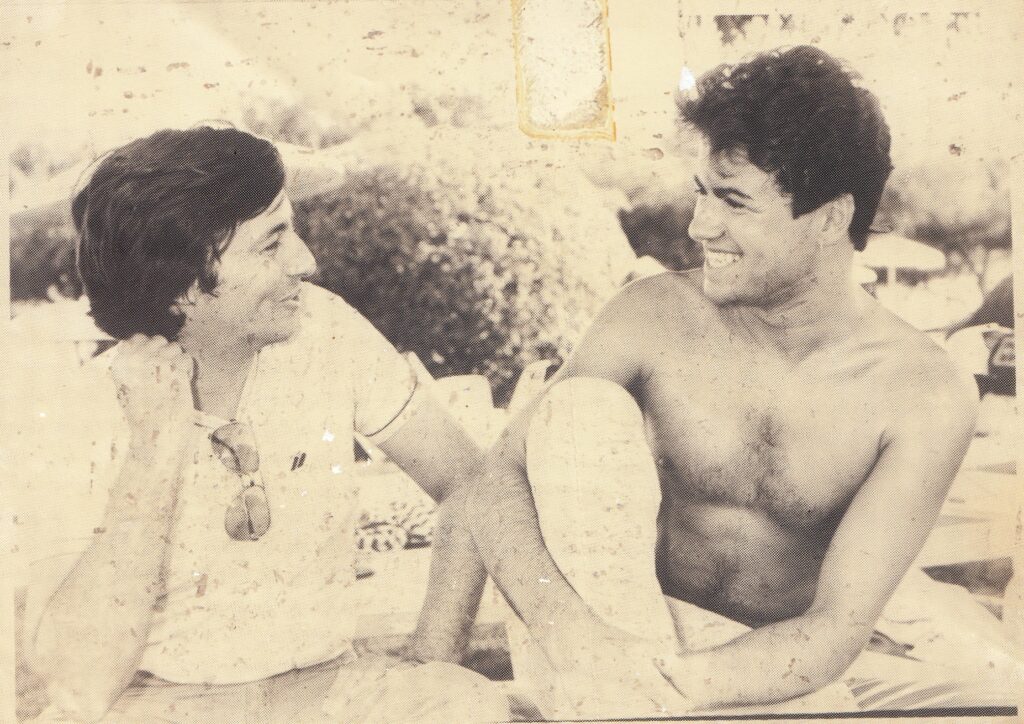
He remembers going to the hotel and asking the girl at the reception if there was a George Michael living there. "He looked at me and said no, we don't have any. I say, maybe a Giorgos Michailidis? Again, no. I had an English music newspaper with Wham on the cover. I showed it to her and then she told me 'if you mean Mr. Giorgos Kyriakou Panagiotou, he is in the pool'".
During their conversation, George Michael surprised Vickers with the way he talked about music, even revealing to him the existence of a then unreleased ballad that was destined to make history, the legendary "Careless Whisper".
He was similarly impressed by Cat Stevens (Yusuf), whom he met twice along the way, first in 1976 and later in his apartment in Limassol, after the star had converted to Islam and left the music scene.
The albums and the Eurovision chapter
John Vickers' relationship with the institution of Eurovision counts a total of 10 participations from various positions, such as vocals, television commentary, as a journalist and as a creator. In fact, his name is associated with the only time Cyprus did not send a song to the contest.
The unknown background unfolded in 1988, when RIK chose its own song, but an objection filed by the creator of another song, for the fact that Vickers did not yet have Cypriot citizenship, led to the cancellation of Cyprus' participation that year.
The vindication for him as a creator came in 1990 in Zagreb, where, having now acquired citizenship, he participated with the song "Milas poly" performed by Haris Anastasiou, taking 14th place.
An unknown but at the same time obvious detail was that behind the melody of the song's chorus is hidden the characteristic musical jingle of RIK. https://www.youtube.com/watch?v=fGFb9Dngosg
In parallel with the airwaves and prints, Vickers developed a personal discography. The beginning was made in 1975 with the 9-minute song "It was an Island" about the tragedy of Cyprus, which was dressed in the documentary of the same name by Andreas Constantinides.
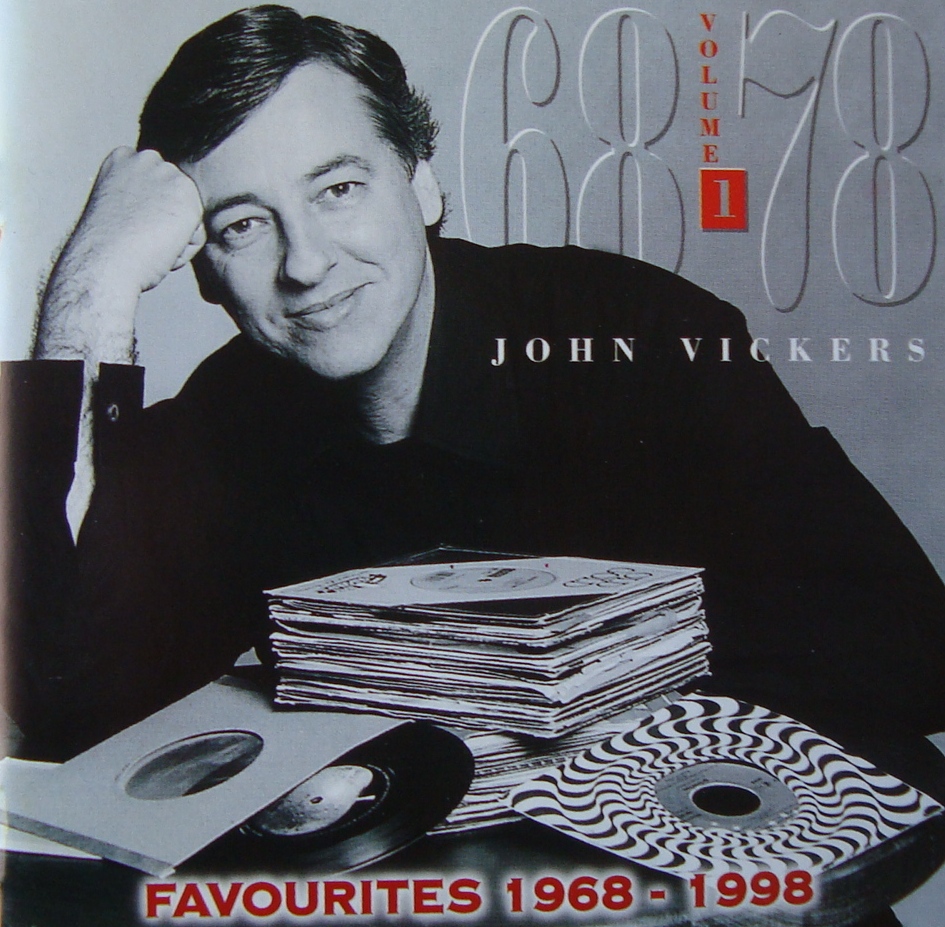
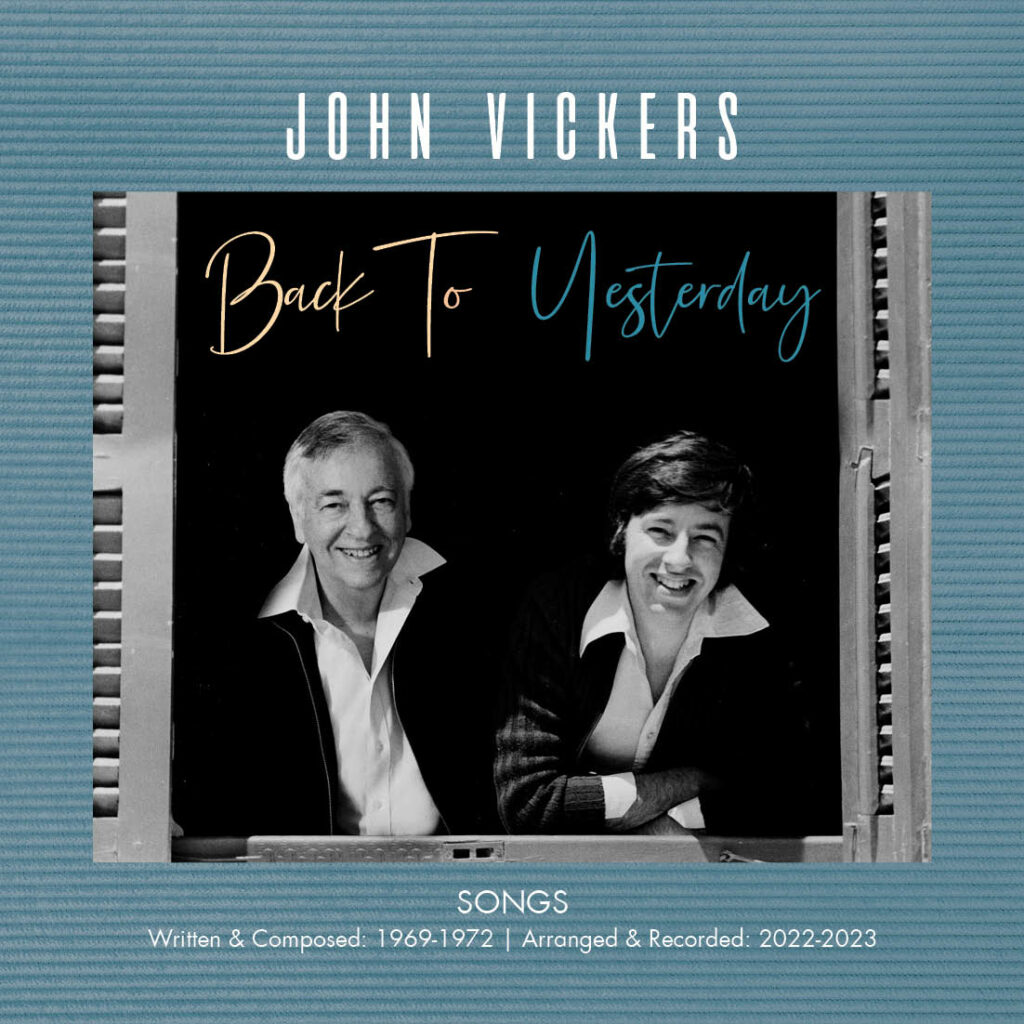
This was followed by his first solo album entitled "At Last" in 1979, the album "Take Two" in 1985 in collaboration with Linda San Martino, and "Transition" in 1987. After a release with covers by other artists in 1998, Vickers made a comeback in 2024 with the album "Back to Yesterday", which includes 20 unreleased songs he had written as a student in the period 1968-1972.
John Vickers participated in the founding team of Radio Proto, the first independent station in Cyprus, where he organized his record collection, while presenting his own show with old songs for 3 years. In fact, this was to be his last contact with the radio.
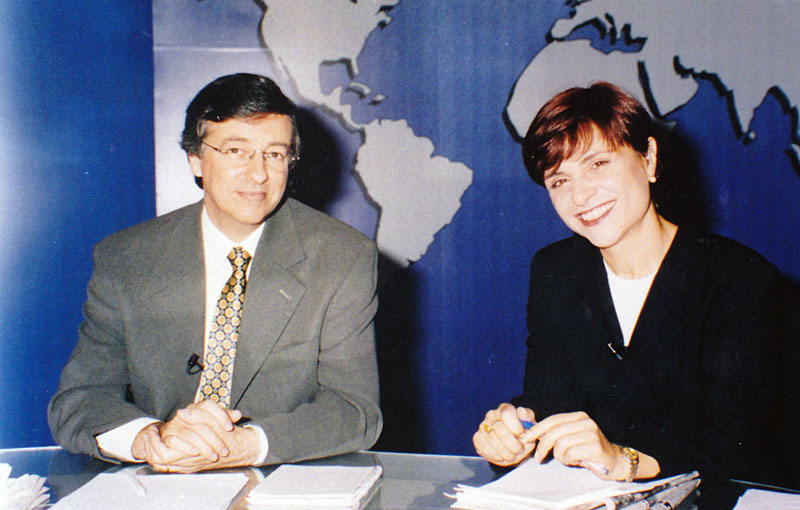
In 1998 he switched to Sigma television, co-presenting with Vivian Ladommatou the live, English-language news show "Weekly Review" with guests including President Vassiliou.
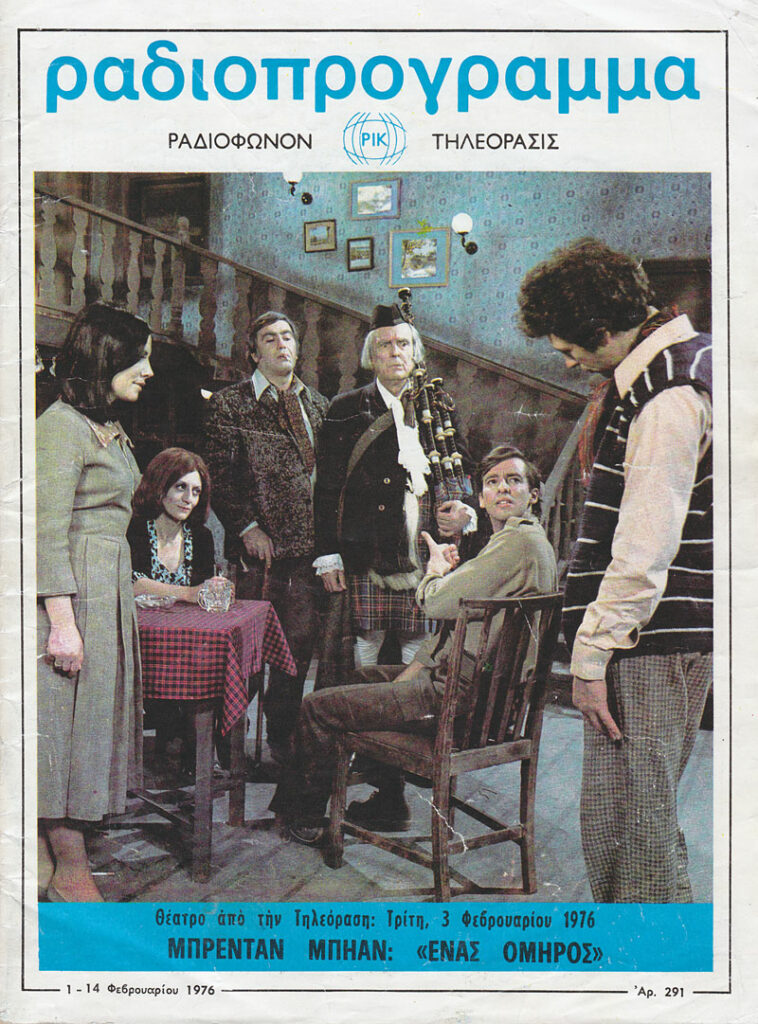
It is worth noting that he was also an actor, as in 1976 Evis Gavrielides chose him for the role of the young English soldier in the play "A Homer" by Brendan Behan.
And as if all this were not enough, he has translated over 30 Greek books into English.
Today, at the age of 77, John Vickers lives in Larnaca with his second wife of 32 years Soula, has two daughters and five grandchildren, while continuing to create and translate books, remaining a living and valuable chapter of Cypriot culture.
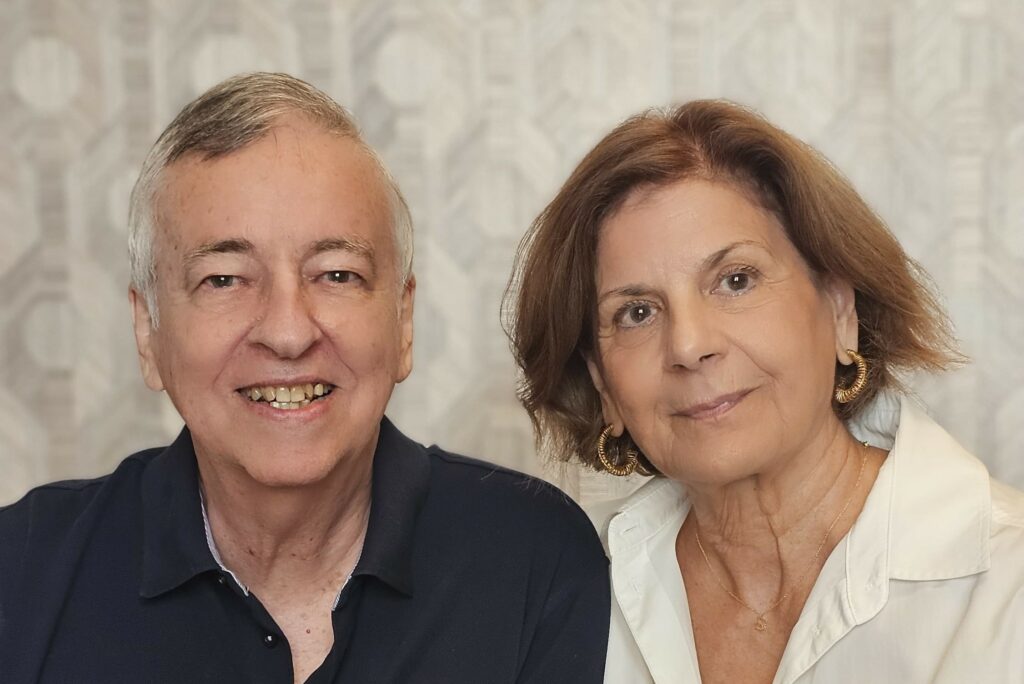
But what people remember with a lot of love after so many years is his program on the radio. Almost 40 years later, "Request Time" remains alive in the memory of Cypriots as the soundtrack of the purest but at the same time difficult years of their youth.
"Back then, Vicky and I were just doing what we loved. We knew they were listening to us, but we didn't imagine that it would take root in them with so much love. Today, two generations of people remember us as if it were yesterday and still recognize us by my voice or Vicky's laughter. I didn't understand at the time that our work would mean so much to so many people," he says.
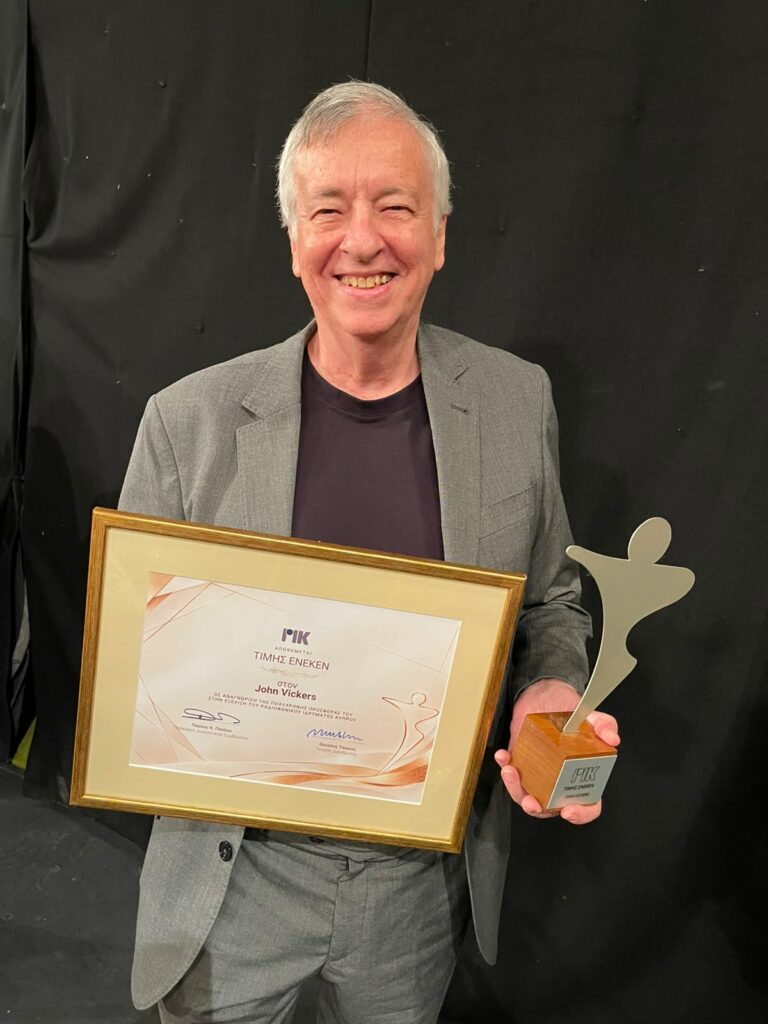
His award, therefore, was the minimum honour due to a living legend.
