
The Audit Office forwarded the special report on the issue of the design and implementation of the construction projects in the Akamas National Forest Park (SAR) to the Attorney General of the Republic for the evaluation of possible criminal or other responsibilities.
The subject of the special report is whether the design and implementation of the projects ensure the protection of the environmentally sensitive area of the Akamas Peninsula. The report records a number of interrelated weaknesses, institutional gaps and deviations from the terms of the environmental approval of projects.
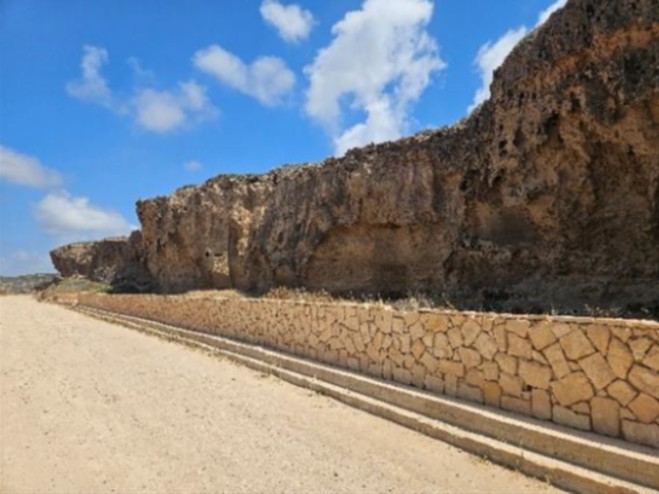
The central conclusion of the Auditor, Andreas Papaconstantinou, focuses on the fact that the design, the environmental assessment, the integration of the terms into the construction plans and the monitoring of the construction refer to a picture of a system without uniform preventive valves. Instead of prevention preceding restoration, the problems were identified after the fact, after interventions had already been carried out in the natural environment, causing work suspensions, contract terminations, redesign needs, additional construction costs and irreparable environmental damage.
At the same time, it is noted that the contract value of the project for the improvement of part of the main road network of Phase A of the Akamas SARP amounted to €6,295,000 plus VAT. Until the suspension of the works, on 11.12.2023, works worth €1,112,158 had been executed, corresponding to only 17.67% of the project, despite the fact that 94% of the contractual time had elapsed.
The Audit Office also refers to the referral of Cyprus in April 2026 to the Court of Justice of the EU for continued non-compliance with the Habitats Directive. It is also noted that illegal catering and leisure centers continue to exist in the area.
The main findings of the audit
Carrying out an appropriate assessment without defined conservation objectives: The Environmental Authority carried out the appropriate impact assessment for the Sustainable Development Plan without any specific conservation objectives having been established for the Natura 2000 site "Akamas Peninsula". Based on recent case law of the Court of Justice of the European Union, the prior establishment of specific objectives is a legal prerequisite for a valid due assessment. At the same time, for Phase A of the road network, a Special Ecological Assessment Study was not carried out, despite the indisputable possibility of affecting the habitat.
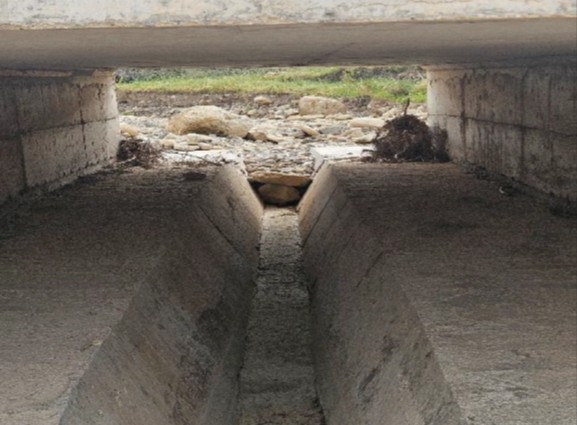
Non-incorporation and divergence of environmental terms in the construction plans: Legally binding environmental terms were not correctly reflected in the final construction plans. A typical example is the hydraulic works on the Toxeftra – Avakas – Lipati road, where instead of bridges that do not seal the bed to ensure the movement of the critically endangered and strictly protected European eel (Anguilla anguilla), box-shaped culverts were designed. In addition, deviations were found in the cross-sections of the roads and in the widths of the road surfaces.
Arbitrary deviations during the implementation of the works in the field: During the construction stage, exceedances were recorded in the excavation depths of up to 2.10 meters compared to the maximum permissible 1.875 m., as well as increased widening/intervention widths. At the same time, box-shaped culverts were built on the riverbed instead of being submerged in it, while the fish passages were blocked by debris. The existing surveillance and monitoring system proved to be inadequate, as the competent authorities did not detect infringements in a timely manner.
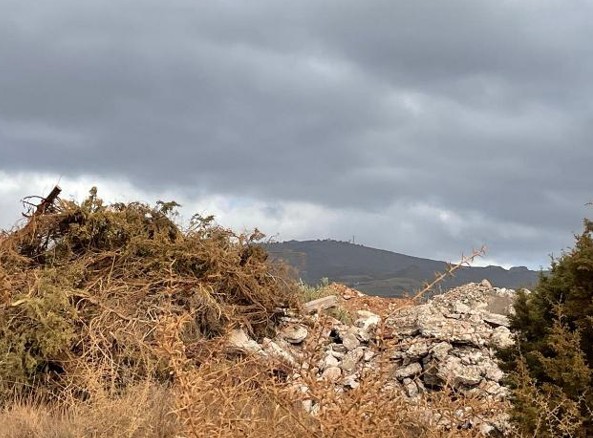
Uncontrolled waste management: The Excavation, Construction and Demolition Waste Management Plan was seriously deficient and did not include licensed dump sites. The result was the uncontrolled deposition of rubble and excavations in various places within the Akamas SAR, in undisturbed soil and natural habitats, in violation of environmental approvals.
Ambiguities, waste of resources and non-fulfilment of the 19 additional conditions: After the suspension of work in 2023, the Environmental Authority imposed 19 additional/amended conditions. Despite the passage of time, 17 of the 19 conditions remained unfulfilled, while the remaining 2 related to over-excavations became unenforceable as the environmental damage was now irreversible. At the same time, a waste of public money was found from the installation of a water supply pipeline and a 3,800-meter-long cable, which were then decided to be removed due to environmental impact.
Erosion problems from external developments and new tenders: It was found that the reconstruction/widening of Laras Street by the Municipality of Pegeia was carried out without the preparation of a hydrological study or the securing of environmental approvals, channeling rainwater that causes serious erosion to the road network of the Akamas SAR. In addition, the new tender announced by the Department of Forests in March 2026 included provisions that are not in line with the Decisions of the Council of Ministers and the binding terms of the Environmental Authority.
The Special Report of the Audit Office highlights the urgent need for the establishment of substantial preventive safeguards. The protection of the Akamas, as the report concludes, cannot be based on the ex-post detection of damage, but requires strict adherence to legal frameworks, transparency and timely supervision before starting any work in the field.
The Ministry of Agriculture defends its plans and handling
The Department of Forests and the Department of Environment are fully questioning the conclusions of the Audit Office, through the 34-page response of the General Directorate of Environment of the Ministry of Agriculture, Rural Development and Environment. The departments involved defend their decisions and actions, considering that the criticisms of the Audit Office ignore the technical peculiarities of the project and the main goal, which remains the rational management and protection of the National Forest Park.
The two competent departments of the Republic do not adopt the positions of "irreparable environmental damage" or "incompatibility of the projects", objecting that the plans for the Akamas National Forest Park (SAR) were made with the protection of the natural environment in mind, the regulation of uncontrolled traffic and the implementation of the approved sustainable development plans.
In response to the complaints about conducting a Due Assessment without defined Conservation Objectives, the Ministry's side rejects the position that the process was legally or environmentally suspended. It notes that the absence of a formal decree on conservation objectives at the time of approval does not invalidate the substance of the environmental assessment, as all protected species and habitat types in the Natura 2000 site were taken into account.
Regarding the construction deviations, excavations and road widths in Phase A of the road network, the Department of Forests and the Department of Environment claim that the works were carried out within the technical specifications required for the safety of the road surface.
Regarding the installation of box culverts instead of bridges on the Toxeftra-Avakas-Lipati road, the departments reject the position that the movement of European eel was excluded.
In response to the findings of uncontrolled debris deposits and waste of resources from the installation of water supply pipelines and cables, the two authorities note that the installation of the pipelines and cables was initially deemed necessary for the proper functioning of the visitor service hubs, while the subsequent modifications were made in the context of the review and optimization of the design.
Regarding the delay in the implementation of the 19 additional conditions imposed after the suspension of work in 2023, it is pointed out that the majority of the conditions are in the process of being implemented or incorporated into the new plans, rejecting the image of complete inaction.
How does the Ministry of Agriculture respond to the findings?
The Ministry of Agriculture responds to the Special Report of the Audit Office on Akamas with a relevant announcement. "It recognizes the need for continuous improvement of the environmental assessment, documentation, monitoring and administrative coordination processes," it states, among other things.
The full announcement:
Regarding the publication of the Special Report of the Audit Office on "Akamas: Do the design and implementation of the projects ensure the protection of the area?", the Ministry of Agriculture, Rural Development and Environment notes that it always attaches particular importance to the work of the Audit Office.
The findings, and recommendations included in the Report will be studied and utilized with a view to the continuous improvement of the procedures for the protection, management and governance of the environment.
At the same time, it is noted that in the context of the consultation process provided for before the finalization of the Report, the Ministry submitted to the Auditor General of the Republic a detailed letter of 36 pages, in which the views, clarifications and comments of the Ministry and its competent Departments on the findings and conclusions of the draft Report were extensively set out.
This letter was included in its entirety as an annex to the final Report of the Audit Office and thus the positions, clarifications and comments of the Ministry are available, in their entirety, for the information of the public.
The Ministry has repeatedly stressed that it recognizes the need for continuous improvement of the environmental assessment, documentation, monitoring and administrative coordination processes.
At the same time, it has argued that the evaluation of the Akamas projects must take into account the full history of the decisions, the institutional and legal framework that was in force at the time they were taken, the responsibilities of the authorities involved, as well as the corrective and improvement actions that followed.
It is recalled that the Sustainable Development Plan of the Akamas National Forest Park was the first comprehensive effort to establish a single framework for the protection, management and organization of the area, with the aim of limiting existing pressures, managing traffic, controlling uncontrolled vehicle traffic, closing illegal roads and strengthening the protection of habitats and biodiversity.
In recent years, and especially following relevant decisions of the Council of Ministers, important measures have been taken to further reduce the environmental footprint of projects, re-evaluate technical interventions, strengthen environmental conditions, review hydraulic projects and promote additional compliance actions for Natura 2000 areas in the Akamas area.
In this context, among other things, the proposed visitor service areas were reduced from fourteen to eight, while further changes were promoted with the aim of reducing the environmental impact.
At the same time, taking into account the recent developments in the case law of the Court of Justice of the European Union and the relevant guidance of the Legal Service of the Republic, the issuance of a decree for the establishment of specific conservation objectives for Natura 2000 sites, including the Akamas Peninsula, is being promoted, in cooperation with all the competent services.
The Ministry remains committed to the goal of effective protection and management of Akamas, through the implementation of environmental legislation, the implementation of the necessary corrective actions, compliance with environmental legislation and continuous cooperation with all competent institutions and bodies.
