
The debate that has been opened after the death of Giorgos Mazonakis about the so-called alternative therapies, charlatanism and the operation of wellness centers has brought back to the fore an issue that in Cyprus has already caused the mobilization of the competent authorities.
This is a gray area in which services presented as wellness, rejuvenation or improvement of fitness meet pharmaceuticals, injectable treatments and other invasive procedures. And here the basic, but simple, question arises. Where does the wellness service end and where does a medical procedure begin, which must be governed by specific rules, scientific protocols and strict control?
In previous years and recently, complaints have been recorded about the administration of non-approved products, the action of centers that provide invasive services, the involvement of health professionals and significant weaknesses in the existing supervision framework.
Even before the death of George Mazonakis, "F" had revealed that the Pharmaceutical Services in Cyprus were investigating a complaint concerning health professionals and the administration of unapproved injectables and other preparations with promises to improve health, appearance and physical condition.
Among the products under investigation were peptides, hormonal analogues and other substances with pharmacological action. This was essentially the beginning of a series of revelations that demonstrated that the phenomenon is not limited to isolated cases.
From doctor's offices to gyms and spas
As "F" had written in relevant reports, dozens of complaints were recorded that had reached the Pharmaceutical Services and concerned the distribution or administration of products in places that are not necessarily related to the classic concept of a medical structure.
The information concerned, among other things, gyms, beauty salons, hairdressers and spas, but also health professionals who allegedly offered intravenous injections and other interventions. The common feature of many of these services is the way they are displayed.
The consumer is faced with terminologies such as "natural", "biomimetic", "pharmaceutical grade", "high purity" or "personalized". At the same time, through websites and social networks, serums and other interventions are promoted that promise more energy, strengthening the immune system, better skin appearance, speeding up metabolism, treating fatigue or faster recovery after exercise. In some cases, these services are even offered at home.
The fact that a practice is presented as wellness, however, does not mean that it ceases to be an intervention in the human body. This is exactly where one of the biggest dangers lies. To the impression that, because something is presented as a wellness service and not as a "cure", it is by definition harmless.
The Pharmaceutical Services have warned that products of unknown or uncontrolled origin may present serious problems in terms of their purity, concentration, dosage or sterility. In fact, when the administration is injectable or intravenous, risks such as infections, infections, incorrect dosage or serious side effects are added.
The case of the center in Larnaca
A special dimension to the issue was given by the case of a center in Larnaca. This particular center was put under investigation by the Ministry of Health and the Police, while during the checks, equipment was found and the services provided were examined.
The area had previously occupied the competent services, as drugs, hormones and other preparations had been identified for which the way of their import and use was investigated. The case did not only highlight the issue of the practices themselves. It also brought to the surface an important institutional problem.
According to what was recorded in the relevant reports, the Ministry of Health can carry out inspections, but without having in all cases the necessary tools for the immediate suspension of the operation of a place that provides such services. Thus, in the event that suspicions of criminal offenses arise, the case is referred to the Police for further investigation.
Even names of doctors without their consent
In another aspect of the phenomenon, names and photos of well-known Cypriot doctors had appeared on the websites of centers and companies that promoted services or products, in some cases without the doctors themselves having given their consent.
Among the cases recorded was that of the president of the Pancyprian Medical Association, Petros Agathangelou, who had stated that he took legal action when he was informed of the use of his name.
The position of the Ministry of Health
The Ministry of Health has already taken an official position, clearly separating wellness services from medical acts. The Minister of Health, Neophytos Charalambidis, clarified that procedures such as plasmapheresis are recognized medical treatments and cannot be presented as simple wellness services. As he mentioned, they should only be carried out when there is scientific evidence, by properly trained professionals and in places that can deal with possible complications. At the same time, he gave instructions for a nationwide mapping of the areas that provide similar services, in order to record the professionals, the operations carried out and the equipment used.
Where is the line after all?
The problem is clearly not well-being per se. Services related to exercise, proper nutrition, care, prevention or mental and physical well-being are a completely legal and constantly developing activity. The red line appears when a commercial service begins to involve pharmaceutical substances, injections, intravenous injections, or other acts that are essentially medical interventions. That's when the questions change.
Dr. Petros Agathangelou: Treatments only with scientific documentation
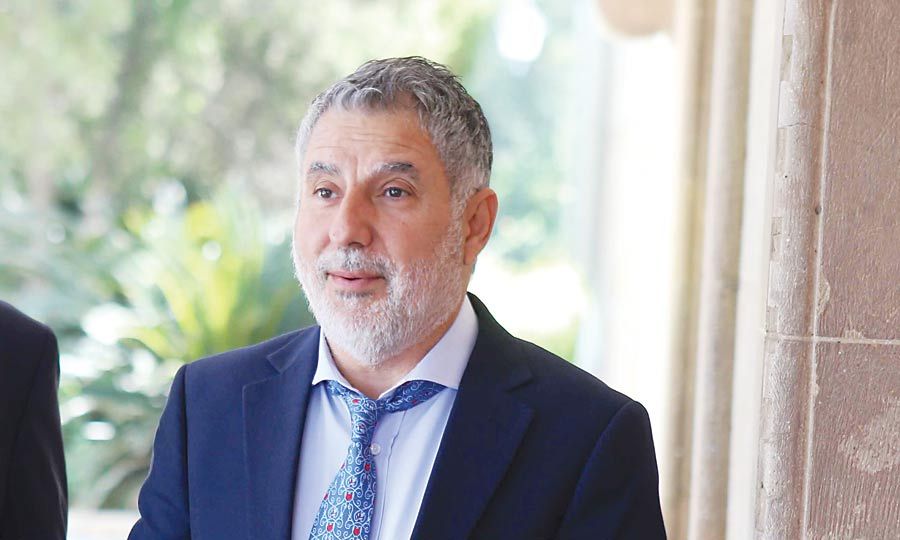 President of the Pancyprian Medical Association
"The rapid development of medical science and technology is constantly creating new possibilities for the prevention, diagnosis and treatment of diseases.
At the same time, however, the development of digital communication, social media and the direct marketing of health services and products has created a new and particularly complex environment for the citizen.
Today, a wide range of services and interventions are promoted in terms such as "innovative", "regenerative", "anti-ageing", "longevity", "detox", "holistic" or "alternative", while at the same time pharmaceuticals or other preparations, injectable products, biological substances and services accompanied by therapeutic or diagnostic claims are available online.
The issue is not the name of a treatment or the innovation itself. Medicine is evolving precisely because scientific knowledge is evolving and new therapeutic possibilities are constantly being developed and evaluated.
The crucial question is whether what is offered to the citizen is based on sufficient scientific documentation, provided by properly trained professionals, uses legal and appropriate products and equipment, is applied under safe conditions and presented in an honest and not misleading manner.
Particularly important is the distinction between an established medical procedure and its use for indications for which there is no corresponding scientific documentation.
A typical example is plasmapheresis, which is an established treatment method for specific indications. As the Cyprus Society of Nephrology has recently pointed out, its implementation must be based on a clear medical indication and scientific documentation.
The same is true of any medical technology or therapeutic practice: the fact that a method is scientifically accepted in specific indications does not mean that every other use or any related therapeutic claim is equally substantiated.
In an environment where scientific information often coexists with commercial exaggeration and where the citizen is called upon to evaluate particularly complex therapeutic claims, the Cyprus Medical Association considers that it has an institutional responsibility to actively contribute to the valid information, prevention and strengthening of patient safety."
Vassos Economou: Clear rules and control are needed
 Former Chairman of the Ethics Committee of the PIS
"The spread of so-called alternative therapies and the absence of a clear institutional framework for their implementation and control create serious issues for patient safety and the functioning of the health system.
Practices such as homeopathy, acupuncture, chiropractic, reflexology, and other methods have gained significant popularity, yet in many cases they are practiced by people without recognized medical training. The problem becomes more acute when unapproved schools or seminaries (existing in Greece) provide titles and "diplomas", without substantial state or scientific control.
The main issue is the creation of supervision mechanisms, the licensing of those who provide health services and the establishment of specific criteria for training and continuous evaluation. Each therapeutic formulation or method should be evaluated based on three key parameters: safety, efficacy, and quality control.
Of particular concern is the promotion of products as "miracle cures" for serious diseases, often with science-based terminology, unsubstantiated testimonies and conspiracy claims by the scientific community or pharmaceutical companies. The greatest risk is not always the alternative treatment itself, but the possibility that a proven effective medical treatment will be delayed or abandoned.
Incidents of adverse reactions associated with complementary therapies, from infections and nerve damage to delayed diagnosis of serious diseases, have been recorded internationally.
Conventional medicine is not free from errors or risks. The difference, however, is that it is based on scientific screening, evaluation and review processes. Personal experience or the feeling that a treatment "worked" is not scientific proof in itself, as the natural progression of a condition, placebo or parallel conventional therapy may be involved.
The key takeaway is that the absence of a clear and effective framework leaves both patients and healthcare professionals exposed. Clear rules, scientific criteria and substantial control are required, in order to protect the health of the citizen first and foremost."
