
Andri Nicolaou left Cyprus for Britain in 2003. Twenty-three years later, she is awarded the British Empire Medal (BEM) for her work in preventing and addressing the exploitation of minors.
She moved to Bristol in the early 2000s to be close to her husband, she told en.philenews. As she was trying to adjust to her new life in Britain, she visited a job agency and asked, "Is there anything I could do?"
The office initially secured her a three-week job in the child abuse investigation team at the Police headquarters. The fact that he had served in the army was considered an additional qualification.
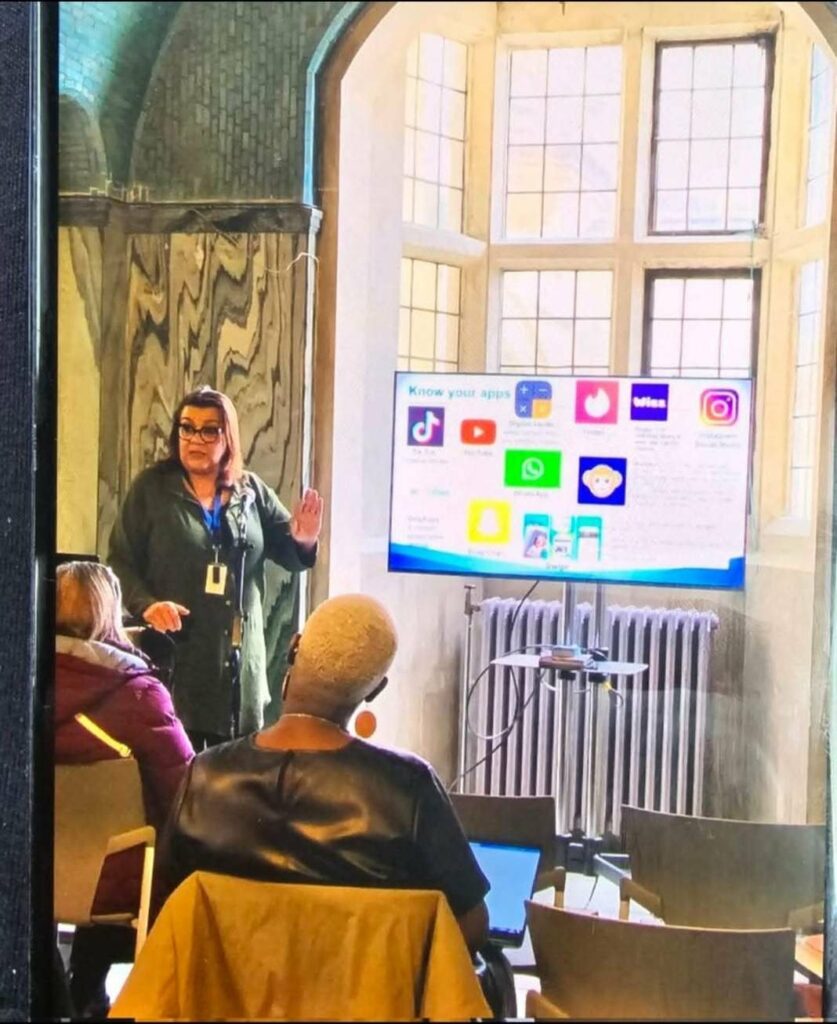
At first, Andri registered reports of child abuse incidents in the system. As she told en.philenews, her employers thought she "could endure" the item, due to her experience in the military.
"I went and never left. Twenty-three years later, I'm still there."
In the Cypriot National Guard she had reached the rank of sergeant. Her work there had nothing to do with the world in which she works today. Although it was something completely different, she told us that she loved her new job just as much.
Over time, he began to become more and more involved in affairs. She started as an administrator, but at one point she told the team that she didn't just want to answer phones, but to actively participate in the investigations.
"So I started getting involved and going out with the detectives."
A few years later, the death of a child in Britain led to the creation of functionaries under the "Every Child Matters" policy. Her boss at the time thought she was ideal for the position, but she needed special approval, as she was not a police officer.
Andri became the first non-police officer in Britain to take on the role of officer on "Every Child Matters".
She says she loved this job, which included cases of missing children and, most importantly, building relationships of trust with minors. The fact that she was not a police officer turned out to be an advantage, as children often felt more comfortable with her than with a uniformed policeman.
Her role changed again later, when she began representing the Police in meetings on cases involving childcare, together with their family members, social workers and other professionals.
Before each such meeting, she researched the parents' history, examining whether there were criminal offenses or other information against them, and presented her findings.
Although she enjoyed this job very much, the affairs were often extremely difficult. As he said, he had to investigate the history of parents who were murderers, sex offenders and people with all kinds of serious criminal backgrounds.
After the Rochdale sex abuse case came to light, Andri began working on a project of the British Home Office's Innovation Fund, which covered seven local authorities.
When the program was completed, in 2016, it moved to the position it holds until today.
From then on, she formed her own area of expertise: exploitation, grooming and prevention, with a special emphasis on education.
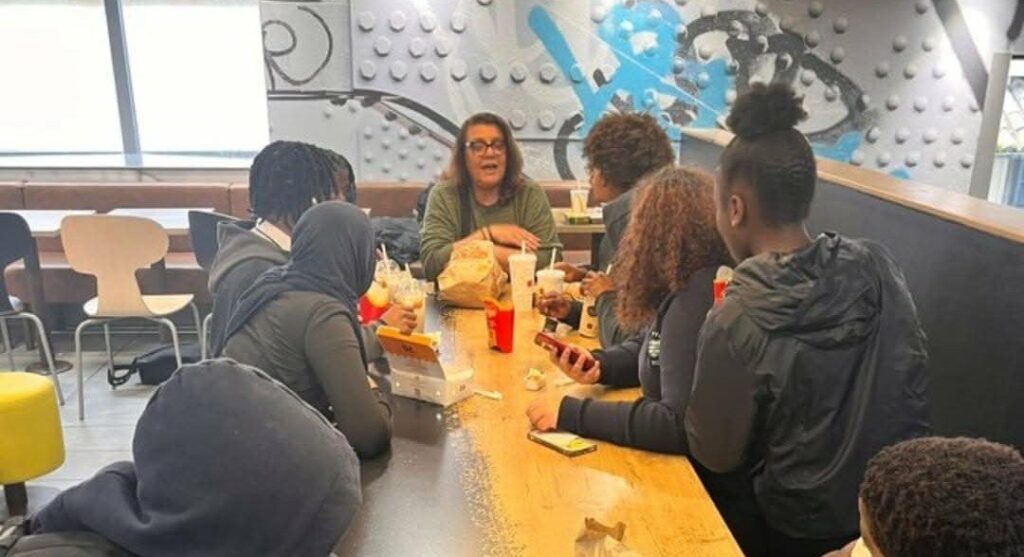
She began to visit children's shelters, in order to get to know them and create relationships of trust before would-be perpetrators could approach them. Then she began to visit schools.
Today she also works with doctors in the Emergency Departments, whom she trains to recognize signs related to knife crimes and children at risk. At the same time, she works with taxi drivers and hoteliers, even organizing discreet operations in hotels with the aim of preventing rape.
Her presentations are adapted according to the audience.
In primary schools, where it is addressed to younger children, it does not lead the discussion itself. Instead, she lets the children determine her course.
She asks them questions about the internet and gradually leads them to the question of whether they think something can go wrong online. The first answer, she says, is usually about inappropriate content.
She has also found how much bullying has changed. Previously, a child could at least escape from it when he returned home. Today, those who harass it can also follow it online.
She is also particularly impressed by the way children perceive "danger from strangers" in the real world compared to the internet.
They understand that they shouldn't talk to strangers on the street, she says, but almost all of them admit to chatting or playing online games with people they don't know.
According to what she has found, one of the most popular online games among children aged seven to nine is Grand Theft Auto, and some children even play with their parents.
Her message is not that children should be completely cut off from the online world, but that they should be aware of its dangers.
Bans, she explains, can make things worse, as when the next incident happens, the child may be so scared that he won't speak.
''If a child is beaten in the park, we don't beat him when he gets home. We embrace it, comfort it and try to find solutions. We don't do the same when it comes to incidents online, because we panic."
She has also noticed that older minors are gradually moving away from social media and alcohol consumption. In Bristol, she said, even non-alcoholic pubs have begun to open for those who prefer not to drink.
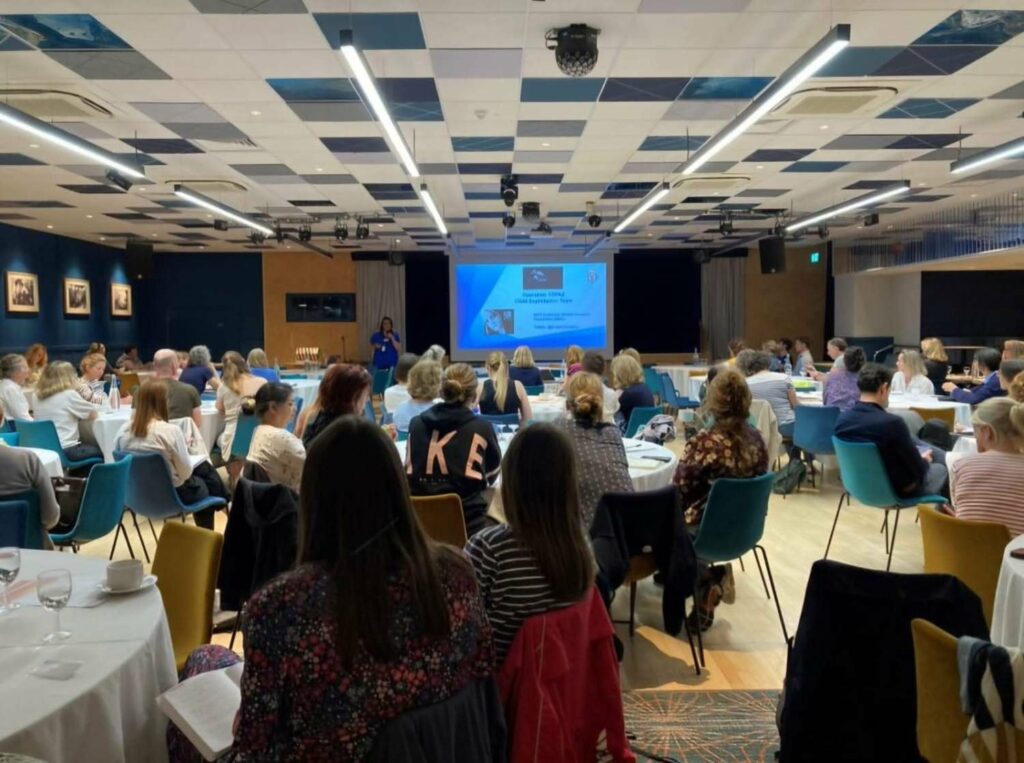
Andri also gives talks at colleges and universities across Britain, mainly to criminology and psychology students, while training psychotherapists and young detectives around these issues.
As she said, she would very much like to do something similar in Cyprus, however such a thing would be difficult due to the different systems and also because she does not legally have the status of a police officer in Cyprus either.
She has also recently started organizing conferences for young people who have been exploited.
In March, she spoke to a hundred girls at the police headquarters.
She spoke to the girls about issues of sexual information, including strangulation during sexual acts, which, as she claims, many young people mistakenly consider a normal part of sexual intercourse.
She also discussed with them ways in which they can protect themselves in their sexual relationships, while a survivor of sexual abuse also spoke at the meeting.
Andri plans to organize a similar meeting in December, this time for two hundred children aged 10 and 11.
As she says, the number of children who fall victim to grooming and exploitation has increased over the years.
She has even come across drug cases involving children as young as six years old. The perpetrators, she explains, know that if a child is arrested by the Police with drugs and the substances are confiscated, they can then exploit him even more, claiming that he "owes" them and forcing him to work for them.
"That's why parents have to be very careful and believe their children. This is what I tell everyone: believe your children. Why would a child lie that someone is abusing him?"
In one case, Andri visited a school to talk to eleven-year-olds about sexual consent after the school had reported incidents of sexual harassment between students.
She started with everyday examples of consent, such as "Can I use your phone?", before gradually moving on to the issue of sexual consent.
After the end of the presentation, a girl approached her along with a friend and revealed that she had been raped by his brother, saying that she had realized what had happened to her only after listening to Andri's speech.
In such cases, after a relationship of trust has been established, Andri makes sure that the victims get in touch with the competent services.
She also mentioned a second incident: a girl contacted her three months after a conference to reveal that she had been sexually assaulted, explaining that it was only after Andri's presentation that she realized exactly what had happened to her.
Andri and a detective who had also attended the conference went to meet the girl, who felt relieved to be able to talk to people she already knew.
Andri was informed by letter that she would be honoured with the British Empire Medal about two months before the official announcement of the award.
She only told her husband and learned that the news had now been made public while she was patrolling a Bristol park known for drug trafficking.
She is now waiting to be informed of the date when the Lord Lieutenant will award her the medal in Bristol.
She will then be invited to a reception in the palace gardens, where she will be greeted by either King Charles and Queen Camilla or Prince William and Catherine, Princess of Wales.
She says she never expected the discrimination to arouse so much interest, until people from different places started contacting her.
"I'm not going to lie, I was shocked. I haven't realized it yet. It's like thinking "no, they're going to take it back, it was a mistake". But, it seems, it didn't happen. I am very proud."
She also stressed that she is entirely Cypriot and that to date she has not acquired British citizenship.
"I am very proud," she reiterated, adding that she is very happy to represent the Cypriots.
Along with her professional activity, Andri also has a strong presence in the Greek community of Bristol.
For the last twelve years she has been president of the city's Greek school, while she is also responsible for child protection issues.
She is also going to meet with Maria Louis, representative of the Cyprus Educational Mission, in the context of organizing a conference on child protection.
Andri also recommends internetmatters.org and iwf.org.uk websites as useful sources of information on child exploitation, as they provide simple guides on how to prevent and deal with such incidents.
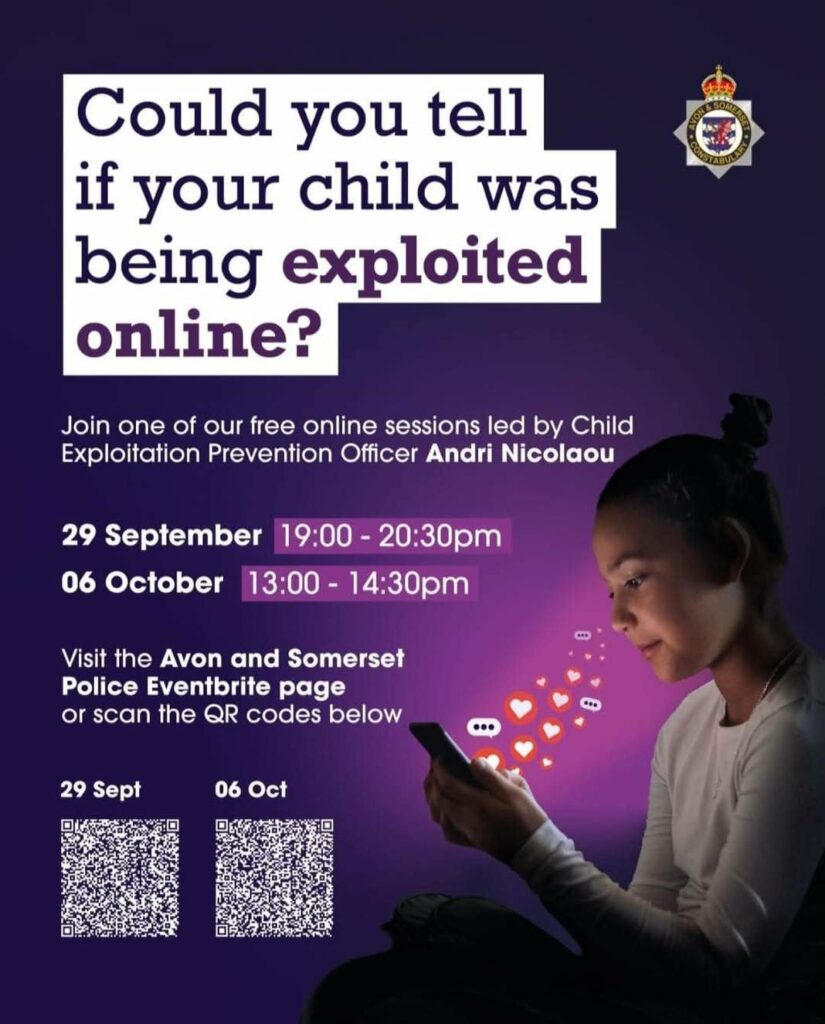
In the coming months, she will organize two free online meetings, on September 29 and October 6, which will be open to participants from all over the world via QR code.
