
IMMIGRATION - SPENDING ON BENEFITS DOWN FROM €49 million to €12 million - SHARP REDUCTION IN IRREGULAR ARRIVALS - NEW DIGITAL SYSTEM FROM 2027 - Filenews 24/9 by Andreas Athanasiou
Of the €49 million. to about €12 million. the expenditure on benefits was reduced, according to what the Deputy Minister of Migration Nikolas Ioannidis stated before the Audit Committee, who argued that the picture in immigration has "changed drastically" compared to the period examined by the Audit Office.
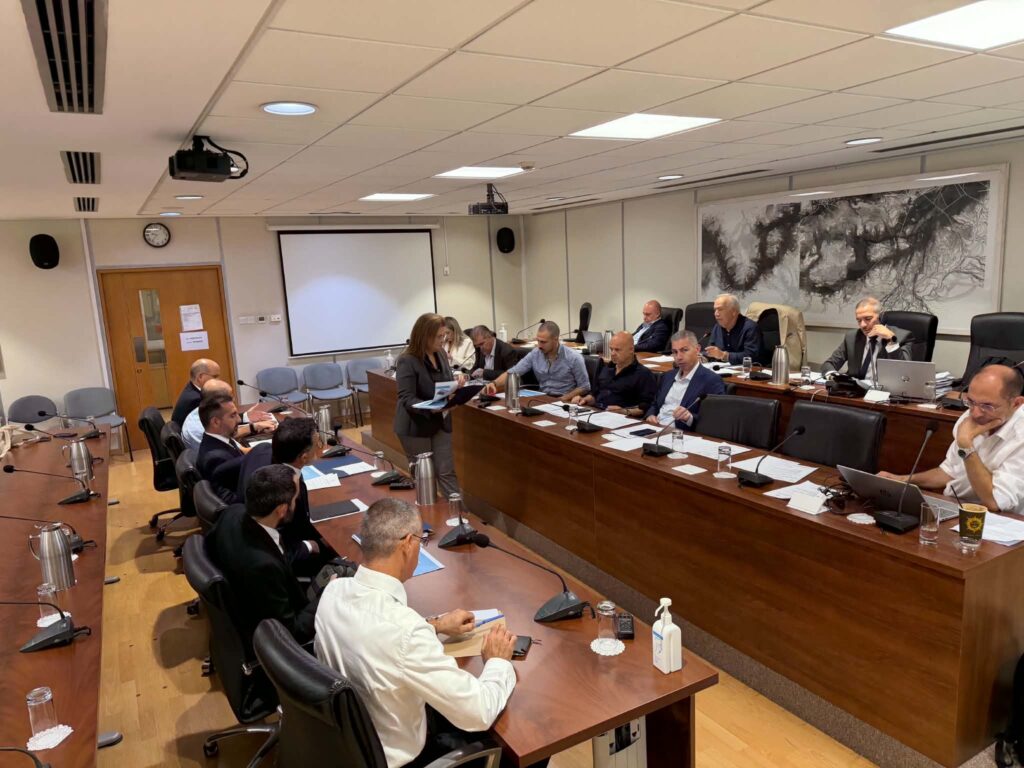
The Committee examined the current data on immigration, with the Deputy Ministry, the Police and the other services involved presenting the progress that, as they mentioned, has been made in recent years, but also the next steps, mainly in terms of the interconnection of information systems.
According to the data presented, irregular arrivals in the first eight months of 2026 decreased to 968, from 11,920 in the corresponding period of 2022. By the end of September, as the Deputy Minister mentioned, they had amounted to about 1,110. The picture is similar in new asylum applications, which decreased from 15,154 in the first eight months of 2022 to 1,135 in 2026.
Pending applications, which were close to 24,000 when the Deputy Ministry was created in June 2024, are now around 13,000. "In about two years they have been reduced by almost half," said Mr. Ioannidis.
Particular reference was made to the Syrians, who remain the largest national team among the pending applicants. New Syrian applications fell from 6,177 in 2023 to 915 in 2025 and to 169 by August 2026.
The Deputy Minister stated that from 2025 the examination of these cases has also been significantly accelerated. As he said, more than 2.500 applications from Syrians have been rejected, while several hundred protection statuses have also been revoked. He clarified that the revocations were not only made for cases of delinquent behaviour, but also because after the change of regime in Syria, the data taken into account in the examination of cases changed.
In returns, the Deputy Ministry presented 6,116 for the first eight months of 2026, while in 2025 the total departures exceeded 12,000. Mr. Ioannidis also mentioned that in the last three years the returns have reached about 40,000.
A central issue in the discussion was the upgrading of information systems, as the inability of the services to have a common and direct picture of the entry and exit of foreigners was one of the most serious problems that had been identified.
"We are working on upgrading the information systems and their interconnection, so that we can monitor every foreigner entering the country," said the Deputy Minister, adding that the process has progressed significantly.
On the part of the Police, Michalis Katsounotos stated that "significant progress" has been made in the technological part and that Cyprus is very close to the installation of the Entry/Exit system. As he said, the system is expected to be installed next March, which is considered particularly important for the recording of inputs and outputs and the interoperability of databases.
It should be noted that the EES is already fully operational as of 10 April 2026 at the external borders of the countries participating in the system, with the exception of Cyprus and Ireland. It replaces manual passport stamping and electronically records the entries and exits of third-country nationals travelling for short stays, along with travel document details and biometric data such as fingerprints and facial image.
On behalf of the police, Christos Mouis, director of YAM, stated that the services used the report of the Audit Office as guidance and proceeded with corrective actions. He even noted that recently 56 people were deported with the assistance of Frontex.
Interest was also aroused by Mr. Katsounotos' report that Austrian officials are expected to visit Cyprus in order to see up close the procedures being implemented.
In the discussion on the Green Line and the Gate, Mr. Katsounotos said that several actions have been taken in the context of the preparation for Schengen, while a legal instrument agreement with the British Bases is near.
At the same time, he stated that the patrols and operations of the Police continue, on the basis of information received about illegal residents and traffickers.
In addition to irregular migration, the Deputy Minister also emphasized the developmental role that, as he said, legal migration must acquire. Special reference was made to the needs for labor in agriculture, livestock and fish farming, but also in other sectors of the economy.
"We want to turn migration from a problem into a solution," was the position he expressed, noting that the attraction of labor should be done in a targeted manner and through legal channels.
In the same context, the digitization of services is proceeding. Since July, online services have begun to be provided for specific categories of licenses, while in 2027 the categories of applications that can be renewed electronically will increase.
The Deputy Ministry is also planning for 2027 a new electronic application monitoring service. Those interested will be able to see online what stage their case is at and be informed by SMS or email about its approval or rejection, as well as about the issuance of their card.
Almost 200,000 active residence permits
Until August, the valid residence permits of third-country nationals in Cyprus amounted to 197,055, according to the data presented by the Deputy Ministry of Migration to the Commission.
The largest category concerns domestic employment, with 34,191 permits or 17.4% of the total. This is followed by immigration permits with 30,316 or 15.4%, general employment with 27,736 or 14.1% and employees in foreign interest companies with 24,446 or 12.4%.
