
Cypriot viticulture is at one of the most critical turning points, with the data of the last four years demonstrating the dramatic situation. The combination of prolonged drought, heatwaves and the epidemic spread of downy mildew has dealt a heavy blow to the sector, causing a dramatic shrinkage in production, a deadlock in the wine industries and strong concerns about the future of the wine sector in the country.
According to the head of the Viticulture – Oenology Branch of the Department of Agriculture, Giorgos Neophytou, the average receipt of grapes from winemaking businesses for the decade 2016-2025 amounted to 14.5 million. kilos. Based on the Department's data, as well as the experience of recent years, the satisfactory annual quantities to meet the needs of the market and manage stocks range between 13 and 16 million. kilograms. These quantities serve the existing needs of wineries on the basis of market requirements and the ability to manage their stocks. Indicatively, in 2022 production had skyrocketed to 22 million kg, demanding emergency state aid to manage the surpluses. In particular, the State was forced to make significant subsidies for unsold grapes and for the management of the surpluses of wine kept in their stocks by wineries.
However, in the previous three years (2023, 2024 and 2025) there has been a steady decline in deliveries below average, with 10.2, 11.1 and 12.3 million kilograms respectively. For this year's harvest, estimates speak of extremely low levels, similar to those of the years 2023 and 2024.
According to Mr. Neophytou, large investments were made in viticulture, with the result that from 4 wine industries in the 80s we reach 70 wineries today. He added that the quality of Cypriot wines is no longer disputed by anyone.
At the same time, the registered vineyard area in the vineyard register amounts to 65,000 decare. Although this area is considered to meet the current needs of the market, its gradual reduction after the accession of Cyprus to the EU is indisputable.
Mr. Neophytou stated that it is important to maintain and why not increase the area of tens in the vineyard register. He underlined that Cypriot wine occupies the largest piece of the pie in the Cypriot market. As he characteristically said, 60% of the wines sold in Cyprus are domestically produced, noting that people emphasize good wine and indigenous varieties. However, he described it as encouraging to give consumers the opportunity for cheap wine, an option provided by imported wines.
In addition to adapting to the rules of supply and demand of the European market, there are important socio-economic factors, such as:
The aging of the rural population.
The shift of young people to other professions
The great physical effort required.
The meagre and uncertain income of viticulturists.
According to the Department of Agriculture, all stakeholders, both public and private, must orient themselves and take actions to encourage the maintenance of the wine-growing area at levels that meet the current needs of the market.
It should be noted that the European Union places particular emphasis on the wine sector, which has always been part of the framework of the Common Agricultural Policy, with which Cyprus is fully aligned and adapted to the particular conditions prevailing in the country. In the context of the long-term policy implemented by the Department of Agriculture and the Ministry of Agriculture, Rural Development and Environment in general, the following are included:
Implementation of Wine Interventions on an annual basis with an annual budget of €4.5 million:
According to the Department of Agriculture, all stakeholders, both public and private, must orient themselves and take actions to encourage the maintenance of the wine-growing area at levels that meet the current needs of the market.
It should be noted that the European Union places particular emphasis on the wine sector, which has always been part of the framework of the Common Agricultural Policy, with which Cyprus is fully aligned and adapted to the particular conditions prevailing in the country. In the context of the long-term policy implemented by the Department of Agriculture and the Ministry of Agriculture, Rural Development and Environment in general, the following are included:
Implementation of Wine Interventions on an annual basis with an annual budget of €4.5 million:
"Restructuring and Conversion of Vineyards": financial support from €1410 to €1980 per tenacio depending on the altitude of the vineyard parcel,
"Construction and repair of traditional dry stone walls in wine vineyards":
financial support from €32/sq.m. to €54/sq.m. for the construction and from €11.5/sq.m. to €17.5/sq.m. for the repair, respectively, depending on the altitude and slope of the vineyard,
"Modernization – visitor investments in wineries":
financial support of up to 40% of the eligible costs,
'Promotion of wines in third countries':
financial support of up to 50% of eligible costs
"Updating quality wines in EU Member States":
financial support of up to 50% of eligible costs
"Green harvest": Financial support of up to 50% of eligible costs (applied in times of crisis, e.g. Covid).
Other common Interventions of the CAP Strategic Plan 2023 – 2027 that address and support the viticulturist of our country:
Basic income support (€23.27 per tenk),
Additional redistributive income support (€2.87 per tenk),
Aid to areas facing natural or other handicaps (from €5.5 to €14 per tenk),
Crushing and incorporation of plant residues into the soil (€20 per tenk)
Exclusion of the use of herbicides (€70 per tenk),
Small-scale maintenance or maintenance of existing dry stone walls within a parcel (€34 per tenk), and
Preservation of native varieties (€30 per tenk)
Preservation of old vineyards aged from 35 – 65 years old (from €30 – €60 per tenk).
Maintenance of approved Commandaria vineyard parcels (€80 per tenk)
Organic viticulture (€120 per tenk)
State Aid SchemesActions that contribute to the reduction of the risk of the occurrence and spread of catastrophic fires – Action 1 Restoration and revival of viticultural land. With a budget of €2.5 million. Financial support of €1090 and €1414 per tenk depending on the altitude.State aid depending on the circumstances for compensation for natural damage (drought, hail and phytochemicals).
Consulting Services: Provision of consulting services to winegrowers and winemaking companies on issues of viticulture, oenological practices, labeling of wine products, designations of origin, geographical indications, etc.
Laboratory analyses: Provision of services in laboratory analyses of wines to improve quality.
Protected Designations of Origin – Geographical Indications: Support for the preparation of technical dossiers and modification of existing technical dossiers for PDO – PGI wines.
State Aid SchemesActions that contribute to the reduction of the risk of the occurrence and spread of catastrophic fires – Action 1 Restoration and revival of viticultural land. With a budget of €2.5 million. Financial support of €1090 and €1414 per tenk depending on the altitude.State aid depending on the circumstances for compensation for natural damage (drought, hail and phytochemicals).
Consulting Services: Provision of consulting services to winegrowers and winemaking companies on issues of viticulture, oenological practices, labeling of wine products, designations of origin, geographical indications, etc.
Laboratory analyses: Provision of services in laboratory analyses of wines to improve quality.
Protected Designations of Origin – Geographical Indications: Support for the preparation of technical dossiers and modification of existing technical dossiers for PDO – PGI wines.
Cry of anguish from LOEL and KEO
Executives of the LOEL and KEO wine industries contacted by "F" described the current situation in black colours. As they explained, viticulture has been facing continuous adverse conditions since 2023 due to adverse weather conditions. This year, the onslaught of downy mildew in the vineyards of Paphos and Limassol gave the "coup de grace", causing the complete disappearance of production in some areas.
As a result, the wine industries are limited for the fourth consecutive year to receipts that do not exceed 50% of their real needs, thus trying to survive with constantly reduced quantities compared to their real needs. In particular, the two wine companies, instead of the annual needs of 4-6 million kilograms of grapes, will vinify much smaller quantities. They described the consequences of this situation as many and serious.
Based on the experiences of the two major wine companies of the place and from the daily contacts with their viticultural partners, the onslaught of the disease seems to have been rapid and simultaneous in the two main wine-growing districts of Paphos and Limassol. They point out that this is a tragic picture of the complete lack in some areas and the very limited harvest in some others. Industries will be forced to import wine from the European market for certain needs. This solution, however, does not cover the needs for Protected Geographical Indication (PGI) and Protected Designation of Origin (PDO) products, local wines that will be listed as a "Cypriot product" such as Xynisteri and Maratheftiko, but also in the production of Zivania and Commandaria, which are a very important part of the wine products of the two wine industries.
The companies warn of a sharp increase in production costs and the inability to retain staff due to the limitation of processing operations, with a serious possibility of redundancies in the absence of support measures. In particular, with the proven serious increase of a number of other production costs such as electricity, fuel and raw materials, the increase in the cost of wine is added for the fourth year, which will further raise the total cost of production.
LOEL and KEO emphasize that, in addition to compensation to winegrowers, the Government must also directly support the wine industries, considering their long-term contribution to the absorption of Cypriot production. At the same time, they ask for the extraction of conclusions from the Plant Protection Services and the overall redesign of viticulture on the basis of European standards.
They point out that the issue of viticulture should be the subject of separate reflection, support, guidance and redesign for reasons that have to do with the Cypriot economy, tradition, but also environmental and social reasons, drawing valuable experiences from other European countries that prioritize it separately from the rest of the plantations and crops.
Executives of the LOEL and KEO wine industries contacted by "F" described the current situation in black colours. As they explained, viticulture has been facing continuous adverse conditions since 2023 due to adverse weather conditions. This year, the onslaught of downy mildew in the vineyards of Paphos and Limassol gave the "coup de grace", causing the complete disappearance of production in some areas.
As a result, the wine industries are limited for the fourth consecutive year to receipts that do not exceed 50% of their real needs, thus trying to survive with constantly reduced quantities compared to their real needs. In particular, the two wine companies, instead of the annual needs of 4-6 million kilograms of grapes, will vinify much smaller quantities. They described the consequences of this situation as many and serious.
Based on the experiences of the two major wine companies of the place and from the daily contacts with their viticultural partners, the onslaught of the disease seems to have been rapid and simultaneous in the two main wine-growing districts of Paphos and Limassol. They point out that this is a tragic picture of the complete lack in some areas and the very limited harvest in some others. Industries will be forced to import wine from the European market for certain needs. This solution, however, does not cover the needs for Protected Geographical Indication (PGI) and Protected Designation of Origin (PDO) products, local wines that will be listed as a "Cypriot product" such as Xynisteri and Maratheftiko, but also in the production of Zivania and Commandaria, which are a very important part of the wine products of the two wine industries.
The companies warn of a sharp increase in production costs and the inability to retain staff due to the limitation of processing operations, with a serious possibility of redundancies in the absence of support measures. In particular, with the proven serious increase of a number of other production costs such as electricity, fuel and raw materials, the increase in the cost of wine is added for the fourth year, which will further raise the total cost of production.
LOEL and KEO emphasize that, in addition to compensation to winegrowers, the Government must also directly support the wine industries, considering their long-term contribution to the absorption of Cypriot production. At the same time, they ask for the extraction of conclusions from the Plant Protection Services and the overall redesign of viticulture on the basis of European standards.
They point out that the issue of viticulture should be the subject of separate reflection, support, guidance and redesign for reasons that have to do with the Cypriot economy, tradition, but also environmental and social reasons, drawing valuable experiences from other European countries that prioritize it separately from the rest of the plantations and crops.
Viticulturists: Contributions of €1.2 million. and €6.5 million in aid.
Responding to the challenges, the Minister of Agriculture, Rural Development and Environment, Christos Senekis, underlined that supporting the wine sector is a constant priority of the Government.
The Minister noted that by 2027, through the Interventions of the Strategic Plan of the Common Agricultural Policy (CAP 2023-2027), approximately €22 million will be allocated. These resources are channelled into the restructuring of vineyards with marketable varieties, the restoration of dry stone stones, the modernization and visitation of wineries, as well as the promotion of Cypriot wines in third countries.
To deal with the effects of downy mildew and extreme weather events, the National State Aid Framework is activated for crops with a production loss of more than 50% (including the Mavro and Xynisteri varieties). In addition, an emergency de minimis aid scheme is established to cover losses over 30% in additional varieties.
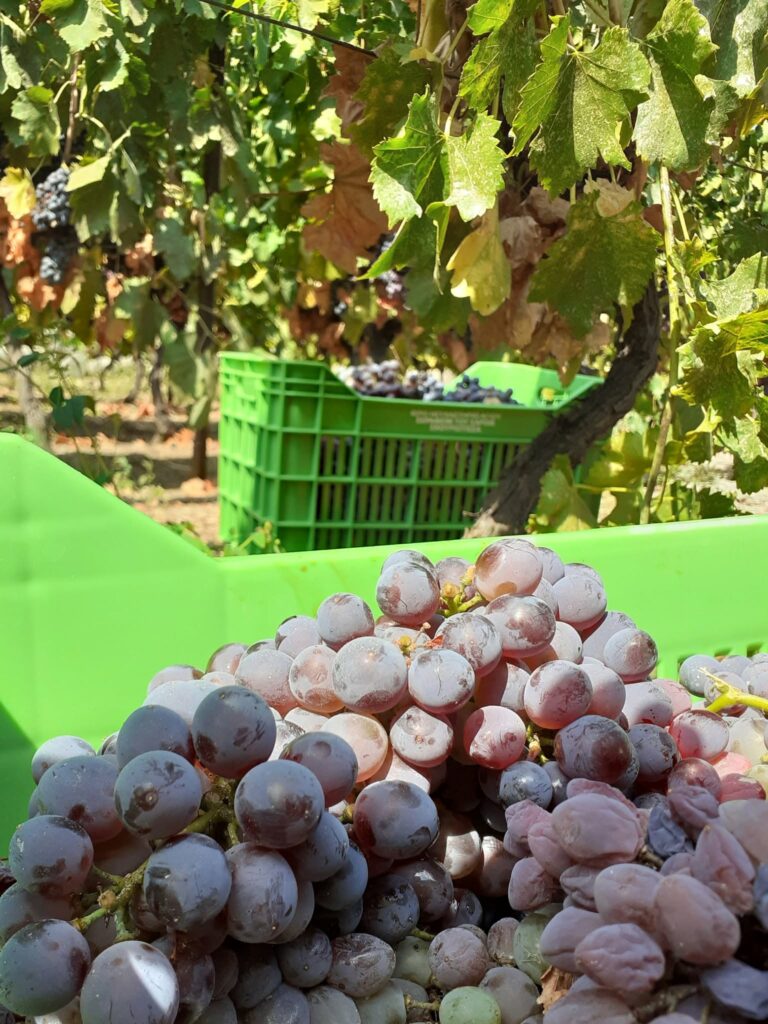
Viticulturists of wine varieties pay an annual levy of €3.15 per ten, while for table vines the amount is €6.75 per ten. Since 2019, when the new risk management system was launched, winegrowers have paid approximately €1.2 million. contributions and have received aid exceeding €6.5 million. With this year's planned aid, aid will be further increased.
A winegrower can only receive aid if he falls within a wider affected area, defined as a cluster of communities with uniformity of crops and soil morphology, for the specific varieties he grows. If the damage has affected only one winegrower individually or a small number of people, and has not caused a loss of income of at least 50% in the cluster of communities, it is not eligible for aid through the National Framework.
The National Framework moves broader than individuality so that the conclusion concerns a much larger area and is objective as far as downy mildew is concerned. Individual factors may favour or limit downy mildew such as adequate spraying at the right time, the general condition of the vine, the morphology of the soil, etc. The presence of downy mildew infestations has been observed in neglected plantations, even in years when downy mildew in general was not favoured by the conditions. Producers must be diligent with their plantations, and in case they find problems from downy mildew at the level of a community cluster, they should immediately inform the Department of Agriculture.
Responding to the challenges, the Minister of Agriculture, Rural Development and Environment, Christos Senekis, underlined that supporting the wine sector is a constant priority of the Government.
The Minister noted that by 2027, through the Interventions of the Strategic Plan of the Common Agricultural Policy (CAP 2023-2027), approximately €22 million will be allocated. These resources are channelled into the restructuring of vineyards with marketable varieties, the restoration of dry stone stones, the modernization and visitation of wineries, as well as the promotion of Cypriot wines in third countries.
To deal with the effects of downy mildew and extreme weather events, the National State Aid Framework is activated for crops with a production loss of more than 50% (including the Mavro and Xynisteri varieties). In addition, an emergency de minimis aid scheme is established to cover losses over 30% in additional varieties.
Viticulturists of wine varieties pay an annual levy of €3.15 per ten, while for table vines the amount is €6.75 per ten. Since 2019, when the new risk management system was launched, winegrowers have paid approximately €1.2 million. contributions and have received aid exceeding €6.5 million. With this year's planned aid, aid will be further increased.
A winegrower can only receive aid if he falls within a wider affected area, defined as a cluster of communities with uniformity of crops and soil morphology, for the specific varieties he grows. If the damage has affected only one winegrower individually or a small number of people, and has not caused a loss of income of at least 50% in the cluster of communities, it is not eligible for aid through the National Framework.
The National Framework moves broader than individuality so that the conclusion concerns a much larger area and is objective as far as downy mildew is concerned. Individual factors may favour or limit downy mildew such as adequate spraying at the right time, the general condition of the vine, the morphology of the soil, etc. The presence of downy mildew infestations has been observed in neglected plantations, even in years when downy mildew in general was not favoured by the conditions. Producers must be diligent with their plantations, and in case they find problems from downy mildew at the level of a community cluster, they should immediately inform the Department of Agriculture.
Affected areas and compensation plan
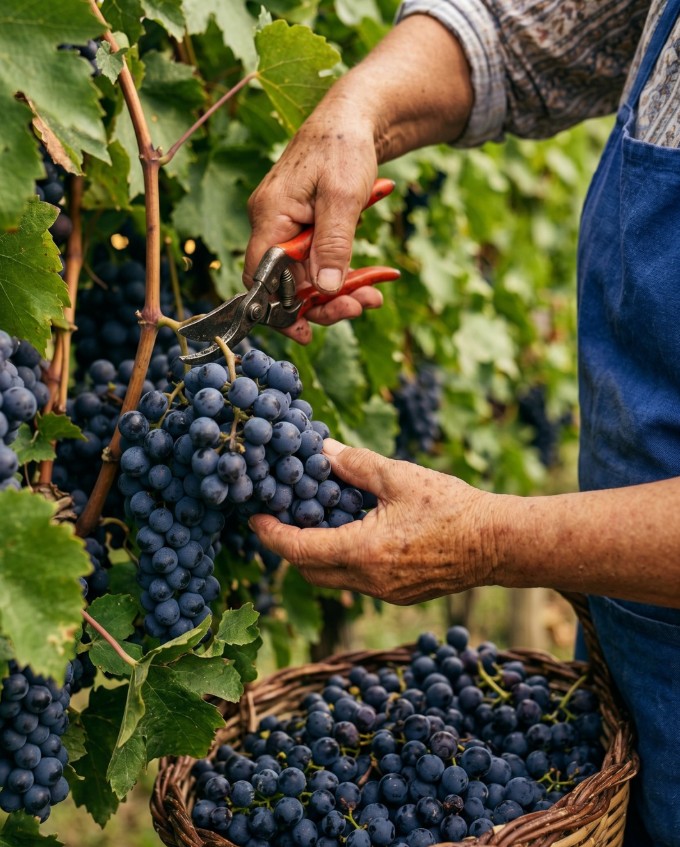
The technical details of the damages and the support plans are clarified by the Department of Agriculture. Based on Law 103(I)/2019-2021 and the National Framework, damage from fungal diseases such as downy mildew is compensated if it takes an epidemic form in community clusters with an average loss of at least 50%.
Damage from plant diseases, including downy mildew of vines, can be assessed on the basis of the above legal framework if they take an epidemic form. A prerequisite is the existence of a wider affected area, defined as a cluster of communities characterized by homogeneity of crops and soil morphology, and in which the average loss from downy mildew is at least 50% of the average yield of the vines. Downy mildew is a fungal disease favoured by the combination of high humidity and moderate temperatures, while areas without ideal ventilation such as deep valleys are particularly vulnerable.
The technical details of the damages and the support plans are clarified by the Department of Agriculture. Based on Law 103(I)/2019-2021 and the National Framework, damage from fungal diseases such as downy mildew is compensated if it takes an epidemic form in community clusters with an average loss of at least 50%.
Damage from plant diseases, including downy mildew of vines, can be assessed on the basis of the above legal framework if they take an epidemic form. A prerequisite is the existence of a wider affected area, defined as a cluster of communities characterized by homogeneity of crops and soil morphology, and in which the average loss from downy mildew is at least 50% of the average yield of the vines. Downy mildew is a fungal disease favoured by the combination of high humidity and moderate temperatures, while areas without ideal ventilation such as deep valleys are particularly vulnerable.
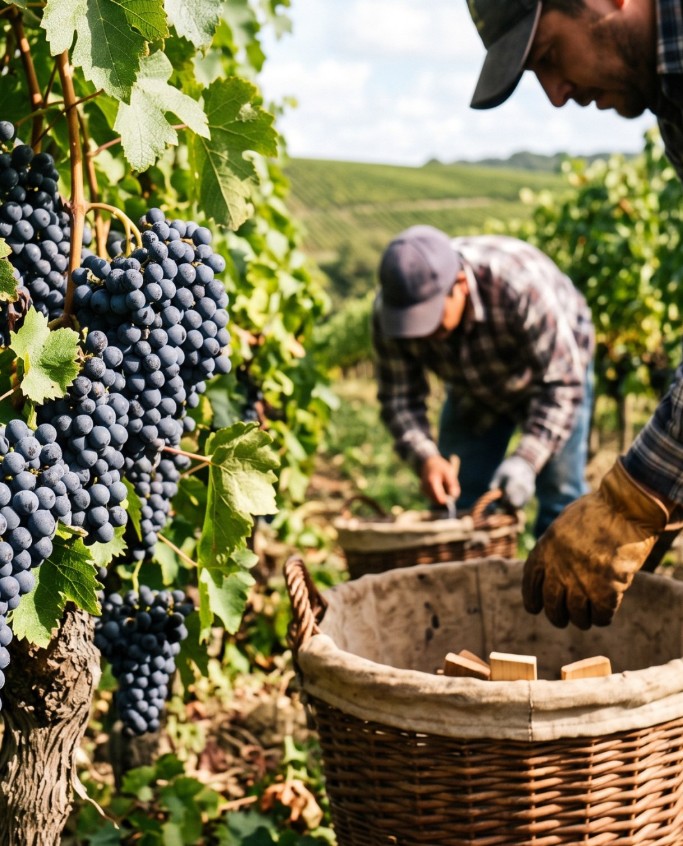
The Department of Agriculture, with daily tours of the wine-growing regions starting from the beginning of May 2026, has carried out an evaluation of all damage notices submitted by winegrowers. A large number of on-site sampling was carried out in several communities, which intensified as the ripening of the grapes progressed, as it was found that the weather conditions in at least some areas remained favourable for the spread of downy mildew.
Based on the sampling and evaluation of all available data, the Department of Agriculture proceeded to declare an area affected by downy mildew, within which an average loss of production of at least 50% was found in all wine vines, and for those varieties that had a loss of at least 50%. It then proceeded to issue Announcements through which the affected persons were invited to submit a Damage Statement within a specified timeframe.
Affected Areas (National Framework)
Paphos District: A wider area of 61 communities has been declared affected for the varieties Mavro, Xynisteri, Maratheftiko and Vasilissa. 1,177 damage declarations were submitted.
Larnaca District: An affected area of 6 communities has been declared for the varieties Xynisteri, Mavro and Maratheftiko. 67 damage declarations were submitted.
The declarations of an affected area concerned exclusively wine grapes, in the designated communities of the districts of Paphos and Larnaca. In the rest of the areas, as well as in table grapes (e.g. coastal Limassol), the average damage did not exceed the 50% threshold and it was not possible to include them in the National Framework.
Supplementary De Minimis Plan (losses >30%)
The Ministry of Agriculture, Rural Development and Environment, having identified the serious problems that have arisen due to downy mildew, and understanding the difficulties that have been caused, has decided to further support viticulturists. Taking advantage of the possibility provided by the current legislation, instructions were given to prepare a special plan to cover the damages exceeding 30% at the level of the wider region, and the affected winegrowers will receive support on the basis of Regulation (EC) no. 1408/2013 concerning de minimis aid.
Through this approach, it became possible to include five additional varieties for the Paphos district in the same 61 communities and covers the varieties Karinian, Siartone, Assyrtiko, Promara and Giannoudi.
It also covers the varieties Mavro, Xynisteri, Maratheftiko and Vasilissa in a compact area of 2,500 decaries in Omodos and in the semi-mountainous area of the Limassol district.
The filing of damage declarations ends on September 21, 2026.
As the Department of Agriculture assures, the payment of financial aid to the affected winegrowers is scheduled to be completed before the end of 2026.
Supplementary De Minimis Plan (losses >30%)
The Ministry of Agriculture, Rural Development and Environment, having identified the serious problems that have arisen due to downy mildew, and understanding the difficulties that have been caused, has decided to further support viticulturists. Taking advantage of the possibility provided by the current legislation, instructions were given to prepare a special plan to cover the damages exceeding 30% at the level of the wider region, and the affected winegrowers will receive support on the basis of Regulation (EC) no. 1408/2013 concerning de minimis aid.
Through this approach, it became possible to include five additional varieties for the Paphos district in the same 61 communities and covers the varieties Karinian, Siartone, Assyrtiko, Promara and Giannoudi.
It also covers the varieties Mavro, Xynisteri, Maratheftiko and Vasilissa in a compact area of 2,500 decaries in Omodos and in the semi-mountainous area of the Limassol district.
The filing of damage declarations ends on September 21, 2026.
As the Department of Agriculture assures, the payment of financial aid to the affected winegrowers is scheduled to be completed before the end of 2026.
