
ANDREA RUTIGLIANO - ACTIVISM IS NOT A CRIME - in-cyprus 27/9 by Diana Aza
Every migration season, Andrea Rutigliano finds himself in the Cyprus media spotlight for his fight against poaching. The investigations officer of the environmental organisation Committee Against Bird Slaughter (CABS) is originally from Milan and lives on a rural property that he has turned into a sanctuary for birds. The protection of legally protected species has become his mission. Or, as Rutigliano puts it, a kind of “karma” – a way for him, as an Italian, to repay an old… Venetian debt.
Did you have this special connection with birds from an early age?
Although I grew up in Milan, I’ve loved wildlife since I was very young – going right back to nursery school. I remember my father giving me a pair of binoculars, and they were the best present I ever received! I could watch birds from my room, I would go to the public gardens, identify them using books, learn about the different species and even observe the differences between males and females.
My grandfather was a hunter and would give me pigeons or goldfinches that he had taken from nests, so I had the chance to get close to birds and actually touch them. But instead of becoming a hunter, I discovered a wildlife rehabilitation centre where you could take orphaned or injured birds. I asked them for help and began looking after the birds, feeding them, raising them and then releasing them back into the wild.
When did you begin taking a more active role in protecting them?
When I came into contact with the Italian forestry service, I learnt about anti-poaching operations and, from the age of 18, I began going up into the mountains, removing traps and rescuing my first birds.
“Is there really poaching in Italy?” I initially wondered. And yet it was Italians who exported the practice of trapping birds to many parts of Europe. That is why so many of the terms used are Italian. From the “posta” – the spot where hunters lie in wait – to Beretta guns, the Italian influence is everywhere.
Birds were trapped in Cyprus in the past as well, but for people’s own consumption. The Venetians taught Cypriots that they could make money from the practice, asking them to trap birds and send them to Italy. That was how bird trapping developed into a large-scale commercial trade.
So, in a way, this is “karma” for me. It is a way for us, as Italians, to repay our debt to the birds.
Although I grew up in Milan, I’ve loved wildlife since I was very young – going right back to nursery school. I remember my father giving me a pair of binoculars, and they were the best present I ever received! I could watch birds from my room, I would go to the public gardens, identify them using books, learn about the different species and even observe the differences between males and females.
My grandfather was a hunter and would give me pigeons or goldfinches that he had taken from nests, so I had the chance to get close to birds and actually touch them. But instead of becoming a hunter, I discovered a wildlife rehabilitation centre where you could take orphaned or injured birds. I asked them for help and began looking after the birds, feeding them, raising them and then releasing them back into the wild.
When did you begin taking a more active role in protecting them?
When I came into contact with the Italian forestry service, I learnt about anti-poaching operations and, from the age of 18, I began going up into the mountains, removing traps and rescuing my first birds.
“Is there really poaching in Italy?” I initially wondered. And yet it was Italians who exported the practice of trapping birds to many parts of Europe. That is why so many of the terms used are Italian. From the “posta” – the spot where hunters lie in wait – to Beretta guns, the Italian influence is everywhere.
Birds were trapped in Cyprus in the past as well, but for people’s own consumption. The Venetians taught Cypriots that they could make money from the practice, asking them to trap birds and send them to Italy. That was how bird trapping developed into a large-scale commercial trade.
So, in a way, this is “karma” for me. It is a way for us, as Italians, to repay our debt to the birds.
How deeply rooted is hunting culture today?
Its roots go back to the Middle Ages and historically it was associated with the powerful and the upper classes. Even today, many high-profile people go hunting.
Donald Trump Jr recently faced allegations over the hunting of a protected species in the Venice lagoon, while George H.W. Bush was a prominent member of Safari Club International and had been involved in efforts to lobby Botswana to lift its ban on lion hunting. During one of Berlusconi’s visits to Russia, Putin took him hunting, even though the former Italian prime minister was known not to be a hunter.
So we are talking about high-profile people who have access to decision-making centres in many countries. Hunters manage to exert considerable influence across Europe.
Although the younger generation is not as interested in hunting, and the number of hunters is declining even in countries such as Italy, France and Spain, they still enjoy significant political support.
Its roots go back to the Middle Ages and historically it was associated with the powerful and the upper classes. Even today, many high-profile people go hunting.
Donald Trump Jr recently faced allegations over the hunting of a protected species in the Venice lagoon, while George H.W. Bush was a prominent member of Safari Club International and had been involved in efforts to lobby Botswana to lift its ban on lion hunting. During one of Berlusconi’s visits to Russia, Putin took him hunting, even though the former Italian prime minister was known not to be a hunter.
So we are talking about high-profile people who have access to decision-making centres in many countries. Hunters manage to exert considerable influence across Europe.
Although the younger generation is not as interested in hunting, and the number of hunters is declining even in countries such as Italy, France and Spain, they still enjoy significant political support.
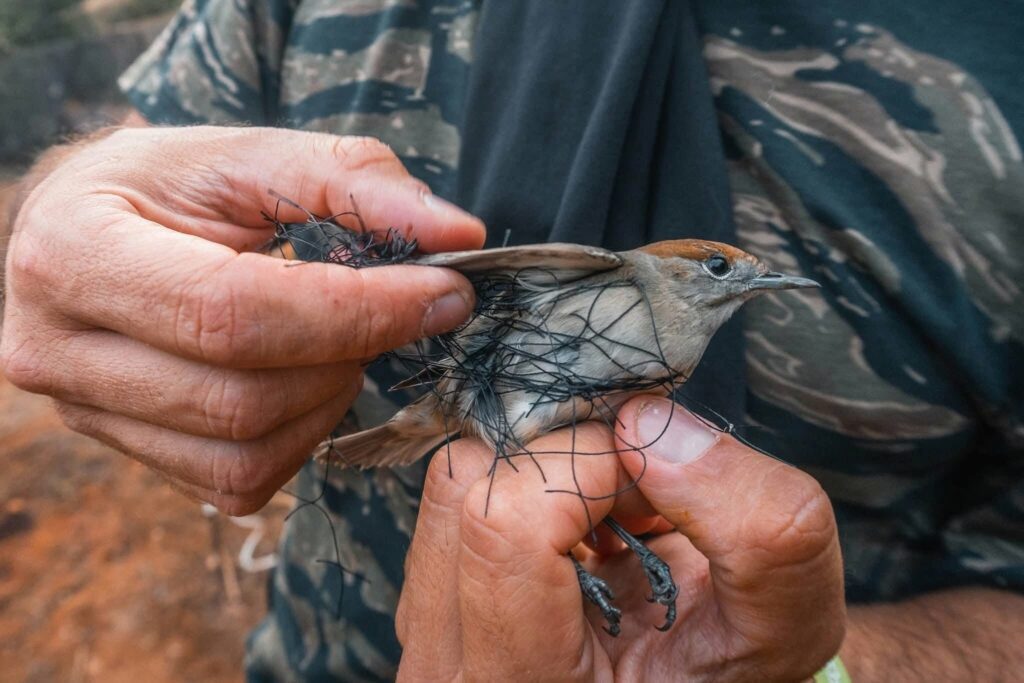
“The worst violence we have ever encountered has been in Cyprus. Nowhere else in Europe – not even in Lebanon – have I encountered people involved in hunting and trapping who operate like members of the mafia, making threats, having connections and enjoying some form of political protection.”
How did you become involved with CABS?
Through the group of volunteers I belonged to, I learnt from media reports about the nets being used in Cyprus. We were mostly teenagers and we simply could not accept that birds were being killed in Cyprus. We wanted to help.
So I came to the island for the first time in 2001 and we began dismantling the traps. CABS then told us they would support us and gave us money to carry out the operations for two years. We stopped for a while before starting again in a more organised way.
In 2009, I came for the first time as an employee, and I am now responsible for Cyprus, Greece, Italy, Spain and France.
Through the group of volunteers I belonged to, I learnt from media reports about the nets being used in Cyprus. We were mostly teenagers and we simply could not accept that birds were being killed in Cyprus. We wanted to help.
So I came to the island for the first time in 2001 and we began dismantling the traps. CABS then told us they would support us and gave us money to carry out the operations for two years. We stopped for a while before starting again in a more organised way.
In 2009, I came for the first time as an employee, and I am now responsible for Cyprus, Greece, Italy, Spain and France.
How do you train for such an unusual and demanding job? What are the main qualities and skills someone needs to join your team?
You need a fair amount of courage and stamina because we start work at around midnight and sometimes work for 36 hours straight, with almost no sleep, doing everything from fieldwork to dealing with the police.
You also need good observation skills and to know how to stay out of sight so that you aren’t spotted, as well as how to use technology. One of our fundamental principles is never to be aggressive. We have to be polite and keep our composure.
We are guests in this country, so we have to respect the law and the authorities. I think the two main things you need are to love birds and not think too much about the risks. As you can imagine, this job is not for everyone.
You need a fair amount of courage and stamina because we start work at around midnight and sometimes work for 36 hours straight, with almost no sleep, doing everything from fieldwork to dealing with the police.
You also need good observation skills and to know how to stay out of sight so that you aren’t spotted, as well as how to use technology. One of our fundamental principles is never to be aggressive. We have to be polite and keep our composure.
We are guests in this country, so we have to respect the law and the authorities. I think the two main things you need are to love birds and not think too much about the risks. As you can imagine, this job is not for everyone.
How much has changed in Cyprus since you first came here in 2001?
The trapping problem in Cyprus was much bigger then, although it was not as professionalised as it is today. Back then, trapping was more commonly carried out for personal consumption, but it was extremely widespread. So widespread, in fact, that you could leave your hotel, walk into the first patch of bushes you came across and find limesticks.
At the time, the police were either completely unaware of the problem or indifferent to it. I even remember police officers covering for trappers. Sometimes we suspected that we were handing the limesticks we had collected over to the police, only for the police to give them back to the trappers.
We now have better cooperation with the police, particularly during the 2014–2017 period. As a result, many trappers who could no longer continue operating professionally in the same way either gave up or became occasional trappers.
At the same time, however, those who were able to make a lot of money from the activity have evolved and expanded their operations. It is strange, because we know exactly who they are, where they operate and when, yet nobody stops them.
The trapping problem in Cyprus was much bigger then, although it was not as professionalised as it is today. Back then, trapping was more commonly carried out for personal consumption, but it was extremely widespread. So widespread, in fact, that you could leave your hotel, walk into the first patch of bushes you came across and find limesticks.
At the time, the police were either completely unaware of the problem or indifferent to it. I even remember police officers covering for trappers. Sometimes we suspected that we were handing the limesticks we had collected over to the police, only for the police to give them back to the trappers.
We now have better cooperation with the police, particularly during the 2014–2017 period. As a result, many trappers who could no longer continue operating professionally in the same way either gave up or became occasional trappers.
At the same time, however, those who were able to make a lot of money from the activity have evolved and expanded their operations. It is strange, because we know exactly who they are, where they operate and when, yet nobody stops them.
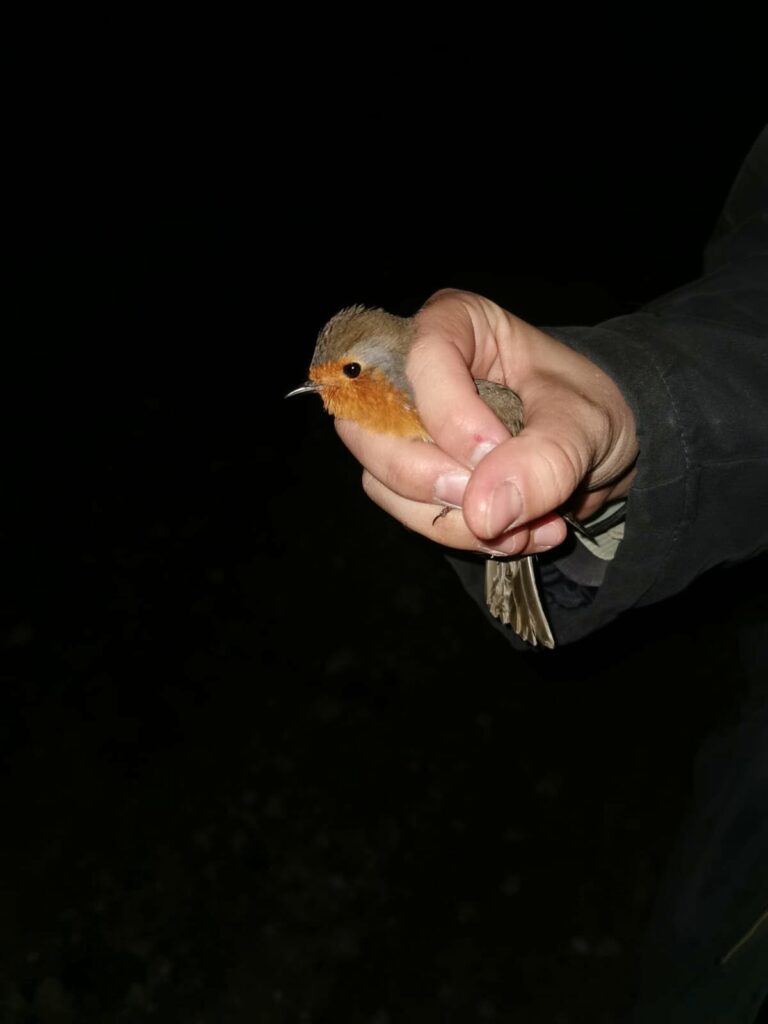
“The message I want to send to Cypriots is that when you eat these birds, you are not only harming the environment; you are empowering criminal groups. Consumers need to understand that they, too, bear responsibility, because behind this seemingly innocent act lie corruption and a great deal of violence.”
Every year you make the news because of attacks against you. Are there similarly large-scale illegal hunters or trappers in other countries?
The worst violence we have ever encountered has been in Cyprus. Nowhere else in Europe – not even in Lebanon – have I encountered people involved in hunting and trapping who operate like members of the mafia, making threats, having connections and enjoying some form of political protection.
In France, most hunters comply with the law, while in Italy, Spain and Germany we have very good cooperation with the authorities. We give them information and they want to catch not only the small offenders but the major ones as well.
Obviously there is political pressure, but it is not as intense. In Cyprus, there is this “macho” mentality, a sense of impunity and a hypocrisy that goes as far as people lying even in front of judges.
We get into confrontations too, but we always stay within the law, and I have never used violence against anyone, not even to defend myself. When I was punched, I could have hit back, but I did not.
The worst violence we have ever encountered has been in Cyprus. Nowhere else in Europe – not even in Lebanon – have I encountered people involved in hunting and trapping who operate like members of the mafia, making threats, having connections and enjoying some form of political protection.
In France, most hunters comply with the law, while in Italy, Spain and Germany we have very good cooperation with the authorities. We give them information and they want to catch not only the small offenders but the major ones as well.
Obviously there is political pressure, but it is not as intense. In Cyprus, there is this “macho” mentality, a sense of impunity and a hypocrisy that goes as far as people lying even in front of judges.
We get into confrontations too, but we always stay within the law, and I have never used violence against anyone, not even to defend myself. When I was punched, I could have hit back, but I did not.
Where do you think the root of the problem lies?
A large proportion of Europe’s migratory bird population passes through Cyprus. Because the island acts like a funnel, a corridor through which migratory species pass, nowhere else in Europe can a trapper catch as many birds as they can in Cyprus.
At the same time, their price has risen considerably. As far as I know, a plate of ambelopoulia (songbirds/blackcaps) in a restaurant today can cost around €80, or roughly €5–€6 per bird. A professional trapper capable of killing more than a thousand birds in a single night can make enormous profits.
That is why new professional trappers keep emerging: they see there is money to be made and strong demand.
This is also the message I want to send to Cypriots: when you eat these birds, you are not only harming the environment. You are supporting an illegal activity and empowering criminal groups.
Consumers need to understand that the issue is much bigger than that and that they, too, bear responsibility, because behind this seemingly innocent act lie corruption and a great deal of violence.
A large proportion of Europe’s migratory bird population passes through Cyprus. Because the island acts like a funnel, a corridor through which migratory species pass, nowhere else in Europe can a trapper catch as many birds as they can in Cyprus.
At the same time, their price has risen considerably. As far as I know, a plate of ambelopoulia (songbirds/blackcaps) in a restaurant today can cost around €80, or roughly €5–€6 per bird. A professional trapper capable of killing more than a thousand birds in a single night can make enormous profits.
That is why new professional trappers keep emerging: they see there is money to be made and strong demand.
This is also the message I want to send to Cypriots: when you eat these birds, you are not only harming the environment. You are supporting an illegal activity and empowering criminal groups.
Consumers need to understand that the issue is much bigger than that and that they, too, bear responsibility, because behind this seemingly innocent act lie corruption and a great deal of violence.
How did you feel when your activities became the subject of discussion in parliament’s Environment Committee, after ELAM placed the “assessment of the impact” of activists’ activities on the committee’s agenda?
We knew that all of this had happened because of our activities, with claims that we were doing something illegal or putting ourselves at risk. But if that were the case, why were we not invited to that particular discussion so they could hear our side as well?
CABS has been coming to Cyprus for 18 years and we have never been found guilty of anything. There have been court cases after hunters filed complaints against us, but the complaints were dismissed by police and the cases went no further.
Whenever we have been in court, we have been witnesses in cases that we initiated, investigated and provided evidence for. We have dozens of cases before the courts every year and file complaints against around 60–70 hunters and trappers who, according to our investigations, are breaking the law.
We are therefore one of the main groups in Cyprus working to combat illegal hunting and trapping in Larnaca and Famagusta, where we operate.
Many of the stories we have heard or read are fabrications by people who want to continue their illegal activities undisturbed. Activism, however, is not a crime, and speaking out against something and trying to protect the environment should not make you a target of political parties.
We knew that all of this had happened because of our activities, with claims that we were doing something illegal or putting ourselves at risk. But if that were the case, why were we not invited to that particular discussion so they could hear our side as well?
CABS has been coming to Cyprus for 18 years and we have never been found guilty of anything. There have been court cases after hunters filed complaints against us, but the complaints were dismissed by police and the cases went no further.
Whenever we have been in court, we have been witnesses in cases that we initiated, investigated and provided evidence for. We have dozens of cases before the courts every year and file complaints against around 60–70 hunters and trappers who, according to our investigations, are breaking the law.
We are therefore one of the main groups in Cyprus working to combat illegal hunting and trapping in Larnaca and Famagusta, where we operate.
Many of the stories we have heard or read are fabrications by people who want to continue their illegal activities undisturbed. Activism, however, is not a crime, and speaking out against something and trying to protect the environment should not make you a target of political parties.
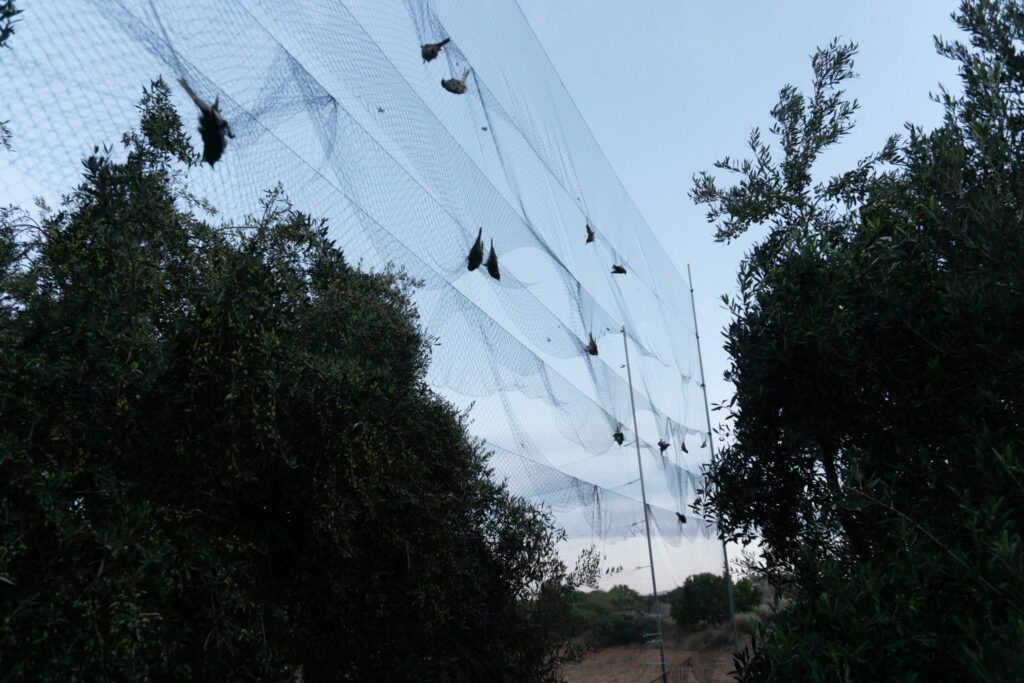
“The Venetians taught Cypriots that they could make money from this practice, asking them to trap birds and send them to Italy. That was how bird trapping developed into a large-scale commercial trade. So, in a way, this is ‘karma’ for me. It is a way for us, as Italians, to repay our debt to the birds.”
What is your everyday life like when the migration season ends and you return to Italy?
This is not just my job; it is my whole life. Everything I have done revolves around birds.
I used all my money to buy a farmhouse and build a huge tower with 400 nesting sites for birds, which I built myself. There are now bird populations nesting there. Little by little, I also bought four hectares of land and created a natural private wildlife sanctuary exclusively for birds.
My family knows that I am away from home from mid-August until November. In spring, we have about a month and a half for bird migration, so that period is shorter but more intense.
I do not mind, though. I may be away for a few months, but afterwards comes the time when I can make up for the time I have missed.
This is not just my job; it is my whole life. Everything I have done revolves around birds.
I used all my money to buy a farmhouse and build a huge tower with 400 nesting sites for birds, which I built myself. There are now bird populations nesting there. Little by little, I also bought four hectares of land and created a natural private wildlife sanctuary exclusively for birds.
My family knows that I am away from home from mid-August until November. In spring, we have about a month and a half for bird migration, so that period is shorter but more intense.
I do not mind, though. I may be away for a few months, but afterwards comes the time when I can make up for the time I have missed.
Do they worry about your safety?
My wife has never worried excessively, and I really appreciate that. With my children, though, I tell the story a little differently.
I do not want to tell them that I am leaving to save birds because I do not want them to blame the birds for my absence.
“What do you do, Dad?” they ask me. “I’m the hunter of hunters.”
That way, it’s the hunters they have a problem with, not the birds. There are even some parents at their school who are hunters. When their children ask, “What does your dad do?”, mine reply: “My dad is the ultimate hunter, because he hunts the most difficult species of all – humans!”
My wife has never worried excessively, and I really appreciate that. With my children, though, I tell the story a little differently.
I do not want to tell them that I am leaving to save birds because I do not want them to blame the birds for my absence.
“What do you do, Dad?” they ask me. “I’m the hunter of hunters.”
That way, it’s the hunters they have a problem with, not the birds. There are even some parents at their school who are hunters. When their children ask, “What does your dad do?”, mine reply: “My dad is the ultimate hunter, because he hunts the most difficult species of all – humans!”
Have you passed your passion on to them?
I think a good parent should not put too much pressure on their children. Obviously, though, birds are part of my life and my knowledge, so all of that finds its way into the stories I tell them.
I have a wonderful video of my daughter, Pamina. She was three years old and at one point she was crawling along the ground on the pavement outside the park.
My wife asked her, “What are you doing, Pamina?” And she replied: “I’m hiding because I have to catch that hunter!”
I think a good parent should not put too much pressure on their children. Obviously, though, birds are part of my life and my knowledge, so all of that finds its way into the stories I tell them.
I have a wonderful video of my daughter, Pamina. She was three years old and at one point she was crawling along the ground on the pavement outside the park.
My wife asked her, “What are you doing, Pamina?” And she replied: “I’m hiding because I have to catch that hunter!”
What keeps you doing this work after all these years?
The sense of responsibility you feel when you know that you are their last hope. After so many years, it becomes a mission.
My mind constantly turns to how many birds might be being killed by people at that very moment, and even when I go to bed, I feel guilty.
I know that people who do not think this way enjoy their everyday lives more. They certainly have less adrenaline, but there is no doubt that their lives are easier.
The sense of responsibility you feel when you know that you are their last hope. After so many years, it becomes a mission.
My mind constantly turns to how many birds might be being killed by people at that very moment, and even when I go to bed, I feel guilty.
I know that people who do not think this way enjoy their everyday lives more. They certainly have less adrenaline, but there is no doubt that their lives are easier.
