
"Unaccompanied children are among the most vulnerable groups of the population, as internationally recognized, and their accommodation is done in the context of providing humanitarian protection, with respect to the international, European and national obligations of the Republic of Cyprus," said the executive director of the children's rights protection organization Hope for Children, Andria Neocleous invited by "F" to take a position on the issue of the successive refusal of several municipal and community councils and local communities in various areas of free Cyprus to accept the creation of accommodation structures for unaccompanied minors within their own municipal or community boundaries.
Mrs. Neocleous added that "such actions against the structures do not take into account the obligations of our country and risk violating international human rights conventions. The protection of minors - he added - is not an option, it is a legal and moral obligation." We note that structures for unaccompanied children are currently operating in various urban and other areas. Their legal guardian is the Social Welfare Services (SWS) of the Deputy Ministry of Social Welfare, but as of January 2026, the Asylum Service of the Deputy Ministry of Migration and International Protection is responsible for housing and supervising the operation of the accommodation facilities, which has assigned the management of these structures on the basis of a relevant agreement, to three non-governmental organizations – Hope for Children, the Cyprus Office of the International Organization for Migration and metACTION.
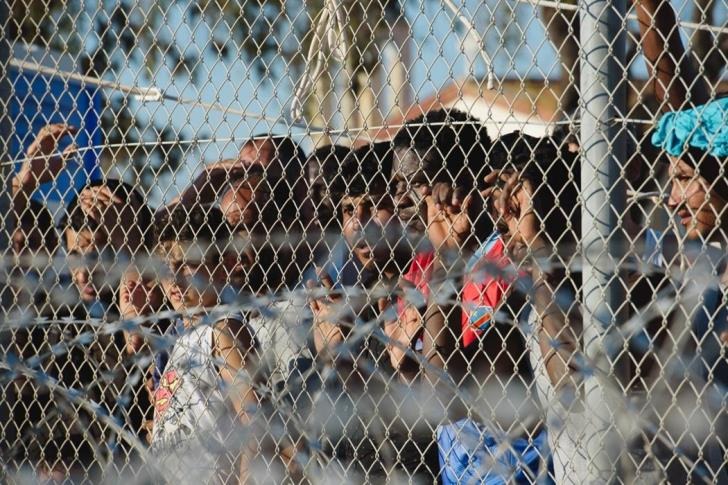
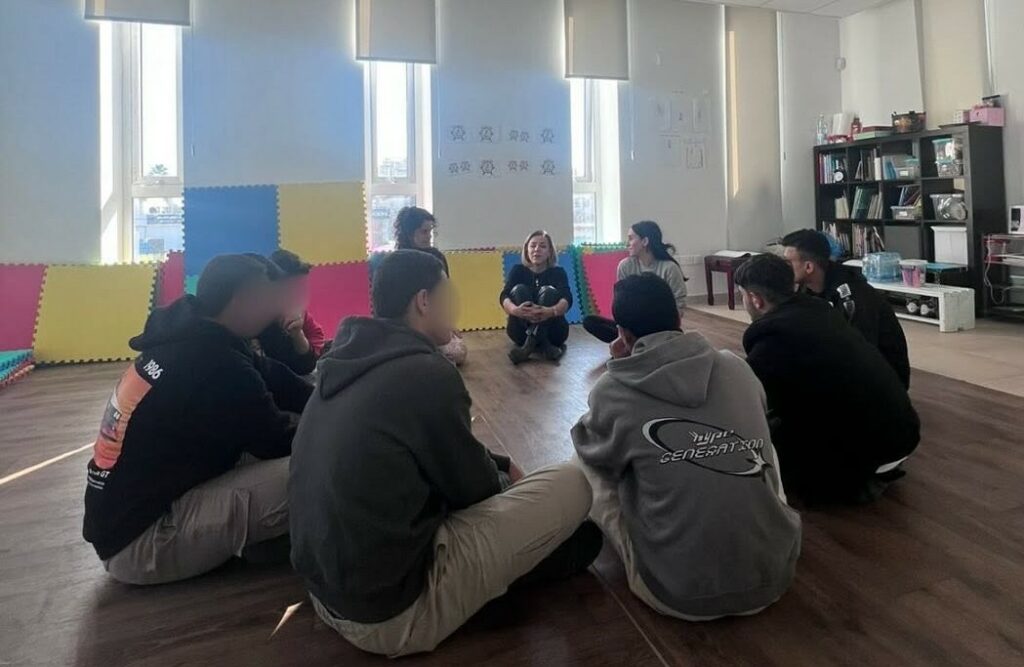
"We, as 'Hope For Children' CRC Policy Center, manage structures with 24-hour supervision-staffing, as well as semi-independent living accommodations," Andrea Neocleous told us, adding that "since 2014, our organization has managed more than 2 thousand cases of unaccompanied children, within the framework of the cooperation protocol with the Social Welfare Services". The message sent to "F" by the unaccompanied minor Youssef T is characteristic: "Hope For Children offered me safety, care and guidance when I needed them most. It hurts me when I hear that people see us as a problem and don't want us in their neighbourhood. Especially when I found out that we couldn't move to a better place because of that. We are children like everyone else, we have dreams and hopes and we want to have a better future".
Reduced needs for housing unaccompanied persons
As we were informed by the Deputy Ministry of Migration and International Protection, about 130 people are currently hosted in the juvenile structures compared to 400 people 2-3 years ago, while most unaccompanied minor refugees in Cyprus come from Syria and fewer from African countries such as Congo and Nigeria. We were also told the following: "These are small structures of 5-15 people, where boys and girls are accommodated separately. For the time being, we will not proceed with the creation of other large structures, since at this stage the flows of migrants on the island are limited. We are trying to maintain the existing structures, because the new amendment to the Law on Refugees obliges us to have adequate consultation with the local community before creating any structure and this makes our work very difficult, due to the reactions. However, it must be understood that the management of migration does not only concern the Deputy Ministry of Migration and International Protection and the government, but the whole country and there must be a proper dispersion of these accommodation structures."
The decisions that were not implemented
We remind you that the Deputy Ministry of Migration had investigated the creation of a new accommodation structure for unaccompanied minor refugees in Aradippou, but this decision was not implemented, due to reactions from the municipal authority and residents. Specifically, the Municipal Council convened in an extraordinary session on July 13, 2026 and "unanimously decided to express its opposition to the proposed creation of a shelter for unaccompanied minors of migrant origin in the core of the Municipality, Aradippou" according to an announcement by the Council. The announcement states that this structure would be housed "in an existing house, which is located in the core of the Municipality, in the immediate vicinity of a primary school, public and private kindergarten". The announcement continues with the following: "The Municipal Council clarifies that its position does not concern the unaccompanied minors themselves, nor does it question the obligation of the State to ensure their protection and well-being. The disagreement concerns exclusively the way in which this decision is attempted to be promoted. To date, there has been no institutional consultation or cooperation with the Local Government, while the Municipality has not been informed, nor was it invited to express its views before the decision was taken. Also, no public consultation was carried out with the directly affected residents, despite the strong reactions that have already been expressed, while no study was presented documenting the suitability of this location. The Municipal Council considers that decisions with such important social and local implications cannot be taken without transparency, documentation, respect for institutions and meaningful dialogue with the Local Government and the local community."
We remind you that similar reactions of local factors, decisions to move juvenile structures and cancellations of decisions to create new structures, preceded in 2019 in Zygi, in 2023 in Lakatamia, in 2024 in Kato Paphos and in 2025 in Agioi Anargyroi in Larnaca. The most recent case of negative reaction to the prospect of creating a shelter for minors concerns the Municipal Council of Latsia-Geri, which in a letter on August 5, 2026 to the Ministry of the Interior on the subject "Creation of homes for the protection of children and adolescents", states that "as early as September 2023, the former municipal councils of Latsia and Geri had taken a clear position against the possibility of granting state land to the Social Services Prosperity for the creation of the described structures". The announcement adds that "with the announcement of the state's intentions at the time, social turmoil was caused in our Municipality, while the mobilizations led to the collection of more than 8000 signatures which were delivered to the Presidential Palace after the protest event on 4.11.2023. We demand the written assurance of the state as to the final withdrawal of the plans for the creation of structures within our municipal boundaries and we reserve our readiness to take any legal measure to defend peace and prosperity in our Municipality."
Nine Child-Adolescent Protection Homes
The latest development on the issue of juvenile accommodation structures, which, unlike the others, are intended to accommodate children under the care of the State and not exclusively for unaccompanied children, concerns the Municipal District of Germasogeia and the extraordinary session convened by the Deputy Mayor of Germasogeia on August 12, 2026. As our colleague Ioanna Mantzipa informed us in a relevant report in "F", the only topic of discussion was a letter from the Ministry of the Interior regarding the creation of "Child and Adolescent Protection Homes" in the area. The deputy mayor told her colleague that "during the extraordinary session, the Municipal District of Germasogeia unanimously decided to take a negative position, once again, on the creation of structures for minors in the area".
It is noted in the report that on July 30, 2026, a letter was sent by the Ministry of the Interior to the Mayor of Larnaca, the Mayor of Latsia-Geri, the Mayor of Amathus and the President of the Community Council of Moni, regarding the ongoing planning on the part of the SWS and the Deputy Ministry of Social Welfare for the creation of nine Child and Adolescent Protection Homes. The Ministry points out that this is an urgent need and explains that these houses will be mixed family-type structures, integrated into society, with access to public health services, schools and public transport. The goal, according to the Ministry, is to individually meet the needs of the children who will be accommodated in the structures. At the same time, the letter points out that this is the first time that the state seeks to develop at the same time, on a nationwide basis and on pieces of state land, nine child and adolescent protection projects."
Refusal of housing without alternative proposals
Andria Neocleous concluded by stating the following: "As Hope For Children we argue that child protection cannot be the subject of public consultation, in the sense that children's rights are not put to a vote. At the same time, we recognize that informing local communities is important to deal with myths and stereotypes. And perhaps this is the most useful direction for the future: not structures without information, but not communities without children in need of protection. The treatment of the housing of unaccompanied children by local authorities in terms of business activity is extremely problematic, as it commercializes essentially all welfare structures, equates an entire social group with a "problem" and overlooks its observationsUnited Nations Commission on the Rights of the Child (UNCRC) for Cyprus, as recorded in its report on 9 June 2022.
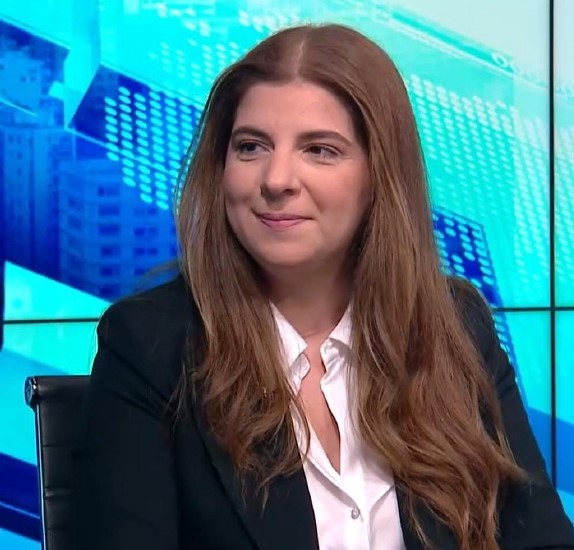
Andria Neocleous, Executive Director of Hope for Children
In its report, the EDP calls on the state to support the organizations that support these children and to ensure that the right of the child to have his or her best interests taken as his or her primary concern is correctly integrated, interpreted and applied consistently in all legislative, administrative and judicial procedures and decisions, both by the public and the private body. We regret to note that the objections that arise act as an obstacle to the Commission's recommendations to ensure safe places for children to live. At the same time, there is no documentation as to whether their overriding interest was taken into account and no proposals are made on what is the immediately available and safe alternative housing, nor are the humanitarian consequences of refusing to house children without alternatives taken into account.
These children have already crossed borders, separated families, places and familiar environments. Social isolation cannot be the next stage of their journey. Inclusion in school, in the neighborhood and in social life does not mean that the needs or concerns of the community are ignored. It means that a way is being sought so that the community feels safe and children have a real opportunity to grow up in safety and dignity. The real question, therefore, may not be whether a shelter should be located "in our own neighborhood". It is whether we can design structures that function properly, with adequate and qualified staff, transparency, supervision and a meaningful connection with the local community, and at the same time remember that the people who will live in them are not a "structure", not a single immigration statistic. They are children. And the protection of a child cannot depend on whether his address is in the "right" municipality."
When a neighbourhood says "no"
The executive director of Hope for Children, Andria Neocleous, commented on the negative reactions to the efforts to create children's accommodation structures as follows: "The recent reactions of specific Municipalities are not isolated incidents. Every time the creation of a shelter for unaccompanied children arises, questions, reservations and, in many cases, clear refusal from the local community appear. The conversation often shifts from "how do we best protect these children?" in "Why should the structure be located in our area?". And yet these children are already in Cyprus. They are not a theoretical or future presence. They are children who have arrived in the country without their parents or another person who has their responsibility and are in need of shelter, protection, education, health and psychosocial care. And the exclusion of children who need support has consequences not only for the children themselves, but also for the society that allows it. When children in need of protection are treated as undesirable in every neighborhood, fear, suspicion and stereotypes are reinforced, while a vicious circle of social isolation is created. A society that excludes its most vulnerable children not only weakens these children's opportunities for a secure future, it also weakens its own social cohesion, solidarity and its ability to coexist and protect those in need."
In its report, the EDP calls on the state to support the organizations that support these children and to ensure that the right of the child to have his or her best interests taken as his or her primary concern is correctly integrated, interpreted and applied consistently in all legislative, administrative and judicial procedures and decisions, both by the public and the private body. We regret to note that the objections that arise act as an obstacle to the Commission's recommendations to ensure safe places for children to live. At the same time, there is no documentation as to whether their overriding interest was taken into account and no proposals are made on what is the immediately available and safe alternative housing, nor are the humanitarian consequences of refusing to house children without alternatives taken into account.
These children have already crossed borders, separated families, places and familiar environments. Social isolation cannot be the next stage of their journey. Inclusion in school, in the neighborhood and in social life does not mean that the needs or concerns of the community are ignored. It means that a way is being sought so that the community feels safe and children have a real opportunity to grow up in safety and dignity. The real question, therefore, may not be whether a shelter should be located "in our own neighborhood". It is whether we can design structures that function properly, with adequate and qualified staff, transparency, supervision and a meaningful connection with the local community, and at the same time remember that the people who will live in them are not a "structure", not a single immigration statistic. They are children. And the protection of a child cannot depend on whether his address is in the "right" municipality."
When a neighbourhood says "no"
The executive director of Hope for Children, Andria Neocleous, commented on the negative reactions to the efforts to create children's accommodation structures as follows: "The recent reactions of specific Municipalities are not isolated incidents. Every time the creation of a shelter for unaccompanied children arises, questions, reservations and, in many cases, clear refusal from the local community appear. The conversation often shifts from "how do we best protect these children?" in "Why should the structure be located in our area?". And yet these children are already in Cyprus. They are not a theoretical or future presence. They are children who have arrived in the country without their parents or another person who has their responsibility and are in need of shelter, protection, education, health and psychosocial care. And the exclusion of children who need support has consequences not only for the children themselves, but also for the society that allows it. When children in need of protection are treated as undesirable in every neighborhood, fear, suspicion and stereotypes are reinforced, while a vicious circle of social isolation is created. A society that excludes its most vulnerable children not only weakens these children's opportunities for a secure future, it also weakens its own social cohesion, solidarity and its ability to coexist and protect those in need."
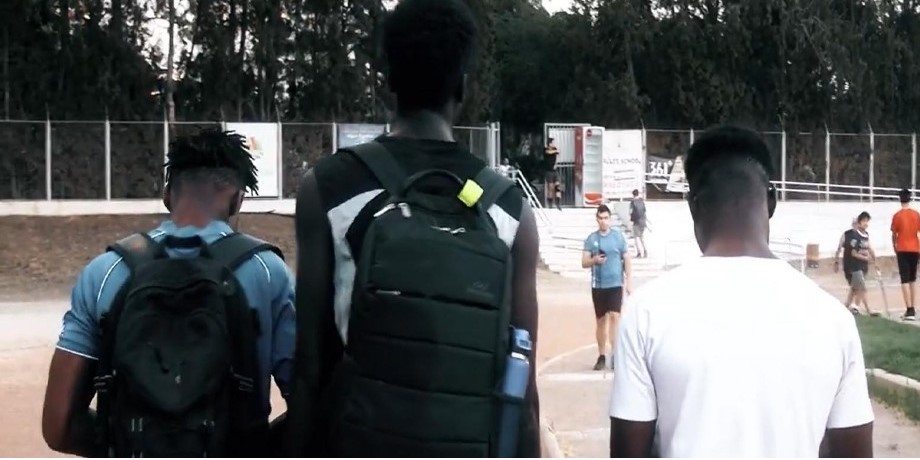
Mrs. Neocleous added, among other things, the following: "When a local authority or a group of residents reacts to the installation of a structure, any concerns are legitimate to be examined and answered with evidence. But when the reaction turns into generalized denial, it creates a problem that goes far beyond a specific house or a specific municipality: where exactly will these children be able to live? If every neighbourhood thinks that hosting unaccompanied children should be done "somewhere else", then "somewhere else" is in danger of not existing. Local authorities can and should ask questions about the infrastructure and operation of a structure. They can also ask for information and transparency. But this is different from rejecting structures as a category."
