
The green light, under strict environmental conditions and restrictions, was given by the Environmental Authority for the application for the expansion of quarrying activities in the community of Drousia and adjacent to the quarry zone of Androlykos. The request, which concerns the operation of a new quarry for the extraction of aggregates outside the existing quarry zone, is adjacent to the protected areas of the Natura 2000 Network "Akamas Peninsula", causing strong reactions and scientific controversies in the Ad-Hoc Evaluation Committee.
It is noted that in the area there is planning for the creation of a new quarry zone in Androlykou and the submission of the relevant environmental studies for evaluation by the Mines and Quarries Service is expected.
The application was submitted by the companies Gennadios Theologou & Sons (Cementworks) Ltd and Poullas Tsadiotis Ltd, which operate within the quarry zone of Androlykou with corresponding quarry privileges and concrete crushing units.
The proposed project concerns a new quarry outside the quarry zone with an area of 49,727 sq.m. The purpose of the development is to extract 900,000 cubic meters. limestone, of which 720,000 cubic meters. are recoverable materials using 315,000 kg of explosives, to meet the aggregate needs of the Paphos District for a period of 2.5 to 3 years. These correspond to 1,512,000 tons of finished products, either for embankment materials or for materials suitable for the production of concrete and mainly sand.
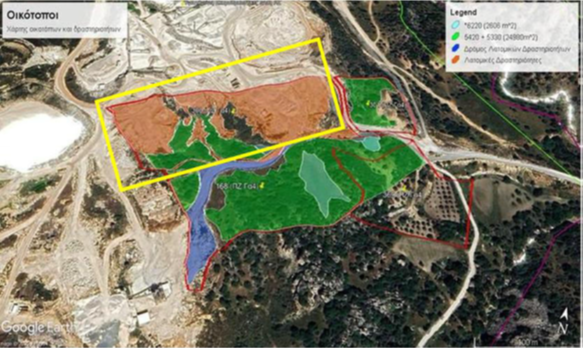
According to the Special Ecological Assessment Report (EOA) of the Department of Environment (July 2026), the area is adjacent at 120 meters to the Special Area of Conservation (SAC) and the Akamas Special Protection Area (SPA). Of the total area, 31% (18,968 sq.m.) already shows anthropogenic deterioration, while the remaining 69% (30,759 sq.m.) is covered by natural vegetation and limestone formations, while at the same time part of it is cultivated.
The Department of Environment concluded that the effects will be mainly local and temporary. It was estimated that the project is not expected to substantially increase the existing nuisance to fauna and habitats, but only to extend it for 2.5 to 3 years, provided that strict conditions are met.
The proposed project concerns exclusively the extraction of quarry materials, which will be transported for processing/processing to the existing crushing units, which are located within the quarry zone of Androlykos.
At a distance of about 1.1 to 1.5 km. From the project area, caves with the presence of bats are detected, on the north-northwest side of the existing quarry. The quarry that is being evaluated is in the south-southeast direction, i.e. on the opposite side from the known locations of the bats.
According to the results of the simulation of the acoustic environment submitted by the designer, the effects from the operation of the proposed project are limited to a radius of about 500m. Therefore, no material direct impact on the known sites of bat presence is expected.
Who agreed and who disagreed
The Ad-Hoc Committee, which met on February 10 to examine the Special Ecological Assessment study, appeared divided. The Game and Fauna Service did not object to the implementation of the project, setting as an inviolable condition the strict demarcation of the area, the avoidance of dumping of rubble outside the limits and the submission of an annual compliance report with photographic imprinting.
However, the denial of environmental organizations was strong and universal. The Federation of Environmental Organizations of Cyprus (OPOK) took a negative position, criticizing the fact that 31% of the area has already been disturbed by unlicensed quarrying operations. At the same time, he stressed the loss of thousands of trees and natural habitats that act as a buffer zone for Natura 2000.
Terra Cypria expressed its grave concern about the loss of protected habitats and rare flora, calling for the rejection of approval for the areas with natural vegetation.
BirdLife took a negative view, highlighting the negative impacts on birds, particularly the protected species of Coracias garrulus and rare birds of prey, as well as the complete lack of adequate consideration of cumulative impacts.
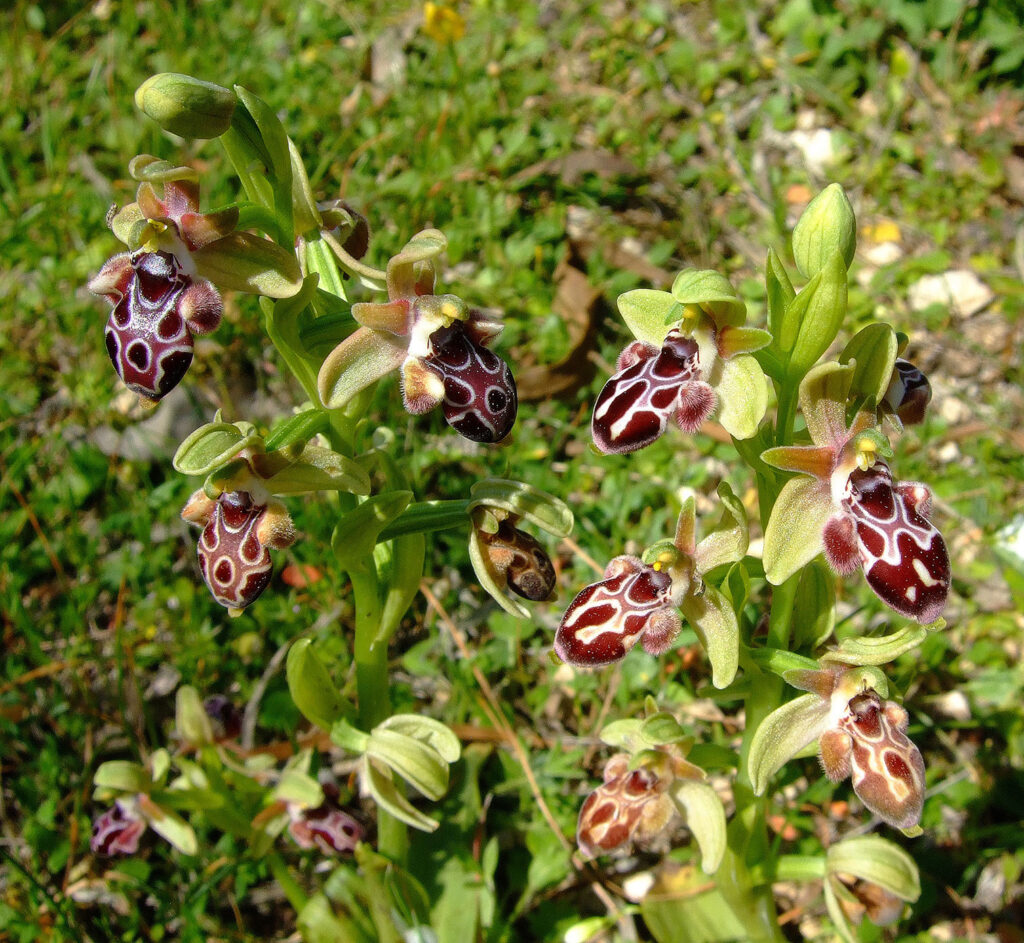
Operation to rescue the orchid Ophrys kotschyi
One of the most sensitive points of the assessment concerns the identification of the priority species Ophrys\ kotschyi (Ophrys the Kotsia / Bee). This species is endemic to Cyprus, protected by the European Directive 92/43/EEC and is included in the Red Book of the Flora of Cyprus as vulnerable. During the field investigations, a total of 20 individuals of the species were located in three locations within the proposed quarry.
To prevent the destruction of the rare plant, the Environmental Authority imposed a special binding condition. The specific area where Ophrys\ kotschyi was found is immediately demarcated and any intervention or disturbance of it is strictly prohibited. During the flowering period of the plant (March – April), the Department of Forests will carry out on-site registration and identification of all individuals.
Subsequently, specialized staff of the Department of Forests will proceed with the transplantation of the plants along with the rhizome and the soil that surrounds them into a suitable natural habitat within the Natura 2000 protected area (SAC).
Environmental conditions of operation
In addition to the protection of the orchid, the decision is accompanied by a package of strict measures.
• No mining work or blasting will be carried out from March to June, so as not to affect the reproduction of birds.
• Application of systematic wetting of roads and piles of materials, as well as the use of drilling equipment of new low-noise technology.
• Mandatory gradual formation of tiers and replanting with native species during the works, as well as submission of an overall Restoration Plan in collaboration with the Department of Forests.
• The movement of heavy vehicles should be limited within designated routes and should not take place during night hours.
• All necessary fire prevention measures must be observed, especially during the summer months.
