
The approval of the "Achilles Shield" by the KYSEA in Greece is not yet a Greek defense market. It shows that the defense relationship between Greece, Cyprus and Israel passes from exercises and declarations to a common, even if not unified, environment. The two countries that gain proportionally the most are Greece and Cyprus.
The "Achilles Shield", worth up to €3.5 billion, it is not a giant Iron Dome. It is a network that will connect new and existing means: the Patriots, the fighters, the units of the Navy and the sensors of the three Branches.
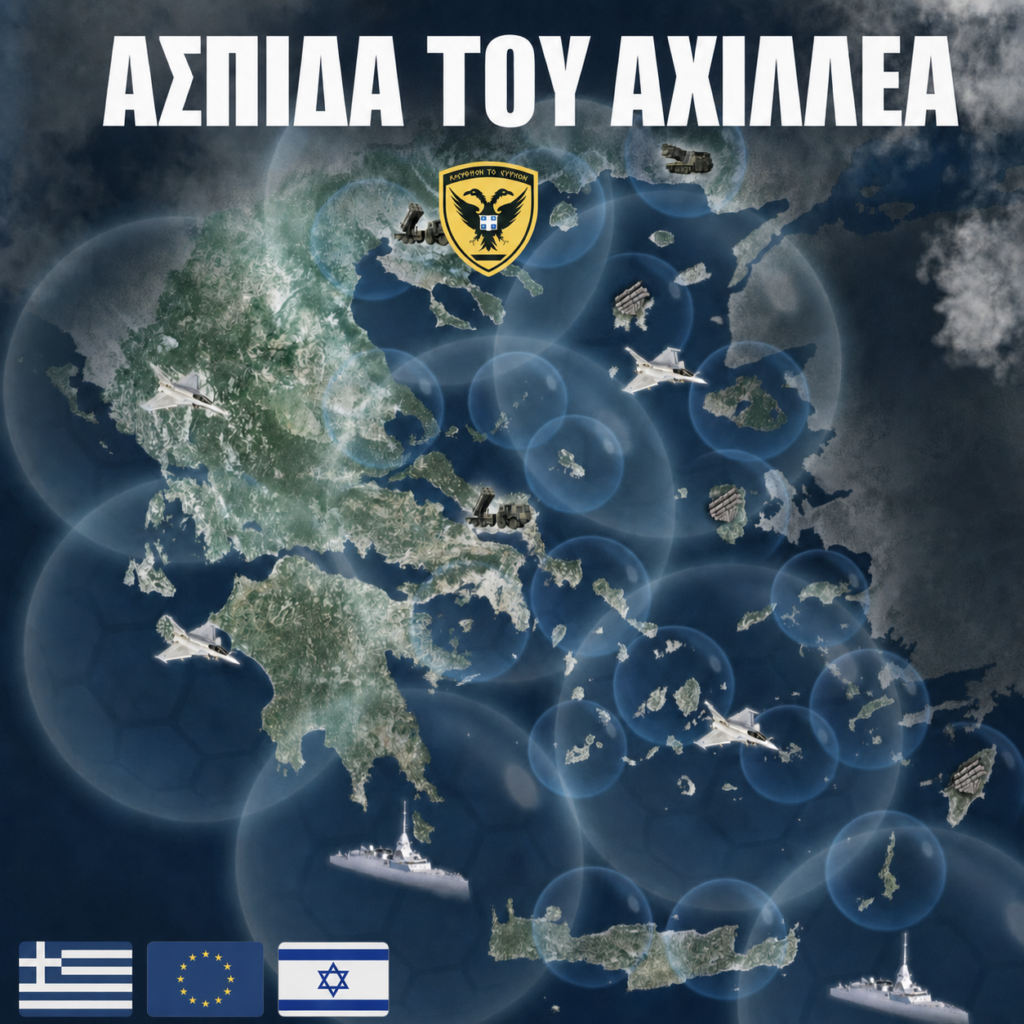
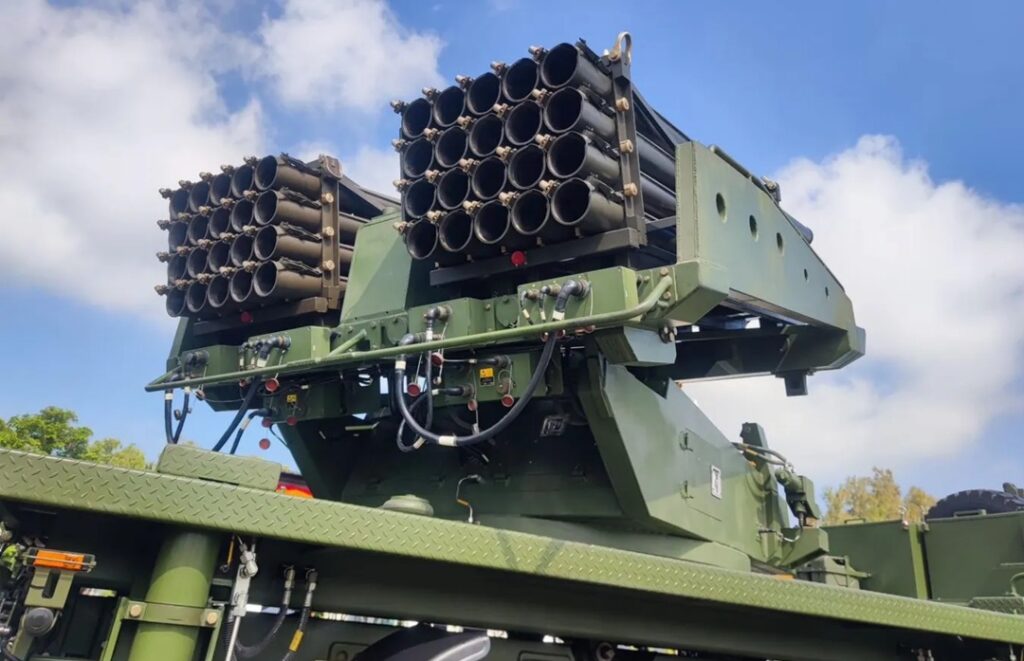
At its core are the David's Sling, Barak MX and Spyder, along with the ELM-2084 radars. The first is intended for the most difficult ballistic and missile threats, the second for the mid-band, and Spyder for low-flying targets, drones and cruise missiles.
In Athens, they insist that the system will be fully operational in 35 months. 25% of the project will be produced in Greece, with an industrial object of about €700 million, a Greek-made command and control system, participation in the production of canisters and projectile parts and access to the source code.
This is perhaps more important than the number of launchers. It is something that Jerusalem makes sure to explain at every opportunity and which a source from Israel's defense space repeated to us yesterday. Without software control, a state buys weapons, he told us. By controlling the software, it gains access and technical knowledge and begins to build defensive autonomy.
Israel already has military superiority, combat experience, and a world-class defense industry. For its part, it gains a safer western exit, training grounds and two stable partners in the Eastern Mediterranean.
For Athens and Nicosia, however, the gain is greater: access to proven technology, to missile and drone confrontation doctrines and, above all, to a partner that sees Turkey as a regional power with competing ambitions.
From common exercises to common "language"
The trilateral defense cooperation plan for 2026 provides for more intensive air and naval exercises, training of special forces and transfer of Israeli know-how for conventional and asymmetric threats. This is not negligible for the National Guard. A small army alone cannot even represent a modern war, with ballistic missiles, roving ammunition, electronic jamming and saturation attacks. But he can train with an army that can represent him and is already facing such threats.
Cyprus has already received the Israeli Barak MX, a modular system that, depending on the projectile, covers different heights and distances and can deal with aircraft, drones and missiles. His choice also marks a move away from dependence on Russian systems, which have become more difficult to support after the invasion of Ukraine. Practically, as well as politically.
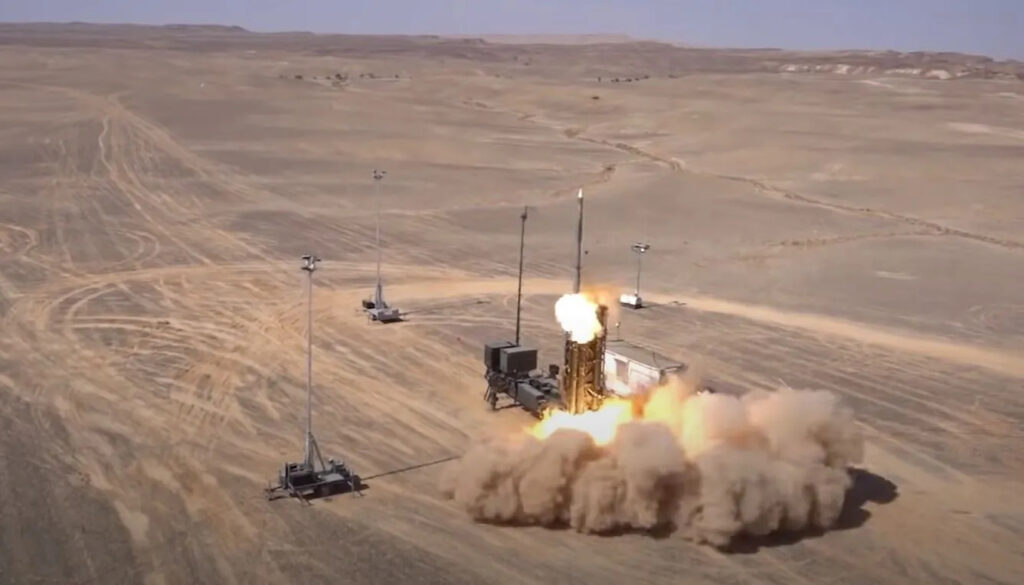
Now the Barak MX is also entering the core of the Greek "Shield". This does not mean that the Cypriot air defense was automatically linked to the Greek one, nor that there is any invisible common dome. However, a common operational language is being created: similar training, easier technical support, compatibility and the ability to exchange images and warnings.
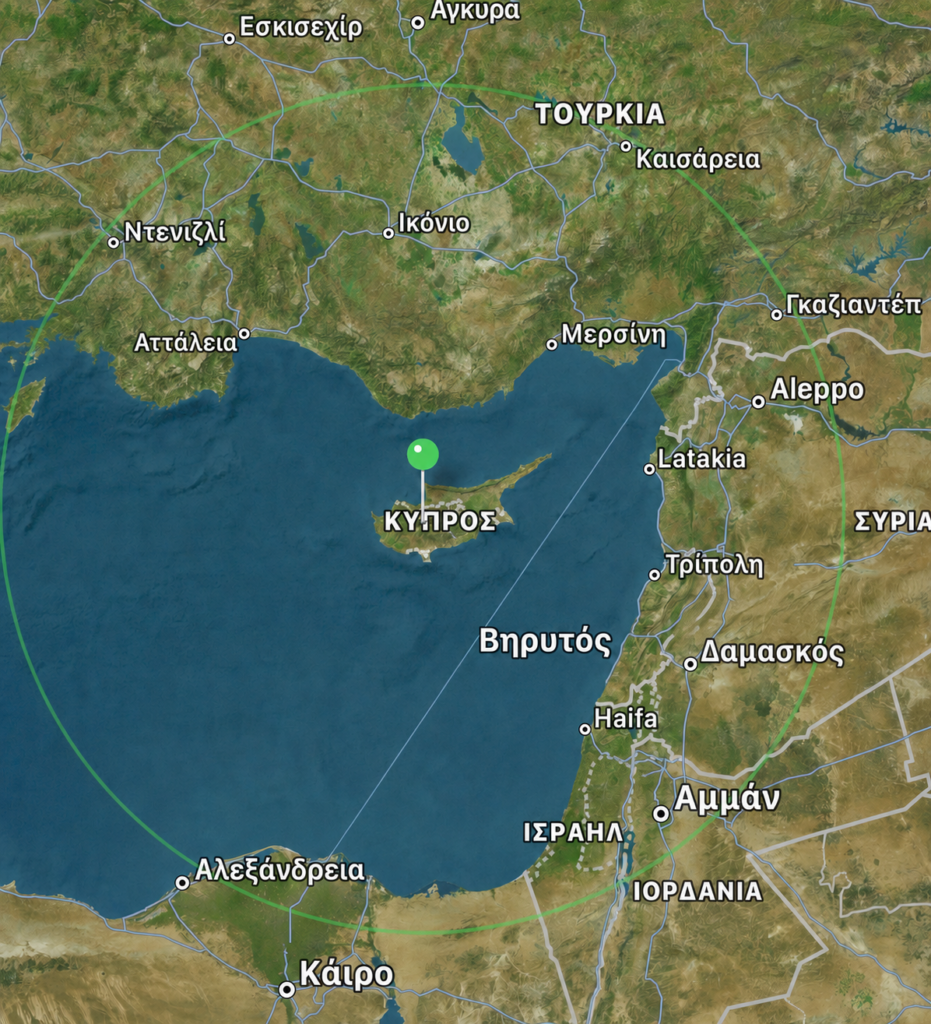
For Cyprus, this matters more. Geography does not allow it to compete in any way with Turkey in numbers; after all, this is not Nicosia's intention. It is investing purely in defense, with the aim of making a surprise more difficult, keeping its command centers and airports alive, and increasing the cost of any offensive action until support is activated.
Last March's crisis gave a small sample: when the regional conflict touched Cyprus, Greece sent four F-16 Vipers and two warships, one with the "Centaur" anti-drone system. Turkey responded with six F-16s and anti-aircraft systems in the occupied territories. Within days, the island became an advanced operational theatre. Theory was also measured in practice.
In the past, burying one's head in the sand relieved many minds, completely cut off from reality, feeding them, so to speak, with the comforting illusion that we would never get there and that all we had — and could — do was sit quietly, so that we wouldn't be bothered by Ankara. Today, such a position is not just naïve. It's much more than that.
The Greek "brain"
The "Achilles Shield" is not something isolated, let alone a move cut off from the rest of the markets, which are moving in the same direction. The Rafale, the F-16 Viper and, later, the F-35 offer the combat leg. FDI frigates, Israeli PULSs, Heron and V-BAT, SAR satellites, VICTA underwater vehicles and anti-drone electromagnetic systems add sensors, precision strikes, surveillance and cheaper responses to cheap threats. Change is not found on each platform separately. The goal is for everyone to see the same picture and serve the same chain of detection and insult.
This indirectly benefits Cyprus as well. A Greece that better protects its bases and infrastructure, that does not constantly commit fighters to alert missions and that sees in time what is moving from the Aegean to the Eastern Mediterranean has a clearly greater ability to strengthen the Republic of Cyprus. The C-390s, in fact, add faster strategic transport and air refuelling. They do not bring Cyprus closer to Greece; However, they are operationally shortening the distance.
Turkish reactions
Publicly, Ankara denounces its "encirclement" and presents the markets of the Republic of Cyprus as a disturbance of the balance. When media wrote that the Barak MX was delivered, the Turkish Ministry of Defense even warned of "dangerous consequences".
The hypocrisy is obvious: the country that maintains more than 35,000 occupation soldiers on an island the size of Cyprus speaks of a fragile balance.
In the field, the answer is more serious. Lefkoniko has been used since 2019 as a base for Turkish drones – when Cyprus had not acquired any such system – providing surveillance over Cyprus and the Eastern Mediterranean. Ankara has occasionally announced a naval base, while upgrading existing port infrastructure for heavier warships. And the deployment of six F-16s in March, even in the context of an emergency crisis, proved that it can quickly turn the occupied territories into an advanced air base. Air defense systems, drone centers and electronic warfare means dramatically reduce the warning time for the National Guard.
As is often written, Turkey still has the advantage of volume and strategic depth: a large fleet of F-16s, early warning and aerial refuelling aircraft, a powerful navy, submarines, missile systems and an industry that produces drones, ammunition and warships on a scale that Greece and Cyprus do not have.
At the same time, it is trying to close the quality gap. It has agreed to purchase 20 new Eurofighters, is seeking 24 more used ones from Qatar and Oman and expects 40 new F-16 Block 70s, while modernizing older aircraft with domestic means. The KAAN has flown, but remains a development program, not an operational fighter. Its insistence on the issue of engines from the USA has to do with just that.
And the return to the F-35 still clashes with the S-400, American legislation and Israeli reactions. In air defense, Ankara is channeling an additional 24 billion. dollars to the "Steel Dome", an ambitious domestic network of radars, missiles and command centers, which, however, still needs several years to complete.
What really changes
The balance, therefore, is not overturned. That is not the goal. Turkey remains numerically stronger and its occupied territories offer an advantage that no contract eliminates: it is already within Cyprus, whether we want to understand it in its full extent or not.
Greece, on the other hand, is building qualitative superiority in critical areas—sensors, networking, air defense, fighters, and precision strikes—and this can give it local superiority in a specific time and space, not general dominance.
The source mentioned above noted that Cyprus does not need to win a race. It needs more mobile air defense systems, cheap means of dealing with drones, adequacy of interceptors, shielding and dispersion of command centers and predetermined plans for Greek aid. Above all, we were told, the exchange of information with Greece and Israel needs to stop depending on the current crisis and become a permanent mechanism.
In conclusion
Neither the "Achilles' Shield" is impenetrable, nor has Israel signed that it will fight for Greece or Cyprus. These are dangerous illusions.
When we asked how one could summarize the value of cooperation, the answer we received was clear: this defensive scheme, he told us, deprives Turkey of the certainty that it can militarily isolate Nicosia, surprise Athens or act in the Eastern Mediterranean without calculating Israeli capabilities.
And he went on to say that deterrence does not require you to be stronger everywhere, but to convince the opponent that his first move will be neither easy nor the last. Exactly there, he concluded, lies the real benefit of the defensive triangle with Israel for Cyprus and Greece.
