
Black smoke was rising from a fully loaded Qatari tanker that was on fire in the Strait of Hormuz last week after being hit by Iran. We had similar images until today, Tuesday, after the resumption of hostilities between the US and Iran in the Arab-Persian Gulf, which threatens to paralyze navigation on this critical sea artery once again, four months after the start of the war between Washington and Tehran.
U.S. President Donald Trump, who was in Ankara for the NATO summit last week, lashed out at his European allies while expressing support for Syria's new president — a former jihadist — as the conflict continued to shake up the global economy.
Millions of Iranians flooded the streets of Tehran for the multi-day funeral of Iran's supreme leader, Ayatollah Ali Khamenei, who was killed in the first wave of hostilities.
The picture of stability in the Gulf was shaking again, as sirens sounded in Bahrain, Kuwait and Qatar, countries that host US military bases and were attacked with drones and missiles from Iran.
At the same time, Israeli forces remained deep inside war-torn Lebanon and parts of Syria. Gaza has already been reduced to rubble.
It is the latest chapter in a conflict that lasted more than two years, which began after Hamas' attack on Israel and revealed that the Middle East as it existed before October 7, 2023 is now over.
What has been shaped in its place is a region that has been radically changed by violence: alliances have shifted, fronts of conflict have expanded beyond all precedents, trade routes have been redrawn and public opinion has been divided.
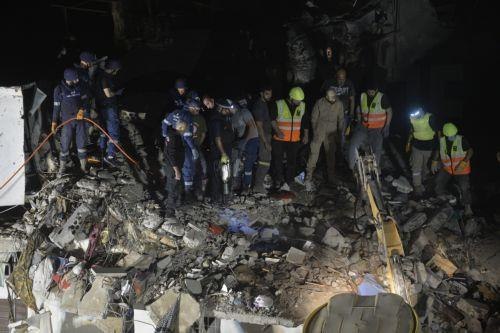
The new Middle East after the war in Iran
Bloomberg Economics' analysis of the situation in the region after the US-Iran ceasefire shows greater polarization, more violence and a shift in alliances compared to the period before the October 7 attack.
Analysts looked at 10 governments and categorized their relations as friendly, neutral, cautious, or hostile.
The resulting picture reveals increased tensions between the 45 bilateral relations examined. Half of them showed changes in their dynamics: nine alliances were strengthened, 10 were weakened, while only nine relationships remained unchanged.
Not surprisingly, Iran and Israel are the two countries with the most strained relations in the region.
Hamas' offensive sparked new conflicts that spread from Gaza to Lebanon, Syria, Yemen and Iran.
Israel, after the shock of the attack, neutralized several of Tehran's allies and paramilitary partners, only to find that they still had the capability to threaten Israel itself, fire thousands of missiles at Gulf countries and disrupt global trade.
The war accelerated the breakdown of American alliances and undermined Israel's international standing, as its military operations expanded to neighbouring countries and tens of thousands of civilians were killed.
Bloomberg Economics' analysis of the situation in the region after the US-Iran ceasefire shows greater polarization, more violence and a shift in alliances compared to the period before the October 7 attack.
Analysts looked at 10 governments and categorized their relations as friendly, neutral, cautious, or hostile.
The resulting picture reveals increased tensions between the 45 bilateral relations examined. Half of them showed changes in their dynamics: nine alliances were strengthened, 10 were weakened, while only nine relationships remained unchanged.
Not surprisingly, Iran and Israel are the two countries with the most strained relations in the region.
Hamas' offensive sparked new conflicts that spread from Gaza to Lebanon, Syria, Yemen and Iran.
Israel, after the shock of the attack, neutralized several of Tehran's allies and paramilitary partners, only to find that they still had the capability to threaten Israel itself, fire thousands of missiles at Gulf countries and disrupt global trade.
The war accelerated the breakdown of American alliances and undermined Israel's international standing, as its military operations expanded to neighbouring countries and tens of thousands of civilians were killed.
Gulf economies take a hard hit
The economic effects of the war are still spreading to international markets, and it will likely take months or even years to reverse.
At the same time, the era of free navigation in one of the most important maritime corridors on the planet is under threat.
"Regional balances had already begun to take shape before 2023, but more than two years of war have strengthened these divisions, dividing the region into opposing camps against an increasingly aggressive Israel," said Dina Esfadiari, chief Middle East analyst at Bloomberg Economics.
"In the end, the Middle East is in a worse situation. The region is divided, more violent, freedom of navigation has been forever affected and the prospects of a return to a basic stability remain extremely limited," he added.
Today, Iran seems to have the upper hand in negotiations with the US for a permanent peace agreement – an outcome almost unthinkable when the war began.
The Islamic Revolutionary Guards continue to threaten navigation in the Strait of Hormuz, after previously causing a spike in oil and gas prices and creating problems in the delivery of products from fertilizers to consumer goods.
Iran may end up with some kind of toll system for crossing the Straits, although Trump is also trying to implement his own version.
Following the new exchanges of fire with Tehran, the US president said on Monday that the US would reinstate the blockade of Iranian ships crossing Hormuz and demanded a 20% surcharge on all other cargo as compensation for security costs. [nb 20% surcharge now withdrawn]
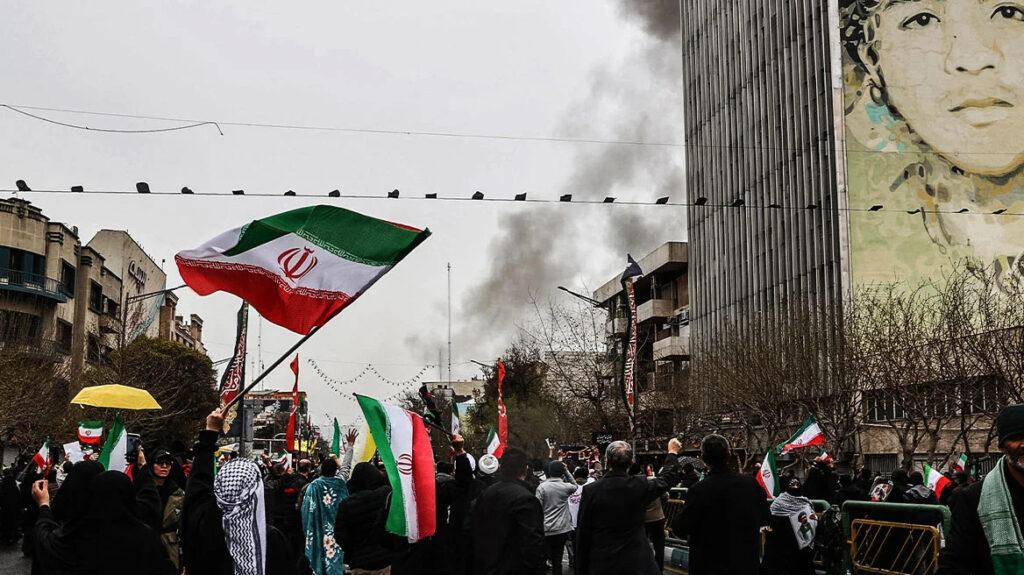
The new geopolitical balance in the Gulf
One of the first geopolitical losses after the October 7 attack was the US attempt to join Saudi Arabia in the 2020 Abraham Accords, through which the United Arab Emirates and other Arab-Muslim countries had proceeded to normalize their relations with Israel.
Before the war in Gaza, Riyadh was moving towards a deal with Israel. However, recognizing Israel became politically extremely difficult as Israeli airstrikes levelled large parts of Gaza and caused the deaths of more than 73.000 people, according to the health ministry of the Palestinian enclave, which is controlled by the Islamist Hamas.
The United Arab Emirates, on the other hand, further strengthened its relationship with Israel and, by the time the war with Iran began, had reached an unprecedented level of cooperation, with information sharing and coordination of military operations.
This relationship deepened even further as several of Abu Dhabi's neighbours began to see Israel as a destabilizing force equivalent to the Islamic Republic of Iran.
This was partly due to the way the Israeli military aggressively expanded its presence in the region, carrying out operations in Qatar, Yemen, Iran, Syria and Lebanon.
Saudi Arabia and the United Arab Emirates have already had differences over political Islam, the wars in Yemen and Sudan, energy policy, and the competition for regional influence.
Israel was another point of conflict and, according to Bloomberg Economics, the relationship between the two Gulf states moved from neutrality to hostility.
As Abu Dhabi strengthened its relations with Israel, Riyadh chose to place greater emphasis on diplomacy and strengthen its relations with Egypt, Turkey, Pakistan and some of its Gulf neighbours.
For the United Arab Emirates, this strategy seems to have worked.
On Friday, the White House, citing Abu Dhabi's support for the war against Iran, eased restrictions on AI exports to the country, paving the way for the purchase of advanced AI chips, something the Emirates has long pursued.
In contrast, there has been no similar move for Saudi Arabia so far.
The war with Iran widened the rift in the region.
Abu Dhabi called on Riyadh and Doha to engage in a coordinated military response and moved closer to US and Israeli operations.
Saudi Arabia refused, warning that an escalation could lead to a wider war, and opted more for the diplomatic route.
This difference reflects two different visions of security in the Gulf:
One of the first geopolitical losses after the October 7 attack was the US attempt to join Saudi Arabia in the 2020 Abraham Accords, through which the United Arab Emirates and other Arab-Muslim countries had proceeded to normalize their relations with Israel.
Before the war in Gaza, Riyadh was moving towards a deal with Israel. However, recognizing Israel became politically extremely difficult as Israeli airstrikes levelled large parts of Gaza and caused the deaths of more than 73.000 people, according to the health ministry of the Palestinian enclave, which is controlled by the Islamist Hamas.
The United Arab Emirates, on the other hand, further strengthened its relationship with Israel and, by the time the war with Iran began, had reached an unprecedented level of cooperation, with information sharing and coordination of military operations.
This relationship deepened even further as several of Abu Dhabi's neighbours began to see Israel as a destabilizing force equivalent to the Islamic Republic of Iran.
This was partly due to the way the Israeli military aggressively expanded its presence in the region, carrying out operations in Qatar, Yemen, Iran, Syria and Lebanon.
Saudi Arabia and the United Arab Emirates have already had differences over political Islam, the wars in Yemen and Sudan, energy policy, and the competition for regional influence.
Israel was another point of conflict and, according to Bloomberg Economics, the relationship between the two Gulf states moved from neutrality to hostility.
As Abu Dhabi strengthened its relations with Israel, Riyadh chose to place greater emphasis on diplomacy and strengthen its relations with Egypt, Turkey, Pakistan and some of its Gulf neighbours.
For the United Arab Emirates, this strategy seems to have worked.
On Friday, the White House, citing Abu Dhabi's support for the war against Iran, eased restrictions on AI exports to the country, paving the way for the purchase of advanced AI chips, something the Emirates has long pursued.
In contrast, there has been no similar move for Saudi Arabia so far.
The war with Iran widened the rift in the region.
Abu Dhabi called on Riyadh and Doha to engage in a coordinated military response and moved closer to US and Israeli operations.
Saudi Arabia refused, warning that an escalation could lead to a wider war, and opted more for the diplomatic route.
This difference reflects two different visions of security in the Gulf:
-the United Arab Emirates is in favour of a close alignment with Israel,
-Saudi Arabia seeks to balance between opposing powers and limit the spread of the conflict.
The disagreement was not limited to diplomacy.
In May, the United Arab Emirates withdrew from OPEC after nearly six decades of membership, taking Riyadh by surprise at the height of the worst energy crisis in a generation.
Iraq then left open the possibility of reconsidering its own participation in the organization, as long as it did not secure a higher production ceiling.
"We are entering a new era for the Gulf states," said Denis Bossard, a former French ambassador to the Middle East and an adviser to the French Institute of International Relations.
Israel, he said, seeks to "reshape the Middle East" and "control its immediate neighborhood."
"This is not accepted by the Gulf countries, with the exception of the United Arab Emirates," he added.
The crisis is spreading to the West
The crisis has also caused new tensions within the Western alliance.
Donald Trump has pressed European governments to help reopen the Strait of Hormuz. They refused.
British Prime Minister Keir Starmer said his country "will not be dragged into a wider war".
Germany's defense minister stressed: "This is not our war," while Spain banned the use of its military bases, calling the campaign illegal.
The conflict further burdened an alliance that had already been shaken by Trump's threats over Danish Greenland and by questioning the post-war international order.
Turkey, which hosted the NATO summit on July 7 and 8, sought to use its geopolitical importance as a bridge between Trump and European allies, who are already facing pressure to increase their defense spending.
During the summit, Ankara's growing importance became evident when Trump moved in the direction of allowing President Recep Tayyip Erdogan to buy U.S. F-35 fighters — the most advanced of this type in the world — despite strong opposition from Israel, although he ultimately did not commit to doing so.
-Saudi Arabia seeks to balance between opposing powers and limit the spread of the conflict.
The disagreement was not limited to diplomacy.
In May, the United Arab Emirates withdrew from OPEC after nearly six decades of membership, taking Riyadh by surprise at the height of the worst energy crisis in a generation.
Iraq then left open the possibility of reconsidering its own participation in the organization, as long as it did not secure a higher production ceiling.
"We are entering a new era for the Gulf states," said Denis Bossard, a former French ambassador to the Middle East and an adviser to the French Institute of International Relations.
Israel, he said, seeks to "reshape the Middle East" and "control its immediate neighborhood."
"This is not accepted by the Gulf countries, with the exception of the United Arab Emirates," he added.
The crisis is spreading to the West
The crisis has also caused new tensions within the Western alliance.
Donald Trump has pressed European governments to help reopen the Strait of Hormuz. They refused.
British Prime Minister Keir Starmer said his country "will not be dragged into a wider war".
Germany's defense minister stressed: "This is not our war," while Spain banned the use of its military bases, calling the campaign illegal.
The conflict further burdened an alliance that had already been shaken by Trump's threats over Danish Greenland and by questioning the post-war international order.
Turkey, which hosted the NATO summit on July 7 and 8, sought to use its geopolitical importance as a bridge between Trump and European allies, who are already facing pressure to increase their defense spending.
During the summit, Ankara's growing importance became evident when Trump moved in the direction of allowing President Recep Tayyip Erdogan to buy U.S. F-35 fighters — the most advanced of this type in the world — despite strong opposition from Israel, although he ultimately did not commit to doing so.
Iran's war shattered the image of safe haven in the Gulf
The war with Iran has also destroyed the image of Gulf cities as safe havens away from the region's conflicts.
Nowhere has this upheaval been more vividly reflected than in Dubai.
Sirens sounded among the city's glass skyscrapers, while interceptor missiles crossed the sky near the Burj Khalifa and smoke covered the region's largest airport.
Iran has launched nearly 3.000 drones and ballistic missiles toward the United Arab Emirates. Most were intercepted, but at least 13 people were killed, while ports, hotels and energy facilities suffered billions of dollars in damage.
Flights and business resumed quickly, but the effects remain.
Even after everyday life had largely returned to normal, the attacks forced Dubai to defend a reputation that for decades had been the foundation of its economic model: the image of a stable city that attracts capital, businesses and workers from all over the world.
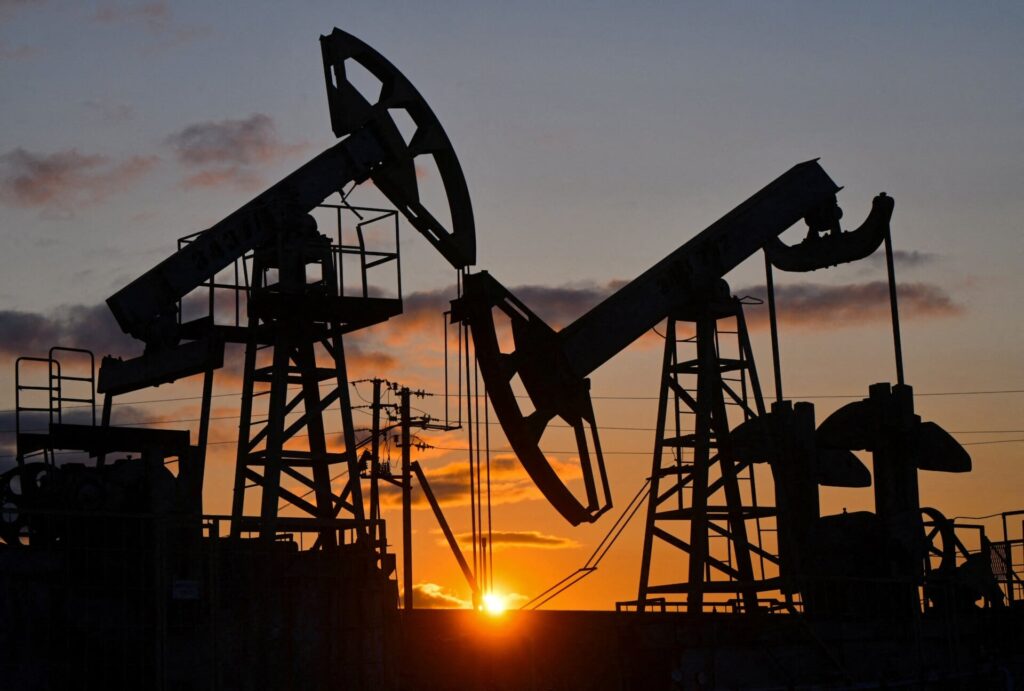
Oil, freight and the cost of war
The price of Brent jumped to $126.41 a barrel in April, up from $72.48 a day before the start of the war.
Prices at gas stations in the US exceeded $4.50 a gallon, while tanker fares rose sharply.
Since then, the price of oil has fallen below $80 per barrel.
However, even if the Strait of Hormuz is fully opened, the cost of insurance is expected to remain elevated, as shipowners now incorporate the risk of a new disruption of navigation into their costs.
Some losses will last much longer.
Iran's March 18 attack on Ras Lafan in Qatar damaged two liquefied natural gas (LNG) plants, which account for about 17% of the country's export capacity.
Repairs may take years.
European buyers continue to look for alternative cargoes, maintaining pressure on the electricity, fertilizer and petrochemical markets.
Across Africa, higher fuel and fertiliser costs are weighing on government budgets, driving up food prices and threatening future harvests.
The price of Brent jumped to $126.41 a barrel in April, up from $72.48 a day before the start of the war.
Prices at gas stations in the US exceeded $4.50 a gallon, while tanker fares rose sharply.
Since then, the price of oil has fallen below $80 per barrel.
However, even if the Strait of Hormuz is fully opened, the cost of insurance is expected to remain elevated, as shipowners now incorporate the risk of a new disruption of navigation into their costs.
Some losses will last much longer.
Iran's March 18 attack on Ras Lafan in Qatar damaged two liquefied natural gas (LNG) plants, which account for about 17% of the country's export capacity.
Repairs may take years.
European buyers continue to look for alternative cargoes, maintaining pressure on the electricity, fertilizer and petrochemical markets.
Across Africa, higher fuel and fertiliser costs are weighing on government budgets, driving up food prices and threatening future harvests.
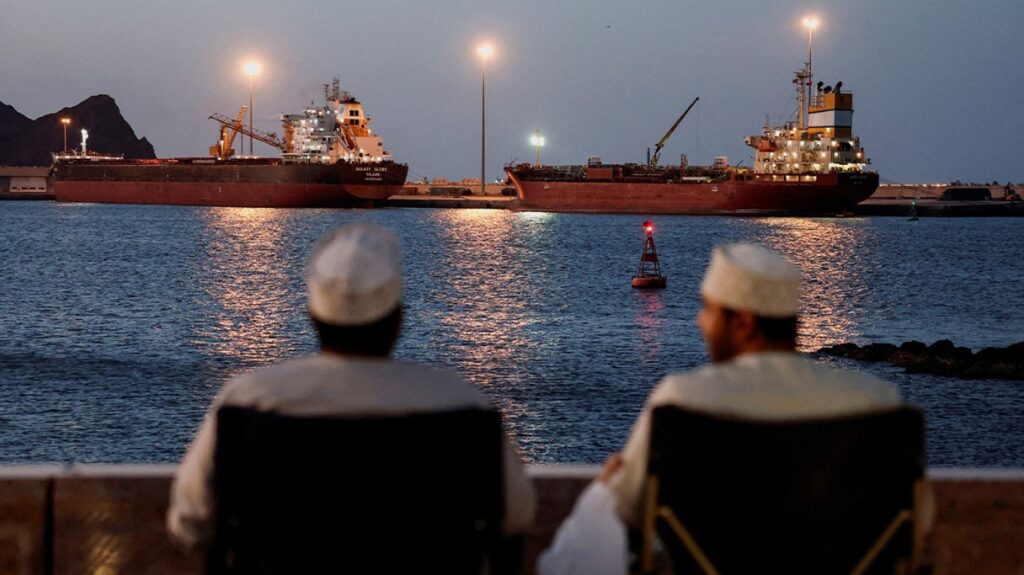
Dependence on the Strait of Hormuz is being reconsidered
The blockade of the Strait of Hormuz has forced Gulf governments to rethink how their economies are connected to the rest of the world.
Energy production has been curtailed across the region, with oil-producing countries at one point cutting their production by at least 10 million barrels per day — about 10% of global supply.
The United Arab Emirates is now planning new infrastructure outside the Hormuz region in an effort to permanently reduce its dependence on this sea crossing.
The crisis has shown that even the richest Gulf countries remain vulnerable to a geopolitical shock.
For decades, their strategy was based on the idea that they could separate economic growth from the region's conflicts.
The war proved that this era is over.
The blockade of the Strait of Hormuz has forced Gulf governments to rethink how their economies are connected to the rest of the world.
Energy production has been curtailed across the region, with oil-producing countries at one point cutting their production by at least 10 million barrels per day — about 10% of global supply.
The United Arab Emirates is now planning new infrastructure outside the Hormuz region in an effort to permanently reduce its dependence on this sea crossing.
The crisis has shown that even the richest Gulf countries remain vulnerable to a geopolitical shock.
For decades, their strategy was based on the idea that they could separate economic growth from the region's conflicts.
The war proved that this era is over.
Israel's expansion
Israel emerged from the wars stronger on the battlefield, but more isolated than at any other time in recent years.
The most immediate change after the Hamas offensive – in which 1,200 people were killed and every aspect of Israeli society affected – was that the two-state solution moved even closer to extinction.
Years of Israeli blockade in Gaza and occupation in the West Bank had already weakened the prospects for the creation of a Palestinian state.
But the trauma of October 7 hardened the attitude of a large part of Israeli society, with many Israelis now considering both a Palestinian state and the forces supported by Iran in the region existential threats.
The government accelerated the expansion of settlements, increased efforts to effectively annex parts of the West Bank, and two years ago the Knesset formally rejected the creation of a Palestinian state.
Iran and the armed organizations it supports continue to advocate the destruction of the Israeli state.
Israel, with broad domestic support, has said it will eliminate these threats.
As part of a new security doctrine, which the Israeli government considers necessary to avoid a new attack similar to that of October 7, the army has expanded its operations beyond Gaza.
Israeli forces advanced deeper into Lebanon to confront Hezbollah, displacing more than a million people, killing thousands, and even destroying entire villages.
At the same time, they occupied strips of southern Syria.
Israel's military successes, which the government presents as defensive operations, however, have reinforced its international isolation.
A year after the start of the war in Gaza, the International Criminal Court issued an arrest warrant against Prime Minister Benjamin Netanyahu for alleged war crimes and crimes against humanity.
Britain suspended trade negotiations and some arms export licenses.
The European Union has reviewed whether Israel has violated the human rights clauses of its trade agreement.
In an unprecedented move, Britain, France, Canada, Australia and Portugal were added to about 150 countries that recognized a Palestinian state.
The test of the US-Israel relationship and the resilience of the Iranian network of influence
Despite growing international criticism, the US – under both Joe Biden and Donald Trump – maintained a policy of "suffocating hugging" Israel, providing military aid, weapons and diplomatic cover, even as Israel's stance in Gaza turned it into an internationally isolated state.
This approach is now under renewed pressure, as Trump rejected accusations that Benjamin Netanyahu dragged him into war with Iran, while the Israeli invasion of Lebanon became a major obstacle to reaching a ceasefire.
Netanyahu had for years portrayed himself as the only politician who could guarantee Israel's security, particularly because of his close personal relationship with Trump.
However, the Israeli prime minister's choice to identify more and more with the Republican Party over the past decade has alienated much of Democratic voters in the U.S. and turned Israel into a deeply partisan issue in American politics for the first time.
In April, 40 of the 47 Democratic senators voted against a military aid package to Israel.
According to an AP-NORC poll released last week, nearly 60 percent of Democrats — including 51 percent of Jewish Democrats — and 40 percent of all American adults consider the U.S. to be "overly supportive" of Israel.
This disagreement is also beginning to appear within the Republican Party, with well-known conservative voices, such as Tucker Carlson, distancing themselves from Trump on this issue.
For the first time, the Gallup poll showed that Americans feel more sympathy for Palestinians than for Israelis.
41% said they were more pro-Palestinian, compared to 36% who expressed more sympathy for Israelis.
The change is striking compared to 2021, when Israelis were ahead with 60% to 23%.
In recent weeks, both former Democratic congressman and former White House chief of staff under Barack Obana, Rahm Emanuel – one of the best-known Jewish politicians in the US – and US Vice President J DVance have criticized Israel's military behaviour, raising questions about the future of the alliance.
"Unconditional support has allowed you to deny food and medical assistance to innocent Palestinians suffering in Gaza, leaving the world to conclude that the Israelis not only want to kill the Palestinians, but are completely indifferent to their death, destruction and suffering," Emmanuel said in a speech at Tel Aviv University.
Vance had said a few weeks earlier that Israel cannot simply "kill to find a solution" to every national security problem it faces.
The Netanyahu-Trump relationship has also become a political burden for the Israeli prime minister.
Polls suggest Netanyahu may lose the election in the fall, as more Israelis appear frustrated by the lingering uncertainty surrounding the peace deal between Washington and Tehran, which leaves Iran not only intact but possibly stronger than before.
Iran's allies: Hurt but still dangerous
Iran's regional network emerged from the war badly wounded, but it still has the capability to threaten Israel and the wider region.
At the same time, the Islamic Republic retained the ability to impose enormous costs on the global economy.
The conflict almost immediately swept away organizations that the U.S. designates as terrorists.
Hezbollah from Lebanon entered the conflict, while Yemen's Houthis launched attacks against navigation in the Red Sea.
Israel first began hitting Iran's allies in Gaza and then expanded its campaign against the Houthis in Yemen.
As it struck at Tehran's allies, Iran's very ability to respond seemed limited.
Israel, the U.S. and Arab partners intercepted the majority of the hundreds of drones and missiles launched by Iran in April 2024.
The most humiliating blow to Iran's network came in September of that year, when Mossad security agents activated explosive devices on pagers used by Hezbollah operatives across Lebanon.
Ten days later, Israel killed Hezbollah leader Hassan Nasrallah in a major airstrike in Beirut.
Iran suffered a new blow when Syrian President Bashar al-Assad fled to Russia after the collapse of his regime.
Israeli forces then seized parts of Syria, while Ahmed al-Sharaa, a former al-Qaeda commander who was later received at the White House and in London, before attending the NATO summit in Ankara, took power.
With Iran's regional defenses significantly weakened, Israel turned directly against the Islamic Republic.
In June 2025, he launched a 12-day war against Iran's nuclear and military infrastructure.
The US participated by bombing the country's most well-protected nuclear facilities.
The attacks left the fate of Iran's highly enriched uranium unknown and forced its nuclear program to move even deeper into underground facilities.
The final match and the uncertain outcome
The current Trump-Netanyahu war, which began in late February, has led to the death of Iran's supreme leader, Ayatollah Ali Khamenei, and top Iranian commanders.
The two leaders believed that they would achieve an easy victory, which would be completed within four to six weeks, and even hoped for regime change.
Tehran's response proved the opposite.
Iran launched attacks across the Gulf and moved to control the Strait of Hormuz.
After more than 100 days of intermittent conflict, Trump had strong reasons to seek an agreement.
The price of gasoline had exceeded $4, inflation was rising and the midterm elections were approaching.
On June 17, the American president signed a memorandum of understanding with Iran at Versailles.
Washington returned to diplomacy with an Iran wounded and poorer, but at the same time determined and still able to impose a price to end the war.
In the deal – which remains fragile after the latest developments – Tehran secured an easing of restrictions on oil sales, which have since been suspended, as well as the prospect of access to frozen funds.
However, the Islamic Republic has not yet accepted clear constraints on its nuclear program, nor has it given up its strategic advantage in the Strait of Hormuz, through which about a fifth of the world's oil and gas passes.
Trump appears increasingly frustrated by his inability to end the war.
In recent days, he has expressed anger at the Iranian leadership, calling Iranian leaders "trash" and declaring that the ceasefire is over.
"The war may ultimately have led to results contrary to those intended, which serve Iran's interests," said Yasser Osman, a former Egyptian envoy to Tehran and former ambassador to the Palestinian Authority.
"The Iranian regime is likely to emerge stronger and more determined than before," he added.
Capital.gr
