
"The effective treatment of addictions and illicit drug trafficking requires balanced policies that invest in prevention, early intervention, treatment, harm reduction and social reintegration, with respect for human dignity and human rights," said the president of the Cyprus Addictions Authority (AAEK) Dr. Christos Minas in his greeting at an AAEK event on the day of International Day Against Drug Use and Illicit Trafficking, which is June 26. The event entitled "The man at the heart of drug policy, who protects health, enhances safety and respects human rights" took place at the University of Nicosia. In the context of the event, Byron Geist, head of the Policy Department of AAEK, presented the Authority's annual review for 2025, while the executive director of AAEK Constantinos Stylianou presented the main results and initiatives of the Cyprus Presidency in the field of drugs at European level. Actions and programs licensed and subsidized implemented by AAEK collaborating bodies were also presented. Interventions were made by the psychologist Dr. Vasiliki Christodoulou, Assistant Professor of Psychology at the University of UCLan Cyprus, the psychologist Elena Zarouna, executive director of KENTHEA and the psychologist Tina Pavlou, clinical director of the closed therapeutic rehabilitation community "Agia Skepi". The event was coordinated by the officer at the Policy Department of AAEK Eva Symeonidou.
A Reminder of Collective Responsibility
"The 26th of June, the International Day against Drug Use and Illicit Trafficking, is an important reminder of the collective responsibility we have as a society towards a phenomenon that affects human lives, families and communities around the world," said the president of the Cyprus Addictions Authority, Dr. Christos Minas, in his greeting.
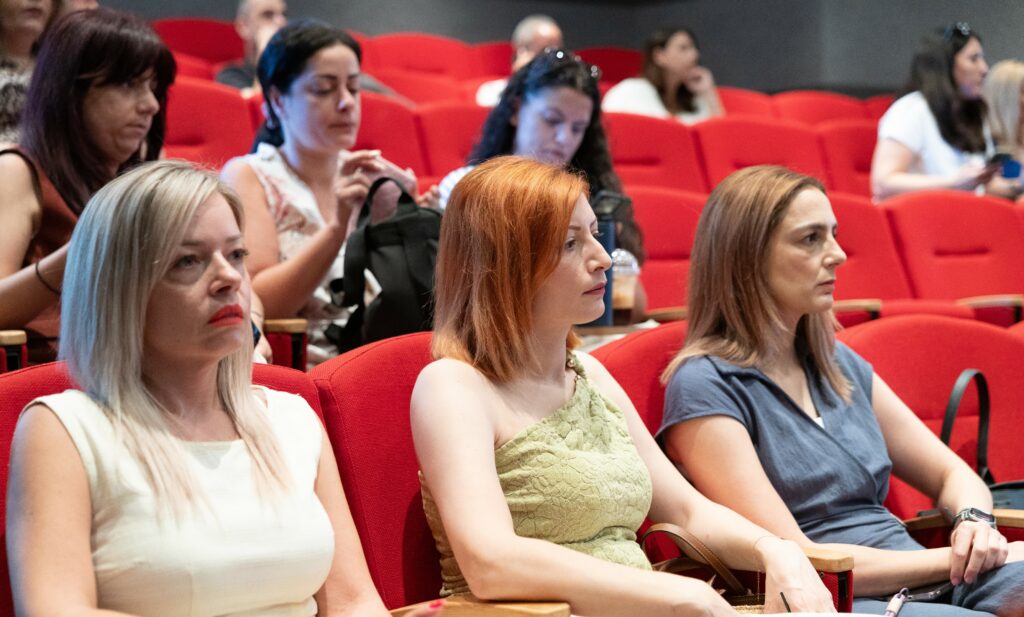 Snapshot from the event of June 26
He added: "The message of this year's UN campaign focuses on the need to break the cycles that fuel dependency, organised crime and social exclusion. The Cyprus Addictions Authority continues steadily to implement the National Strategy for Tackling Addiction 2021–2028 and the Action Plan 2025–2028. At the same time, it develops policies and actions based on scientific knowledge, a documented approach and the cooperation of all competent bodies. This year is of particular importance for Cyprus, as from January 2026 our country took over the rotating Presidency of the Council of the European Union. In this context, Cyprus chaired the Horizontal Working Group on Drugs, actively contributing to the formulation of a modern European drug policy, which is effective, balanced, evidence-based and human-centred."
Annual review – trainings and objectives
An assessment of the work and actions of AAEK for 2025, as well as the work of all stakeholders and partners of the Authority, was the annual review of 2025 by the head of the Policy Department of AAEK Byron Geist. He said that important achievements that stood out were the development and promotion of a policy plan and procedures for the prevention, detection and treatment of the use of alcohol and illegal addictive substances in the work environment, the continuation and strengthening of the cooperation protocol for the prevention and treatment of illegal addiction substances in schools between the Ministry of Justice, the Ministry of Education and AAEK, but also the memorandum of referral of students to therapeutic programs.
An important achievement was also the successful completion of a three-year support program for people who use psychoactive substances residing at the Kofinos International Protection Reception and Hospitality Center, the operation of the "MOTIVO" center in the Paphos district to deal with gambling addiction. The funding of the program was entirely covered by the National Betting Authority." Regarding the research and training pillar, he spoke about a series of 11 workshops throughout Cyprus with the aim of strengthening the knowledge of social workers of the SWS for the effective treatment of people with substance use disorder and their families, for the training of directors and assistant directors of Secondary and Primary Education in matters of prevention of addictions, especially in the school environment and for the training of police officers and prison guards for the handling of persons arrested for offences involving addictive substances. In conclusion, Mr. Geist referred to the goals and priorities of the Policy Department of AAEK for 2026.
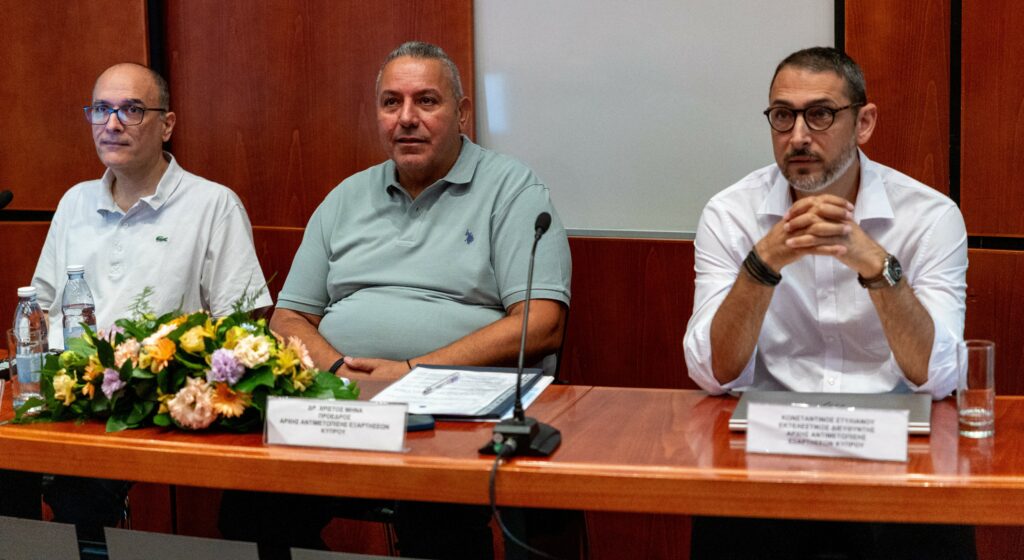 From left to right: Byron Geist, Christos Mina and Konstantinos Stylianou
Impact of life in Larnaca and Famagusta
The preventive program EpiDRASI Zois, which has been operating with a grant from AAEK since 2019 in the provinces of Larnaca and Famagusta, was presented by the counselling psychologist Dr. Vasiliki Christodoulou, Assistant Professor of Psychology at UCLan Cyprus. The program is implemented under the scientific supervision of Dr. Christodoulou and operates with the support of registered psychologists and other professionals in the field of education, from the Inspire research center of UCLan Cyprus (https://inspirecenter.org/). As he underlined, "the program tries to touch multiple levels in terms of prevention and is always open for collaborations and referrals at an individual, group level or even for parent or community workshops. We accept children with some signs of risk, but who have not yet progressed to substance use. Our goal is to deal with risk factors in a timely manner. Through the program, we also involve the family and meetings are held with parents during the period that the child participates in the program, for effective parent-child communication and setting boundaries within the family. In addition, opportunities are provided for subsidized participation in healthy activities in the community, such as sports activities, learning support, horseback riding, and other creative or recreational activities.
It is important for us to strengthen our cooperation with the school community and so we have trained teachers on what are the risk factors and what are the protective factors that they themselves can identify within the school."
Dr. Christodoulou stated that "through participation in the program, the support that children receive from peers increases and the problems they have with them decreases. There was a significant increase in psychological well-being, a reduction in overall difficulties, a reduction in depression and increased involvement in activities that are in line with values."
Program for children of imprisoned parents
The two preventive programs for children of vulnerable groups "I deserve a Chance" and "Responsibility of all of us to be well" were referred to by the scientific director of the programs, counselling psychologist Elena Zarouna, executive director of KENTHEA (Center for Information and Therapy of Dependent Individuals). She said that the programs have been implemented for the last 8 years with the help of the ITHACA and ODYSSEA stations and with licensing and a grant from AAEK. She added: "In the context of our work with children of vulnerable groups, we work with the group of children of imprisoned parents. This is a group with significant needs in psychosocial support, in strengthening and protecting their human rights. These children are asked to separate from their parent and grow up with one parent or even in the child protection system (foster care or child/adolescent housing.
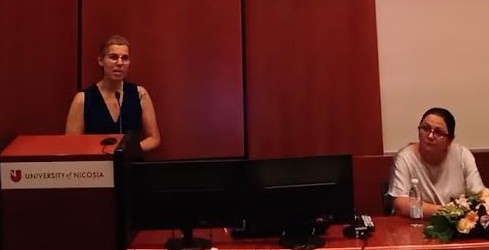 Dr. Vasiliki Christodoulou on the podium and Elena Zarouna seated
The existence of children and the influence of the parental bond should also be of concern to the respective Court when deciding whether an accused will be kept on trial, but also in case of conviction and on the amount of his sentence and/or alternative sentences. In addition, when we work in the field of psychosocial support for these children, we evaluate the nature of the parent-child relationship before imprisonment and work both on the acquisition of appropriate parenting skills by the imprisoned parent where they are lagging behind, and on the preservation of a child's right to have communication with his parent, as often as he wishes (given that this is judged in his favour) based on the methods allowed by the prison (by phone, online and in person) at the frequency allowed by the regulations.
We are often faced with the condition of the first visit to prison, where we are called upon to prepare children for this experience. It is very important for children to know what they are expected to see and hear, as well as for separating from the parent, which – if the child is not properly prepared – can be very painful. In addition, when it comes to mental health, members of our team deal with how children understand why a parent is in prison. In cases where the reason for imprisonment concerns short sentences, things are easier given the small extent that this condition may have taken in the media.
In cases where a serious crime has preceded on the part of the parent, children are called upon to manage this information, which may conflict with their cognitive schema about their parent and even more so with their feelings towards the parent. These processes are dealt with by our specialized team of experts in these issues."
The characterizations that stigmatize...
As Elena Zarouna pointed out, "we are called upon to protect the children of imprisoned parents to the maximum extent possible from the stigma that the parent's actions bring to them. This is – she continued – a very difficult effort, given the small size of our island and the great prevalence of the use of social media. If we want to protect children who have had the misfortune to be affected in this unfavourable way by the actions of their parents, we all need to be very careful about what we write or say and how we write or say it, since everything that is written or said on the internet, It is absorbed by artificial intelligence systems and once it is posted, it stays, even if the person who has posted it downloads it. Therefore, we call on everyone to avoid characterizing people and to refer to behaviours. The children of imprisoned parents deserve the support of all of us and we can make sure that they grow up and become healthy and successful adults despite the painful conditions they experience with what may have happened to them in their childhood, which they have not chosen and is in no way their responsibility. As an organization, we see that with the right support, most of these children respond positively to our interventions."
MOTHER-CHILD PROGRAM - Rehabilitation and the parental role
The clinical director of the closed therapeutic rehabilitation community "Agia Skepi", psychologist Tina Pavlou, described in her intervention the women's program that includes a mother and child program. She stated that "mothers who are in the program can stay in specially designed rooms with their young children who receive services based on their own developmental needs".
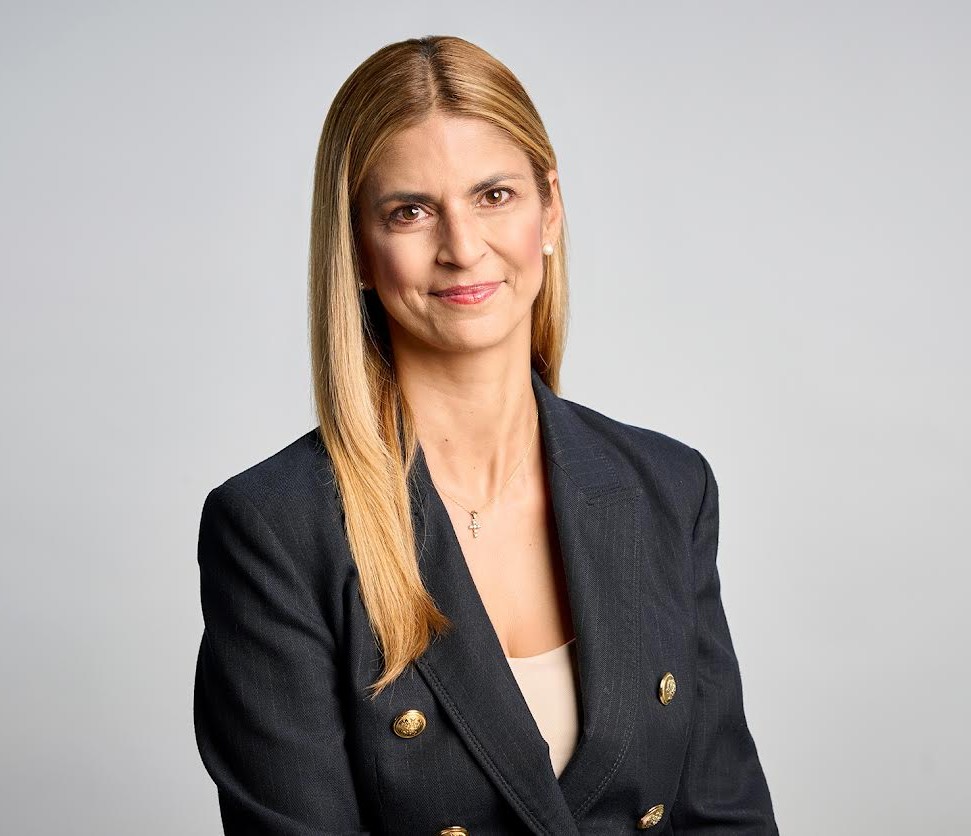 The clinical director of Agia Skepi, psychologist Tina Pavlou
Mrs. Pavlou spoke about the case of a woman who used heroin, cocaine and crystal meth for years and ended up in the Central Prison. She added the following: "She made many attempts at treatment over the years and her last attempt was made while she was in prison in the 4th month of pregnancy and came to "Agia Skepi" with a treatment decree. Before prison she was homeless. Upon her admission to the program, she began to be given a substitute to avoid preterm birth. In the 7th month she quit for 4 days and made too much use, she was spotted and returned to the program. She gave birth prematurely and the infant entered with withdrawal syndrome. He was given substitutes and remained for a month in the neonatal intensive care unit of Makarios Hospital. Due to the use of cocaine during pregnancy, the child has partial deafness. The mother continued her treatment with the little one. Services from the School for the Deaf were included in their program with a special educator and speech therapist coming to "Agia Skepi" weekly. Today, 2.5 years later, the little one attends the kindergarten of the School for the Deaf, the mother works, lives exceptionally in a space provided by "Agia Skepi" and is supported by our reintegration framework. The father also joined the program in the last year and is in the phase of social reintegration. Both parents were supported by the program in their parental role. They have gone through and are having a hard time, but they are responding to their rehabilitation and the proper upbringing of their child. The mother has just bought her first car. Until now, she changed two buses every morning and afternoon, to take the little one to school and go to work."
