
Increases in all monthly disability benefits, gradual integration of new beneficiaries, as well as the creation of 11 social benefits and eight independent living services are provided for by the new legislation on Social Participation, Inclusion and Independent Living of Persons with Disabilities, which has already been implemented.
The new framework also provides that the current beneficiaries retain all the benefits they already receive, while the expansion of the system will take place gradually.
In the first phase, which covers the period 2026-2028, it is estimated that about 5,000 people with disabilities will be included, with additional state funding of €106 million.
After the completion of the first three years, the expansion will continue, with the ultimate goal of benefiting a total of 12,000 new beneficiaries.
Presenting the roadmap of the reform, the Deputy Minister of Social Welfare, Klea Papaellina, said that the new framework changes the way the state approaches disability, emphasizing the autonomy and equal participation of people with disabilities in society.
"This new legislation is not just another legislative initiative. It is a new social agreement that puts even more at the center the human being, their dignity, their quality of life and the safeguarding of their rights," he said.
Ms. Papaellina, clarifying that none of the existing beneficiaries is going to lose the benefits they receive, explained that with the first phase of the implementation of the new framework, an increase in all monthly disability benefits currently paid is foreseen.
The most important component of the reform, said the Deputy Minister, is the inclusion in the planning of non-financial benefits.
Specifically, a framework of 11 social benefits of independent living is introduced, as well as eight independent living services, "with the aim of substantially strengthening the autonomy of people with disabilities and their ability to live and participate equally in society".
The philosophy of the reform, Ms. Papaellina explained, is based on the transition from a model that focuses mainly on the provision of benefits to a system that supports the real needs of each individual, strengthening independent living and personal choice.
The full implementation of the reform requires, among other things, upgrading IT systems, adapting administrative procedures, training staff and informing citizens in detail.
For this reason, the planning provides for implementation in three phases. This means, as mentioned, that the changes in benefits and the inclusion of new beneficiaries will take place progressively and not at the same time for everyone.
From August 2026, the personal assistance and home care allowance will be implemented, in which the current Disability Allowance is incorporated. According to the Deputy Ministry of Social Welfare, the new benefit will be accompanied by increases in benefits and a gradual expansion of beneficiaries.
The number of beneficiaries is estimated to increase from about 16,500 today to 21,500 by the end of 2028, while in the long term it is expected to reach about 28,500, as the disengagement from income and property criteria progresses.
The timetable in detail:
Phase A:
The first phase concerns five independent living benefits, with a gradual implementation in the second half of 2026.
July 2026
· Launch of the Car Purchase Grant.
· Launch of the new Movement Allowance.
For the Movement Allowance, it is provided:
· An increase of 33%.
· From €75 to €100.
· From €150 to €200.
As well as a lump sum payment corresponding to the increase from January 1, 2026 for a period of six months, which will be credited to the accounts of existing beneficiaries at the end of July.
August 2026
· Start of the Personal Assistance and Home Care Allowance.
Sep 2026
· Commencement of the Day Center Participation Allowance.
October 2026
· Start of the Supporting Consumables Allowance.
Phase B:
According to the decision of the Council of Ministers, the second phase of implementation will begin before the end of 2026 and will concern the expansion and implementation of the eight independent living services.
Phase C:
During 2027, the full implementation of all the provisions of the new law is foreseen, namely:
· The 11 independent living benefits.
· The eight independent living services.
For the implementation of the reform in 2026, €26 million will be spent, in 2027 €35 million. and in 2028 €45 million.
Citizens who are interested in being informed about the new rights or when they may be included in the new framework should follow the official announcements of the Deputy Ministry of Social Welfare and the Department of Social Inclusion of People with Disabilities, as several of the provisions of the reform will be activated at different stages of implementation.
The goal is meaningful inclusion
As the Deputy Minister pointed out, the success of the new framework will not be judged by the adoption of the law, but by whether it will improve the daily life of people with disabilities and pointed out that the implementation of the new framework is not completed with the adoption of the law, but is a process that requires significant preparation by the competent services.
"The implementation of such important legislation is not completed with its adoption or publication. Instead, it is now starting. It requires hard work, changes in information systems, procedures and continuous information of citizens," she said.
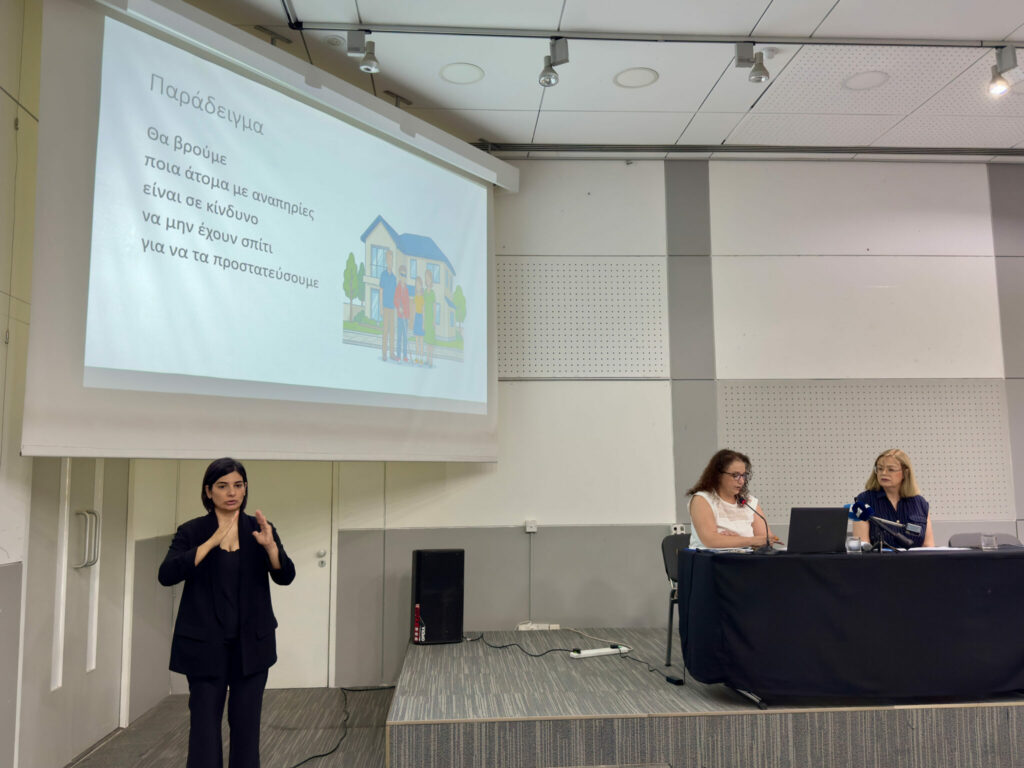 Press Conference for the presentation of the Revised National Strategy and the Action Plan for Disability 2024-2028
She assured that the Deputy Ministry will continue to work closely with the organizations of people with disabilities and their families, while the Department of Social Integration of People with Disabilities will publish an annual report on the progress of the implementation of the reform.
According to the Deputy Minister, the new legislative framework is fully harmonized with the United Nations Convention on the Rights of Persons with Disabilities, as well as with the European and National Disability Strategy. At the same time, it is part of the government's commitments to modernize the welfare state and strengthen social cohesion.
"The success of the reform will be judged by the improvement of the quality of life of people with disabilities, the expansion of their options and their substantial equal participation in society," the Deputy Minister concluded.
