
ARE WE UNJUSTLY AFRAID OF SNAKES? - Filenews 13/7
Hearing the word "snake", usually the reaction of the person is fear, a sense of danger and discomfort. This seems to be one of the most deeply rooted human instincts, which for our ancestors was essential for survival purposes. But is there a reason for people in Cyprus to feel this terror?
The Department of Environment and the European project Pandoteira, which deals with the management of the Natura 2000 network in Cyprus, explain the role of snakes in nature and give practical instructions for the safety of citizens, answering basic questions and clarifying why, based on their experience, there is no reason to panic.
- Are snakes useful to us?
We may not realize it immediately, especially when we are locked in four walls and two screens, but all animals of nature are important and useful.
Human health and quality of life depend directly on the health of the natural environment and, by extension, the balances that govern it. Snakes contribute to human well-being in a variety of ways:
- Friends of farmers: A significant part of their diet consists of rodents (mice and rats), which when left uncontrolled, without natural predators, cause serious damage to crops, such as carob trees.
- Protection against serious diseases: By consuming rodents, snakes protect us from serious diseases. Rodents can be carriers of diseases, such as Leptospirosis and Borreliosis (or Lyme disease), through ticks. The rat poisons used to control rodents are toxic and dangerous to ourselves, while leading to the death of a multitude of natural predators such as snakes and birds of prey that feed on the poisoned rodent. Thus, instead of decreasing the rodent population, in the long run it increases due to a decrease in their natural predators.
- Utility in medicine: More and more drugs are made from enzymes and toxins derived from snake venom. Such drugs include, among others, antithrombotics and drugs that treat heart attacks or strokes.
- Food chain: Apart from the basic role of snakes as predators, they themselves are prey for a multitude of other animals, mainly birds of prey, playing a crucial role in the balance of biodiversity in Cyprus.
- Do we have dangerous or deadly snakes in Cyprus?
Animals attack, or rather defend themselves, and become dangerous only when threatened.
In Cyprus we have 3 venomous species of snakes. Of these, only the fina – otherwise known as the kontoura, viper or echidna – (Macrovipera lebetinus) has a venom toxic enough to do us harm. The other two, the shuttlecock (Malpolon insignitus) and the woodpecker (Telescopus fallax) although they have venom, their bite cannot cause any significant harm to humans and so they are considered completely harmless.
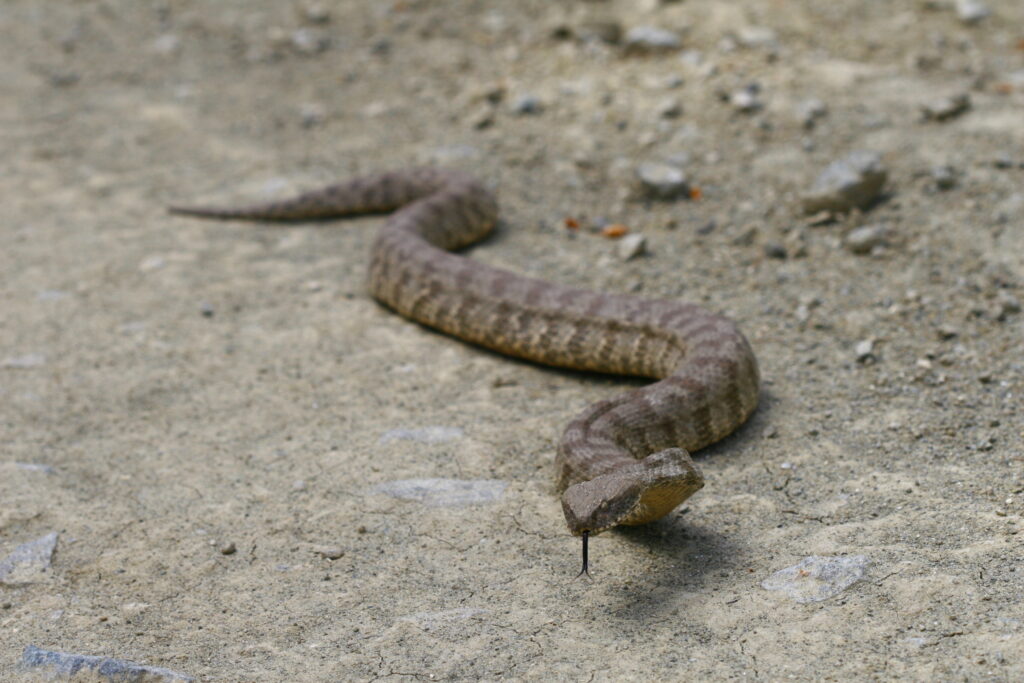
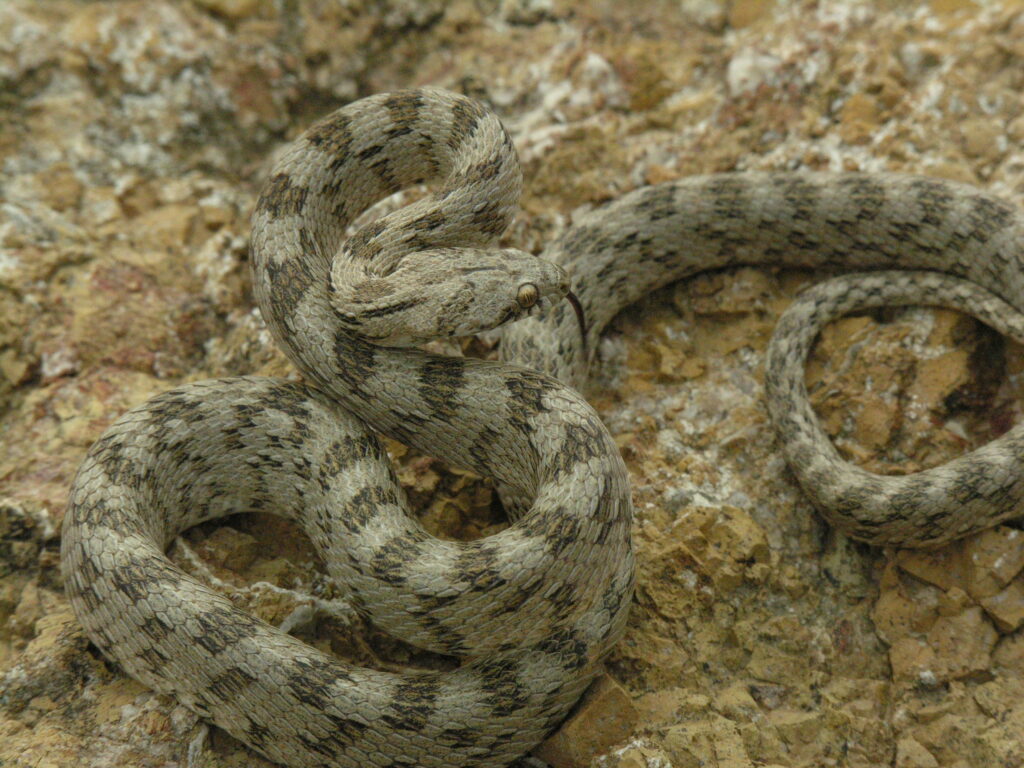
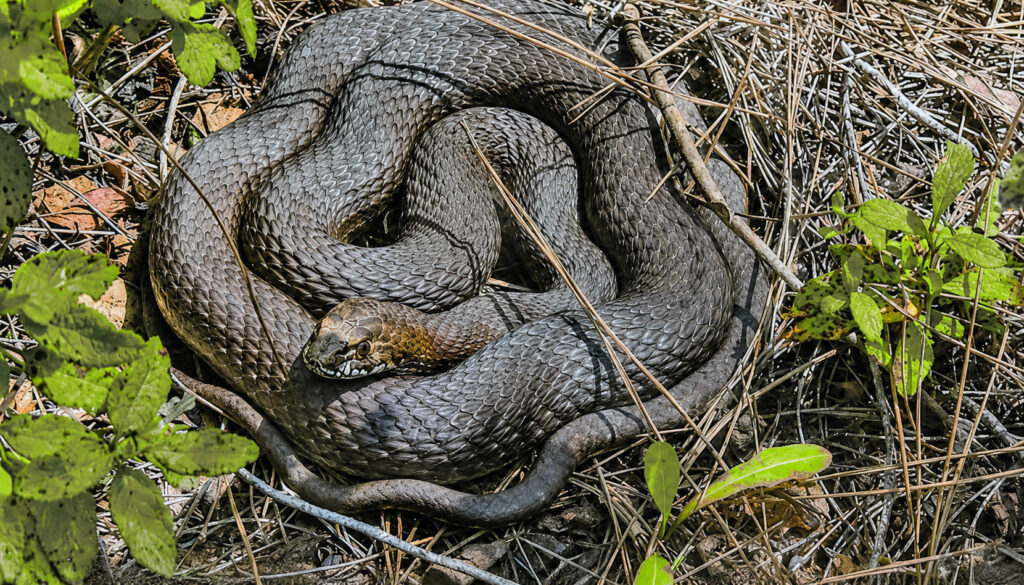
As for fina, yes it is dangerous, but there is no need to panic. The fina is much less dangerous than we think. First of all, it never attacks humans, but it can bite to defend itself in case we approach it at a very close distance, step on it or try to catch it. Fina venom is not neurotoxic – that is, it does not affect the nervous system – like the venom of some species found on other continents (e.g. cobras, mamba). In that case, things would be much more serious. In the case of fina, the venom is mainly cytotoxic and hemotoxic – that is, it affects tissues and blood – and spreads mainly through the lymph rather than through the bloodstream. Therefore, it needs time to act. This gives us time (a few hours) to go to the nearest hospital where we will be treated.
If he bites us, yes we will be scared, yes we will be in pain, yes it will probably take us a few days to get well again, but we will not die. In Cyprus every year dozens of people are bitten by finas. However, deaths are extremely rare and are usually due to allergic shock or a burdensome medical history.
After a fina bite, transport to the hospital is imperative and must be done immediately. Although we generally have enough time to go to the hospital wherever we are on the island, the sooner we go, the less tissue damage the poison will have time to cause, and the faster we will recover. Particular attention should be paid to young children, the elderly and people belonging to vulnerable groups, due to various diseases. These people, due to their condition, are likely to be affected more quickly and intensely by the poison and hospitalization should be done quickly.
- Why don't we exterminate them to save lives?
More lives will be at risk if we exterminate snakes than if we leave them alone. Snakes play an important role in the balance of ecosystems and the disruption of this delicate balance puts us at risk.
Snakes belong to the nature of Cyprus. They have been on this island for much longer than humans. Several million years ago, to be exact. The environment of our island has developed, evolved and maintained an ecological balance along with them. The extermination of snakes, and the disturbance of this balance, will only bring problems. A very easily understood example of this imbalance is the increase in the population of their prey, specifically rats. Finns are particularly effective predators of large rats. Their absence from the natural environment would result in an increase in the rat population, especially in areas where other predators, such as manbirds, are absent. Rats are a much bigger problem for humans, both economically, through the destruction of crops, and health, as they are carriers of diseases that can easily be transmitted and affect humans.
- What is the expected behavior of a fina?
Finas don't wake up in the morning saying "Ah, what am I going to do today... Let me go and bite someone." They live their daily lives like any animal that struggles to survive. They will warm themselves in the sun, cool off in the shade, hunt to eat and enjoy what nature offers them.
The fina is a slow-moving species of viper, unlike most other snakes on the island. This characteristic makes it rely more on camouflage and immobility, hoping that we will not see it and pass it by, since snakes see humans as some large predator. When camouflage is not enough and the "potential predator" – that is, us – is still approaching the fina, then the next line of defense is to flee, if given the space, or to warn with a hiss to repel the predator.
The only cases in which the fina will try to bite us are if we step on it (and this is not always), if we hold it in our hands, if we try to lift it off the ground, or if we approach it at a very short distance. It is important to emphasize that most of the time bites occur when someone tries to kill a fina or catch them for any reason.
Finas do not jump and do not chase us to bite us. On the contrary, they are afraid of us and do everything they can to avoid us in order to survive. The right and most effective way to stay safe when we are in the countryside is to always see where we step and where we put our hands. Also, when we go hiking or perform work in the countryside, it is good to wear hiking boots or boots and not open shoes.
- What do we do if we are bitten by a snake?
The issue should not only be what we do, but also what we DO NOT do. There is no need to panic – the end of the world has not come. We don't tear the wound and we don't suck the poison – these things only happen in movies. We are not indifferent and we do not take the wheel in our hands.
If we are bitten by a snake that we know for sure is not fine, then there is no reason to worry. It is advisable to wash the wound with soap to avoid the possibility of bacterial infection, even though this is very small. Let's not forget that snakes feed on rats and germs can be transferred from their bite. As a precaution, we can go to the hospital to have the wound properly treated.
If we suspect that it is a fina bite, we must remain calm. Panic is the worst enemy. There is enough time to safely go to the nearest hospital, wherever we are. We call 112 and notify about the incident, so that the hospital is aware and prepared to treat us. If someone can't take us to the hospital, we ask for an ambulance. We don't drive if we've been bitten. The immobility of the bitten limb is important to limit the diffusion of the venom to the surrounding tissues. We do not do any bandaging on the bitten limb, as this can cause more damage. We don't try to suck the poison and we don't take any medication without medical guidance.
- How can we ensure that snakes do not enter our yard and home?
No animal has the slightest desire to enter a person's house, except perhaps cockroaches. When snakes enter our yards, they are usually by mistake or desperation, in their attempt to find food, shelter or a cool place to rest in the summer.
There are ways in which we can repel snakes from our space and there are countless ways that have absolutely no proven effect. Most often, snakes are passing visitors and will leave on their own.
Substances such as sulfur, mothballs or other commercial chemical preparations are toxic and very dangerous to humans, with no proven effect on repelling snakes. Many commercial repellents choose not to mention their active substances, which potentially makes them even more dangerous for us. Natural preparations based on garlic or lavender are clearly preferable to chemicals, but still their effectiveness needs confirmation. The same happens with devices that produce vibrations as a measure of repelling snakes.
The only sure thing is that all this makes us feel safer. In practice, when a snake follows the smell of a rat and this smell brings it to our yard, it will not stop its hunt because there is simply something there that bothers it. He will capture his prey and then leave.
What is really effective? We should not give a reason to a snake to visit our space. Snakes are often attracted to homes because they offer a food source or even suitable hiding places. The presence of snakes usually indicates the presence of rodents, which they feed on, so it is a priority to maintain a space that does not attract rodents. So we keep our yard clean:
- We remove food debris and water sources (e.g. leaking watering pipes), which will attract mice.
- We cut tall grass and remove piles of materials that can be hiding places for rodents, but also for snakes.
- We clean the areas under shrubs and trees in which snakes can also hide.
Under no circumstances do we use poisons, adhesive tapes or nets as a method of capture or killing. These methods are not at all selective in the animals they kill, and usually lead to a slow and torturous death.
- Can having a black snake in an area (e.g. in my field) help to ward off venomous snakes?
The enemies of my enemy are my friends... Isn't that what the old people said? The black snake (therko or pervolaris, as it is also known) is an important ally of man.
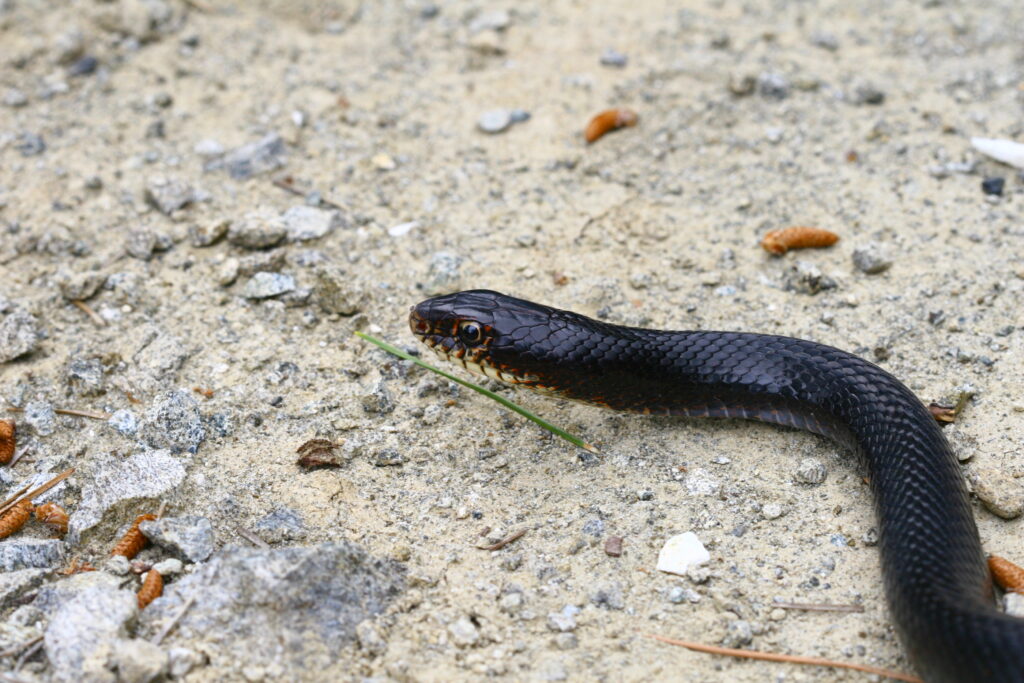
Villagers and farmers have always felt safe if they knew that there was a black snake in their orchard or yard. Several times they even brought themselves and took care of black snakes to protect them from the fins. They did this because black snakes are a natural predator of the fina. They are larger in size – a large black snake can reach up to 2.5 to 3 meters – more robust and strong, and can kill and feed on finches. Of course, this does not necessarily mean that where there are black snakes there are no fins, just as it does not mean that where there are snakes that feed on rodents, there are no mice. Certainly, however, the presence of a large black snake in an area will make the fina think about it two or three times before approaching.
Each species is important and has its role
Each species that is part of a region's biodiversity plays a distinct and irreplaceable role. When we allow animals to function naturally, as predators, prey and members of the complex ecosystems to which they belong, we help to maintain the ecological balance. A balance on which man himself depends, as an integral part of nature.
So let us allow snakes to play their part in the balance of the natural environment. If you see an injured snake or if a snake enters a residential area, contact the police or fire department.
Authors: Marilena Stamatiou, Giorgos Pisiilis (Herpetological Association of Cyprus) & Dr. Savvas Zotos (Laboratory of Terrestrial Ecosystem Management – Open University of Cyprus)
