


Two key initiatives of the European Commission, the "Strategy for the Islands" and the "Strategy for resilient, prosperous and sustainable Coastal Areas", were presented on Friday in Paphos by the President of the Republic Nikos Christodoulides.
Speaking at the High-Level Conference on "Strengthening the EU's islands and coastal communities", President Christodoulides linked the two initiatives to the recent conclusions of the European Council."Today the cycle of the Cyprus Presidency may be closing symbolically, but equally symbolically the Cyprus Presidency is opening another one," he said, describing the strategic initiatives of the European Commission as "extremely important".
In his address, President Christodoulidis welcomed the delegates to his city, Paphos, "a city that encapsulates the enormous potential presented by the islands and coastal communities of the Union, despite the challenges" as he said.
Noting that the event at the southeastern edge of the Union has a special symbolism, with which the Cyprus Presidency closes its official events, he expressed particular satisfaction – that "the Cyprus Presidency has brought tangible, measurable and substantial results in all its pillars of priorities for the benefit of European citizens, with our vision of a more autonomous Union, open to the world".
He said that Cyprus handled and negotiated "issues of major geopolitical importance, particularly demanding legislative files, such as the new long-term budget of the Union, the competitiveness of the Union, enlargement issues, but also issues that touch the daily life of every European citizen, such as education, health, labour rights, air passenger rights and so much more."
President Christodoulidis said that he feels "proud of my country and its people and of what they have achieved in just 181 days".
As he analyzed, the "Cyprus Presidency aimed and I believe succeeded in a number of areas – from defense and security, competitiveness, energy, health – to give substantial content to what we have been discussing for years at a theoretical level: The strategic autonomy of the Union. This is the most important imprint of the Cyprus Presidency."
It may be, he said, today "the cycle of the Cyprus Presidency is closing symbolically, but just as symbolically the Cyprus Presidency is opening another. We are presenting today here, at the southeastern tip of the EU, on our island, two extremely important strategic initiatives of the European Commission: the Strategy for Islands and the Strategy for Resilient, Prosperous and Sustainable Coastal Areas, which are also specifically mentioned in the recent Conclusions of the European Council."
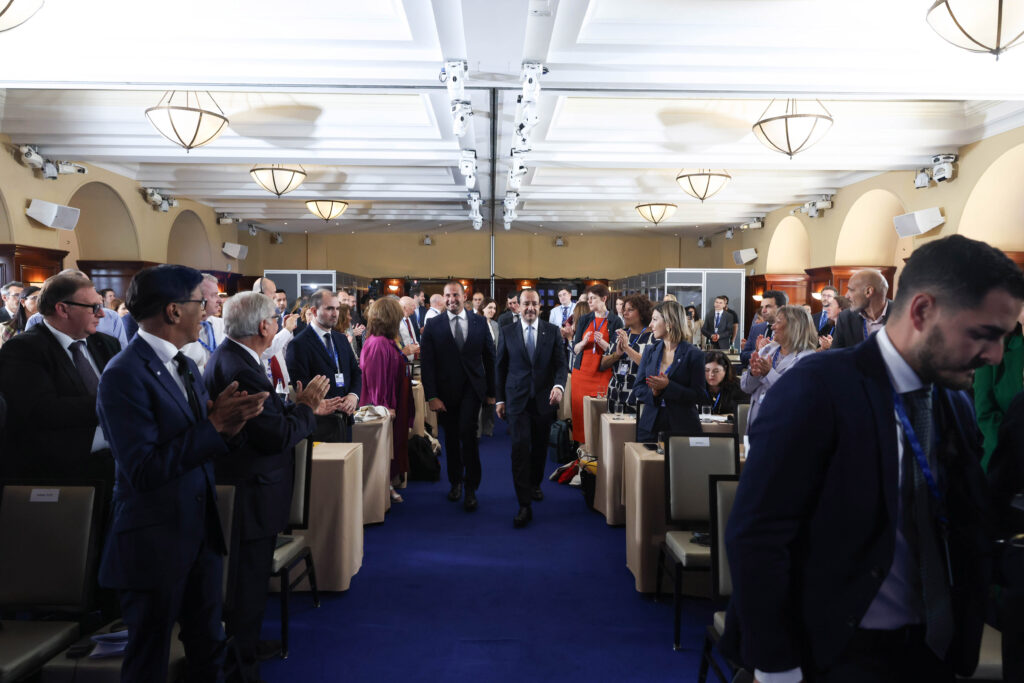
He explained that for the first time, through these strategies, "a comprehensive and coherent framework is provided to address the particular challenges, but also to exploit the opportunities and prospects of the island and coastal regions of the Union".
President Christodoulidis spoke in numbers, saying that 17 million European citizens live on the more than 4,000 inhabited islands of the EU, 95 million European citizens live in coastal areas of the EU, which extend over around 70,000 kilometres, while 17 Member States have island regions and 22 Member States have coastal areas.
From Sweden and Finland in the north to Spain and Italy in the south, from Portugal in the west to Greece in the east, the European Union's coastal regions and islands span a unique geographical arc, he noted, while on the northwest axis, Ireland is an emblematic benchmark of European maritime geography, while in the Mediterranean, Malta and Cyprus highlight the island dimension at the southern borders of the Union.
"This broad geographical dimension reflects not only the rich diversity of Europe's seas and coastlines, but also the strategic importance of coastal and island regions for economic cohesion, food security, environmental protection, resilience and even for the security of the entire Union," he said.
He expressed the view that "living in island and coastal communities is a special privilege", offers unique natural wealth and biodiversity, a distinct cultural identity, but also significant prospects for development.
At the same time, however, he noted, "living in these areas involves many challenges and real, everyday difficulties. Connectivity, climate change, energy and water security, rising sea levels and coastal erosion, but also the need to keep local communities alive."
For island member states, the challenges have real consequences, he said, as they directly affect access to markets, competitiveness, tourism, fisheries, aquaculture, water resources, infrastructure and the daily lives of local communities.
The presentation of the strategies today, the President said, "is an essential step towards a horizontal and holistic approach to all these challenges with the aim of a more cohesive and resilient Europe. A Europe that recognises the diversity of its Member States and ensures that European policies and funding are aligned with the specificities of all its regions and meet the needs of all its citizens."
Referring to the two strategies presented today, he said that "they are in full alignment with our national agenda and the priorities of the Government".
A typical example, he continued, "is our national policy for the sustainable development of marine aquaculture, in the context of the Blue Economy. Over the past fifteen years, the sector has recorded steady annual growth of 4% to 5% boosting economic activity in coastal areas, creating jobs and contributing substantially to the resilience and sustainability of coastal communities."
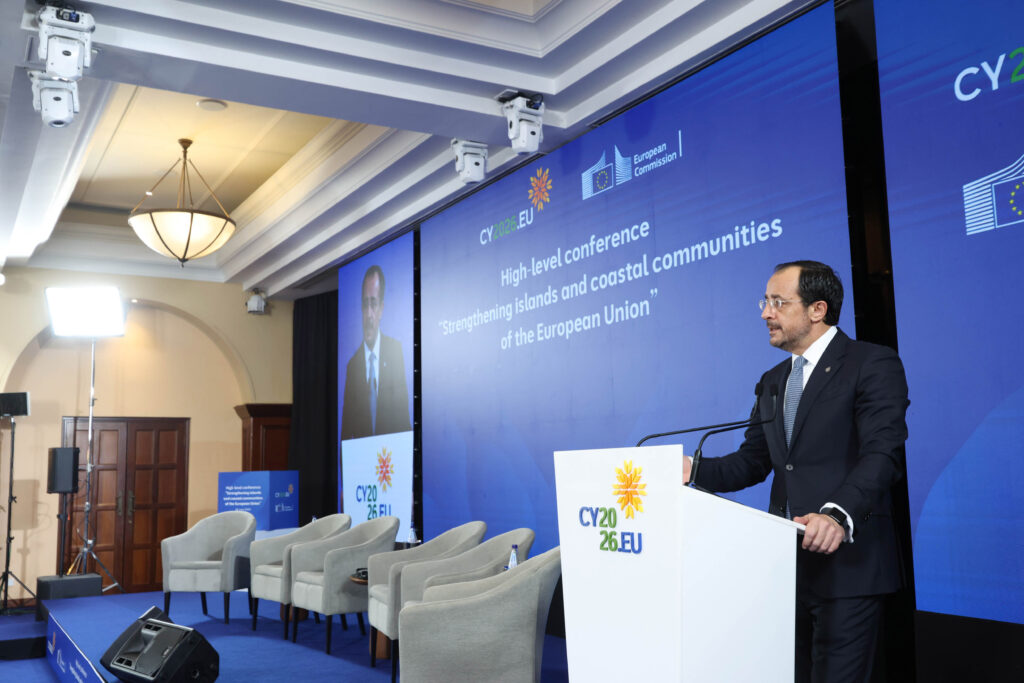
Equally characteristic, he added, "are the investments of more than €150 million in Cyprus, co-financed by the European Union's Cohesion Policy, for the modernization and digitization of the electricity grid. By installing smart management systems, new energy infrastructure and storage systems, we are strengthening the country's energy security, expanding the use of renewable energy sources and making our energy system more resilient and reliable."
For an island and energy-isolated state such as Cyprus, President Christodoulides said, "such investments are a basic condition for the green transition, competitiveness and the substantial strategic autonomy of the country and Europe."
According to the President, addressing structural constraints due to geographical specificity and strengthening the strategic capabilities of islands and coastal areas are at the core of the new strategies. "They are therefore at the forefront of dealing with major crises and challenges related to security and defence, the protection of vital infrastructure and the effective management of migration flows," he said, noting that through the protection and support of these regions, we support the European Union as a whole.
"And we are taking a substantial step closer to our vision: For a Europe that is competitive and prosperous, secure and strong. For a Union of Values for all. For a strategically autonomous Union, open to the world," he said, adding that "with this vision we started the Cyprus Presidency six months
