
Only 11 women emerged in the election for the 56 seats in the House of Representatives, with their percentage accounting for 19.6% of the MPs of Cyprus, accounting for only one in five. Despite the fact that she is one of the largest numbers of elected women in our country (it was repeated in 2016), gender inequalities in representation prevail.
The old traditional parties, although they express concern, could not put more women in Parliament with their formation. On the contrary, the newly formed parties made the change. ALMA has 2 women out of 4 MPs (50%) and Direct Democracy one out of 4 (25%). On the contrary, DIKO has only one out of 8 (12.5%), AKEL 3 out of 15 (20%), DISY 4 out of 17 (23.5%), while ELAM, although it doubled its seats, did not manage, for the second time, to elect a woman.
The Commissioner for Gender Equality, Josie Christodoulou, expressing concern to "F" about the fact that 50% of the country's population, who are women, is not represented, proposes, among other things, the implementation of binding quotas both on the ballots and internally, in the party committees. It also proposes the creation of a women's political academy. In addition, the president of the Mediterranean Institute for Gender Studies (MIGS), Susana Pavlou, speaks of a democratic deficit and a clear distance from the 30% set by the United Nations.
"F" collected the CVs for the 11 who made it in the 2026 Parliamentary Elections as well as the course of the three women who went down in history as the first to become MPs of Cyprus.
Quota suggestions by the Commissioner for Equality
The absence of women from the House of Representatives is addressed as a problem by the Commissioner for Gender Equality, Josie Christodoulou. "I think that the 11 MPs should be divided and participate in all the Committees. Issues of demography, violence, motherhood, single-parent families, large families will be discussed, they must be present. These, of course, are the glaring issues. In fact, every issue is gender and affects men and women, such as the Tax Reform," she underlined.
The highest percentage of representation in Cyprus is in the Council of Ministers, with 37.7% women, he underlines. The new Parliament accounts for 19.6%, the local government 21%, the European Parliament 0%.
Already from the candidacies, she said, underrepresentation is apparent. "It was one in 3 and one in 5 was elected. For this reason, we propose the implementation of binding quotas in the ballot papers but also in their internal procedures."
The problem of underrepresentation, she underlines, is that a Parliament is created that does not represent society, in which 50% are women. "This is not a competition between women and men. It's that they have different needs, different experiences, different perspectives on how they see issues and it needs to be reflected in the legislative power."
The measures and suggestions submitted by the Commissioner's Office, among others, are:
• Implementation of binding quotas both on party ballots and internally, in party committees
• Cooperation of parliamentary parties for the introduction of mandatory quotas through legislation, as a temporary measure
• Creation of a political academy for women (and young people) by the parliament and with the cooperation of all parties
• Creation of nurseries in or near the parliament and/or the political offices of the parties
• Transposition of the practice followed in the European Parliament, which adopted a zero-tolerance policy of sexual harassment by incorporating regulations that prevent members who do not sign the declaration from chairing parliamentary committees
• Reinstatement of the Parliamentary Committee on Equal Opportunities for Men and Women as a separate Committee
Suzana Pavlou: Far from the UN 30% base
The president of the Mediterranean Institute of Gender Studies (MIGS), Suzana Pavlou, expressed dissatisfaction and concern about the negligible representation of women and especially about the stagnation of the number elected in the contests. Speaking of a democratic deficit for a distance from the minimum of 30% set by the UN, he underlines that the mandatory quota needs to be institutionalized.
"We have stagnated. The 11 women who were elected are not progress and this is evident if we look at it in the long run. We had 8 women in 2021, we had 11 in 2016 and 7 in 2011. There is not even a gradual improvement in the long run," she underlined and added that there was no substantial change in the composition of the parliament, despite the fact that this year we had the most candidates with a percentage of 29.8%.
She expressed concern that the parties themselves do not promote women and that those who have increased chances are those who were either already elected, or who for some reason were familiar with the world.
The most serious problem with the absence of women in Parliament is that a "democratic deficit" is created as 51% of the population is not represented. It's not just a matter of equality, because what is right is right. It is also a matter of substance, that it is primarily the MPs who will deal with issues that touch the daily lives of women. Over time, only they (with some exceptions, of course) have promoted legislation on abortion, violence against women and domestic violence and many more in general, such as sexism, same-parent families and others." She also said that it is their experiences that strengthen this attitude.
"The desired minimum to start talking about change is 30%, from which we have a very long distance since we have not once reached 20%. It is about the critical mass needed to bring about change in political life. It is the point where a change in culture and mode of operation begins based on the standards of the United Nations."
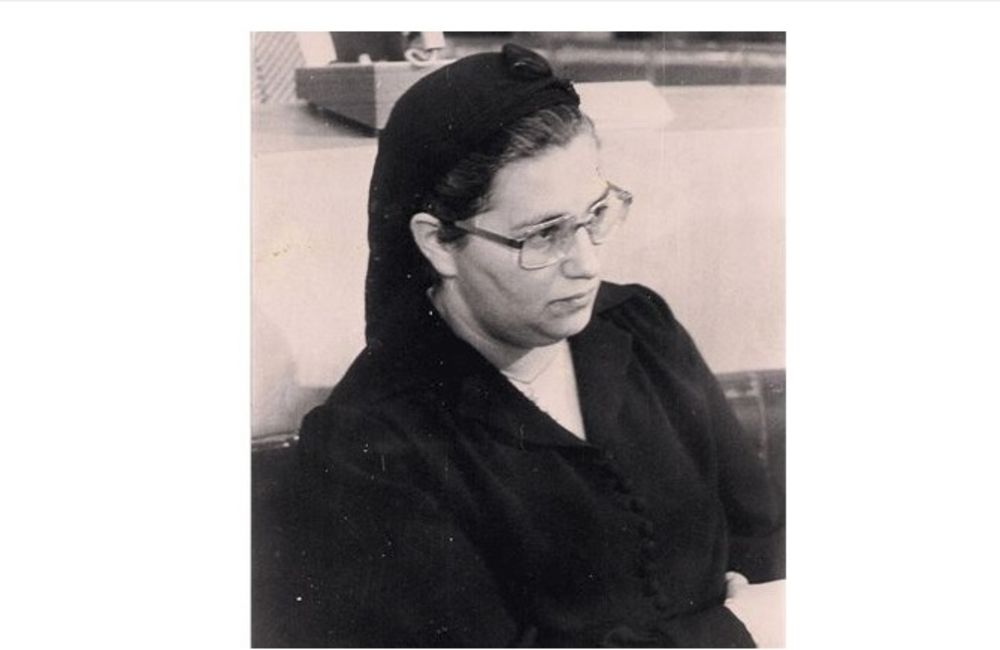
The women who showed the way
The first woman to enter the Cypriot Parliament was the Turkish Cypriot Ayla Halit Kiazim, in 1963. The second followed, almost 20 years later. She was the first Greek Cypriot, Rina Katselli, who was elected in 1981 in the Kyrenia constituency with DIKO. The third MP of Cyprus was Kaiti Clerides. He was elected in 1991 in Nicosia with the DISY – Liberal Party coalition.
Ayla Halit Kiazim
Ayla Halit Kiazim was a Turkish Cypriot farmer and politician. She was a Member of Parliament for the Paphos constituency of the Independent Turkish Group from 25 October 1963 until December 1963, when the Turkish Cypriots withdrew from the government of the Republic of Cyprus and the Parliament.
Rina Katselli
Rina Katselli was a Kyrenia MP of DIKO from 1981 to 1996. She was the first Greek Cypriot MP of the Republic of Cyprus. Katselli was a writer and director of the publishing house "Chrysopolitissa". In 1978 she created the first groups that later founded the women's organization of DIKO, and GODIK. As a Member of Parliament, she was a member of the Parliamentary Committees on Foreign Affairs, Education, Labour, Refugees, Trashed, Missing and Injured as well as Environment.
Kaiti Clerides
Kaiti Clerides served as a Member of Parliament for Nicosia with the DISY – Liberal Party Coalition from 1991 to 2001 and as a runner-up from 2004 to 2006. She was the third elected MP in the history of the Cypriot Parliament and the first female Vice President of DISY.
What are the 11 of the Parliament?
DISY
Annita Demetriou
She was born in 1985 in Troulloi, Larnaca and studied Social and Political Sciences. She is the first woman and youngest person to serve as Speaker of the House of Representatives. At the same time, she was elected president of the Democratic Rally in March 2023. Since 2016, she has been elected MP for Larnaca.
Savvia Orfanidou
Savia Orfanidou has been a DISY Nicosia MP since December 2019 and vice president of the party since May 2023. She was born in 1979, originally from Akaki and Kato Drys. She graduated from the English School of Nicosia and studied Economics and Political Science.
Fotini Tsiridou
She was born in 1979 and holds a law degree from City University London. In December 2018 she was appointed by the Council of Ministers as Vice-Chairman of the Cyprus Stock Exchange. In 2022 she was ordained Lady of the Patriarchate of Alexandria and All Africa, an honorary title she holds to this day. Since June 2021 she has been serving as a Member of Parliament for the Limassol constituency.
Nicoletta Constantinou
She was born in Paphos in 1986. She studied Law in London, works as a lawyer and teaches Law at Neapolis University Paphos. Since November 2024, she has taken over the Migration portfolio at the Monitoring Council of the Government Work, while she is a member of the expanded Political Bureau of DISY. She is the first woman to be elected in Paphos.
AKEL
Marina Nikolaou
She was born in Limassol in 1986 and comes from Pelendri. She studied Social and Political Sciences. She is an AKEL MP and a member of the party since 2004.
Argentoula Ioannou
She was born in 1963 in Famagusta and lives in Limassol. She is a lawyer, president of the Cyprus Association of Single Parent Families and Friends, as well as president of the Equality Committee of the Cyprus Bar Association.
Anastasia Hasikou
She was born in 1984, comes from Dikomo and lives in Nicosia. She studied Political Science as well as Music. Since 2009, she has been working as a professor of ethnomusicology and music pedagogy at the ARTE Music Academy.
DIKO
Christiana Erotokritou
She was born in Nicosia in 1973. In June 2018, she was elected deputy president of DIKO, a position she holds to this day. Since 2016, she has been re-elected as a Member of Parliament for Nicosia.
Jump
Irene Charalambidou
She was born in 1964 in Limassol and grew up in Nicosia. She studied Journalism and Psychology and worked for years as a journalist. In 2011 she was elected for the first time as an MP for AKEL – Left – New Forces, while in 2016 she was re-elected, recording a historic milestone as the first woman to emerge first in preference crosses nationwide in national parliamentary elections. In 2020, she was appointed Special Representative against Corruption. In the last match he was elected with ALMA Nicosia.
Theodoulitsa Drousiotou
She was born in Famagusta in 1972. She studied Dentistry and maintains her own practice. She is the president of the Limassol Dental Association and a member of the Board of Directors of the Pancyprian Dental Association.
Direct Democracy
Diana Konstantinidi
She was born in 1988. She is a London-based barrister and a member of the Bar Association of England and Wales, specialising in international criminal law, public international law and human rights. She is also the Vice President of Direct Democracy.
The positions of the parties
The parties express dissatisfaction and concern about the small number of MPs.
DISY
There is no satisfaction with the low representation of women in Parliament and in the Democratic Rally. However, satisfaction was expressed for the fact that it is the party with the largest number of parliaments. An effort is needed in all decision-making centers to increase the representation of women and to eliminate inequalities, it was underlined.
AKEL
Obviously, we still have a long way to go until gender balance is achieved in the political life of the country. The issue was of particular concern to AKEL at its last Congress in 2025, where we decided that special attention should be paid. It is no coincidence, therefore, that there was a significant increase in the presence of women on his ballot, reaching 38%. With the elections, the number of women in the 15-member Parliamentary Group of AKEL Left Social Alliance increased by one, reaching 3, i.e. 20%.
Women, it is underlined, have many challenges to face. Beyond the sexist stereotypes and obstacles of her daily life and reconciliation with professional, family and political life.
ELAM
Men and women have an equal opportunity and right to contribute to parliamentary work and we do not approach people on the basis of gender, but on the basis of skills, adequacy and willingness to contribute to society. On our ballot, there was a multitude of worthy and capable women, who, if elected, could make a substantial contribution and carry out important parliamentary work. We fully respect the verdict of the citizens. The bet must be the continuous strengthening of the participation of all citizens in public affairs, in terms of equality and meritocracy.
DIKO
The representation of women in Parliament remains at low levels and this certainly does not satisfy anyone. For DIKO, their equal participation in politics is a matter of quality of Democracy, substantial representation and participation in decision-making centers. As far as DIKO is concerned, the percentage of women's parliamentary representation is certainly lower than what we would like. But the valuation cannot be done only numerically. It also matters which roles of responsibility are assumed by women, which is why she has elected a woman to the position of Deputy President.
JUMP
Political representation cannot be complete without meaningful gender equality. In this context, Alma records a historical political legacy, achieving an absolute balance of 50-50 in its parliamentary presence. ALMA was the only party in which the ratio of men and women in its lists was the closest to 50-50. We have demonstrated in practice that political renewal passes through inclusion and fair representation. At the same time, there remains intense concern about the overall low percentage of female representation in Parliament.
