
At a time when the housing crisis is putting more and more pressure on citizens, the Cyprus Land Development Agency (KOAG) is attempting to strengthen its role as the main body implementing the state's housing policy.
The President of the KOAG, Theseas Ioannou, in an interview with "F", talks about the course of the Organization, the new projects that are in progress, but also about the way of financing the KOAG, which with the abolition of the Cyprus Investment Program was essentially annihilated. At the same time, he refers to the new plans but also to the discussions and thoughts regarding the evolution of the KOAG for an even stronger presence and assistance in matters of affordable housing.
-Mr. Ioannou, let's start with the biggest project that the KOAG currently has in its hands and concerns affordable housing in Limassol. How are the procedures and timelines progressing?
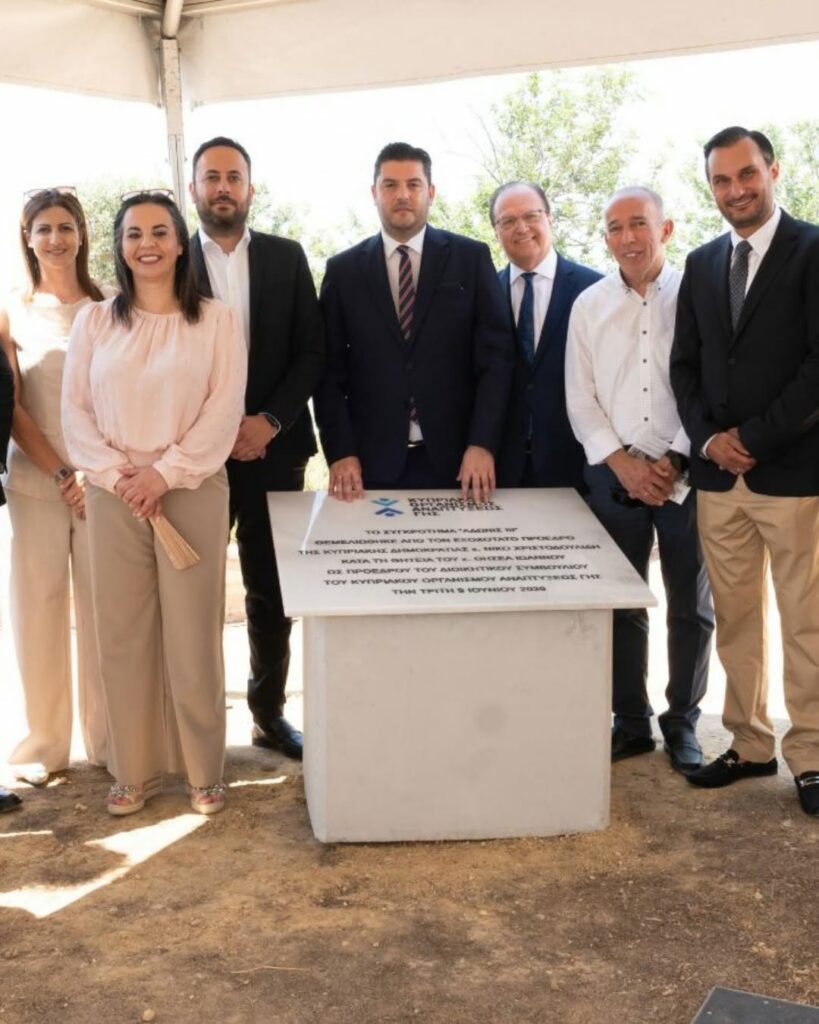
The largest project currently being implemented by the KOAG is the Affordable Rent Scheme in Limassol, which includes the construction of 138 apartments in four six-storey apartment buildings. This is an investment totalling more than €22 million, which is co-financed by the state and the Organization.
The construction works are in full swing and are progressing according to the schedule we had announced. The project has been designed based on the principles of sustainable and sustainable development and is characterized by high aesthetics, modern specifications and respect for the urban environment.
Our goal is not just the construction of residential units, but the creation of a modern and functional community, which will contribute to the upgrading of the wider area and give new dynamics to the heart of Limassol.
Above all, however, this project will offer substantial support to dozens of families who are currently struggling to secure decent and affordable housing. Limassol is undoubtedly facing the most intense housing problem in Cyprus and that is why we consider this project to be one of the most important interventions being implemented today to address the housing crisis.
-The KOAG had faced a serious funding problem after the abolition of the Cyprus Investment Program. In the end, how was this money secured so that the various projects could proceed?
Indeed, the abolition of the Cyprus Investment Programme has created significant challenges for the KOAG. However, the State, recognizing the critical role of the KOAG in dealing with the housing crisis, proceeded to make a series of strategic decisions that have substantially changed the data for the better.
Through new policies and financial tools, the KOAG now has additional resources at its disposal that allow it not only to strengthen its development program, but also to expand its action in areas where the relevant possibility did not exist until recently, such as the production and management of affordable rental housing units.
Specifically, today the Organization utilizes revenues resulting from a series of urban planning incentives, which the Government has made available precisely to deal with the housing crisis. These revenues are not treated as simple financing, but as an investment that is gradually transformed, through an organized and long-term development program, into new homes and apartments of affordable housing for all social strata.
I would even say that today we are in a completely different era for the CFO. For the first time in many years, the Organization has the tools, resources and political support needed to function as a key pillar of the state's housing policy.
-Is there any evidence of the money that has been given to the KOAG in recent years to carry out its work and help society with the housing crisis?
Yes. In the last three years, the state has substantially strengthened the KOAG, both in terms of funding and in terms of responsibilities.
Specifically, to finance affordable rent projects, the state will give the KOAG €16 million (for the Limassol project) and €12 million for the Strovolos project. In addition, through the urban planning incentives and the last revision in April 2025 as well as the political decision to end up in the CLAG the financial compensation from the utilization of the special housing incentive, an amount exceeding €17 million is expected to flow into the CLC.
Indicatively, for the implementation of the projects of the Affordable Rent Scheme, €16 million will be granted to the KOAG by the state for the Limassol project and €12 million for the corresponding project in Strovolos. At the same time, through the utilization of urban planning incentives, the revision of the relevant policy in April 2025 and the Government's decision to pay to the KOAG the financial compensation resulting from the implementation of the Special Housing Incentive for the Production of Affordable Housing, additional resources are expected to flow to the Organization that are estimated to exceed €17 million. These resources allow the CAG to plan on a long-term basis, implement more projects and gradually increase the stock of affordable housing across Cyprus.
Equally important, however, as funding is the fact that the State has assigned to the KOAG expanded responsibilities for the management of affordable housing which is produced by implementing a number of housing projects. The KOAG no longer functions only as a builder of housing units, but as the central body for the planning, management and implementation of the New Housing Policy. This has led to the creation of an integrated and permanent mechanism for the production of affordable housing, which can respond more effectively to the needs of society and the challenges of the housing crisis.
-How many projects are currently either in the implementation stage or ready to be delivered?
Currently, the KOAG is implementing or has launched projects corresponding to a total of 244 residential units for sale, 192 residential units for rent and 135 plots of land in various areas of Cyprus.
We already have ready-to-sell residential units in Kaimakli and Larnaca, while at the same time new houses are under construction in Kokkinotrimithia and Polemidia, as well as apartment buildings in Agios Dometios, Kaimakli, Pallouriotissa and Lakatamia.
At the same time, we are proceeding with the design and implementation of additional projects in areas where housing needs are particularly high. In particular, new apartment projects in Pallouriotissa and Aglantzia are at an advanced stage of preparation.
At the same time, the large affordable rent project in Agios Nikolaos in Limassol is under construction and the affordable rent project in Strovolos is in the licensing stage.
Plot divisions in the districts of Nicosia, Limassol, Larnaca and Paphos are also on track.
What is important is that the COAG today has the largest development program of the last decades. Projects are being implemented simultaneously in the two provinces with the most intense problem, with the aim of gradually increasing the stock of affordable housing and providing more options for both buying and renting.
-Europe is separating affordable housing from social housing. What kind of programs do we have in Cyprus? For affordable housing or for social housing? And how can we strengthen social housing, i.e. for those who do not have even the minimum money to acquire a home?
It is important to make this distinction. Affordable housing is aimed at households that work and have income, but find it difficult to meet the current housing market conditions. Social housing, on the other hand, is aimed at households and individuals facing more severe economic or social difficulties and for whom even affordable housing may not be sufficiently accessible without additional government support.
In Cyprus, the majority of the measures that have been developed in recent years concern affordable housing. This reflects today's reality, as the housing crisis no longer affects only vulnerable groups, but also the middle class, young couples and working households who find it difficult to acquire or rent a home at a reasonable cost, despite the fact that they work for good wages.
At the same time, however, social housing remains an extremely important priority. Its development requires stronger state intervention, increased public resources and the creation of housing units that will be available at particularly low rents or with special support schemes for those most in need.
It is precisely in this direction that the Government's decision to proceed with the construction of about 500 affordable rental housing units, which after their completion will be under the management of the KOAG, is moving. This is a particularly important housing intervention, which creates for the first time on such a scale a permanent stock of homes that will remain available at a particularly affordable rent for households most in need. In my opinion, this is one of the most important and substantial interventions that have been implemented over time in the field of housing policy in Cyprus.
-What are the next steps? There is a lot of discussion about the evolution of the KOAG. What is on the table right now and what thoughts are there?
First of all, we consider it very positive that such an intense and substantial public debate is taking place on the future of the CFO. The interest shown by the Government, the Parliament, the political parties and society in general is a recognition of the importance of the role that the Organization is called upon to play in dealing with the housing crisis.
Beyond that, for us, the important thing is not the title, the name or the organizational form that the Organization will have in the future. What really matters is the essence: to have the right tools, competences, resources and flexibility needed to be able to produce more affordable housing and respond effectively to the needs of society. I believe that, through the policies and decisions that have been taken in recent years, the foundations have already been laid in this direction.
If the State considers that through the evolution or further strengthening of the KOAG, the goal of dealing with the housing crisis can be served even better, then of course we are ready to contribute creatively to this discussion. What is important is to ensure that Cyprus has a strong, modern and efficient housing agency, capable of implementing state housing policy and consistently producing tangible results for citizens.
At the end of the day, citizens don't care what an organization is called or how it evolved. They are interested in being able to find a decent home at an affordable cost. And this is the goal we remain committed to.
