
Defence Minister Vasilis Palmas has defended Cyprus’ expanding network of military partnerships, insisting that the republic would not seek anyone’s approval over defence agreements and arguing that Turkey should instead focus on its own conduct and the continuing occupation of the island.
In an interview with The Cyprus Mail, Palmas reserved some of his strongest language for criticism directed at Cyprus’ growing defence ties and the signing of Status of Forces Agreements (SOFAs), including the recently concluded agreement with France.
“The Republic of Cyprus is a recognised state and has every right to conclude agreements, develop relations and forge alliances with any member of the international community it considers appropriate,” he said.
“We will not ask anyone’s permission for the agreements we make, whether they concern the country’s political activity, defence or security. The security of our citizens is non-negotiable.”
Rejecting suggestions that closer ties with countries such as France, Greece, Israel and the United States could make Cyprus a target or provoke Turkey, Palmas said international cooperation was essential in the current geopolitical climate.
“The modern era is one in which states need synergies, friendly relations and cooperation with other countries in order to safeguard the prospects and future of their people,” he said.
He added that Ankara should engage in “self-criticism” over what he described as the illegal occupation of Cypriot territory.
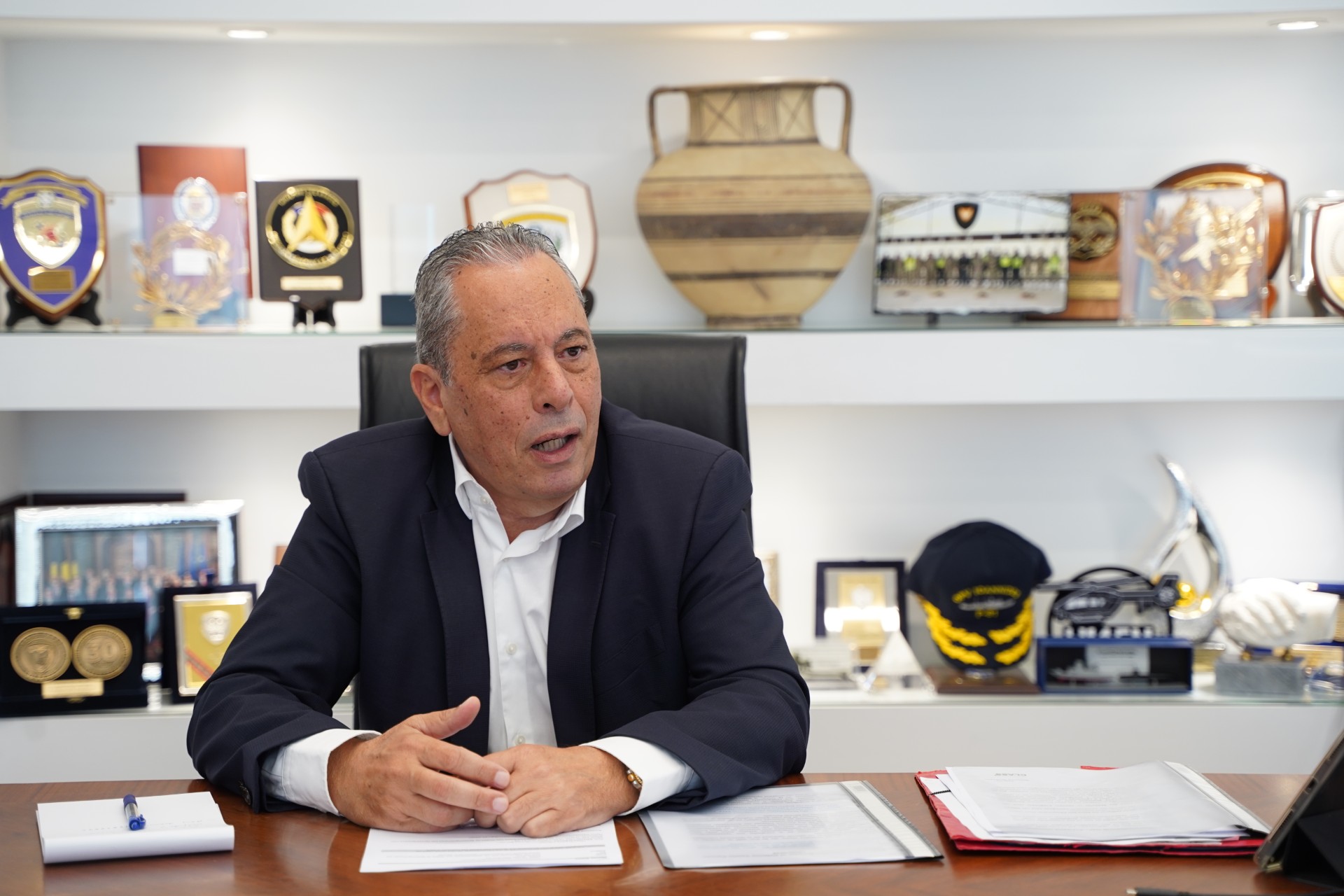 Defence Minister Vasilis Palmas
“I would say that Turkey should address issues relating to the illegal occupation, for the past 52 years, of European Union land, and in this case that of the Republic of Cyprus,” he said.
Palmas argued that agreements such as SOFAs were only possible when underpinned by strong political relations, noting that France was both a strategic partner and one of the European Union’s leading member states.
SAFE and defence spending
Palmas also outlined how Cyprus intends to make use of the European Union’s Security Action for Europe (SAFE) mechanism, through which the country has secured access to up to €1.18 billion in long-term loans.
He stressed that the facility consisted of borrowing rather than grants and said decisions on drawing down funds would continue to be taken jointly with the finance ministry in order to preserve fiscal stability.
“What this means is that every time we draw capital from SAFE to strengthen our defence and our defence industry, it will be reflected in the state’s public debt,” he said and stressed that the burden would not be transferred directly to the public.
Significantly, the minister underlined that Cyprus was under no obligation to utilise the entire amount approved by Brussels.
“We may draw €800 million, we may draw €700 million, or we may use the full amount,” he said.
The ministries of defence and finance have already received pre-approval for the drawing down of €170 million during the second half of 2026, with the first procurement orders expected before the end of the year.
While refusing to discuss individual weapons systems, Palmas also played down speculation surrounding the possible acquisition of Leopard tanks, saying there had been no substantive discussions between the governments concerned regarding such a transfer.
He said Cyprus’ priorities had been shaped by lessons from the wars in Ukraine and the Middle East.
Particular emphasis, he said, was being placed on drones, counter-drone capabilities, surveillance, the protection of critical infrastructure and strengthening air defences.
The acquisition of four Kentavros anti-drone systems forms part of that effort.
Upgrading key bases
The minister confirmed that the planned modernisation of the Andreas Papandreou air base in Paphos and the Evangelos Florakis naval base at Mari formed part of a broader strategy aimed at enhancing Cyprus’ operational capabilities and supporting humanitarian and crisis-management missions in the Eastern Mediterranean.
He added that the United States was playing a key role in plans for the air base upgrade and expressed hope that construction work could begin by spring 2027. France, meanwhile, has shown particular interest in the development of the Mari naval base.
According to Palmas, the upgraded facilities would also help Cyprus continue to act as a hub for humanitarian and evacuation operations.
“We decided that we need these kinds of modern facilities so that, despite being a small country, we can continue to play a substantial and high-level role in the region,” he said.
Nato membership remains aspiration
Palmas reiterated that the government’s strategic objective remained eventual membership of Nato,, provided political conditions permitted.
“The Republic of Cyprus is ready to become a member state of Nato, provided political conditions allow it,” he said.
However, speaking candidly, he acknowledged that Turkey’s opposition represented a major obstacle and said the government was realistic about the prospect.
For the time being, Cyprus was placing particular emphasis on strengthening the European Union’s strategic autonomy and expanding cooperation with partners contributing to regional stability.
Pushing Article 42.7
Palmas also shed light on Cyprus’ efforts to strengthen Article 42.7 of the EU treaty, the bloc’s mutual assistance clause.
He said the mechanism had effectively been tested “on a small scale” during the recent crisis involving Iran, even though Cyprus had not formally invoked it and responses had come from individual states rather than the EU itself.
According to the minister, President Nikos Christodoulides raised the issue during the summit hosted in Ayia Napa, highlighting the importance of solidarity among member states when security threats arise.
Palmas acknowledged that developing the mechanism further would require extensive discussion because many EU member states were also members of Nato.
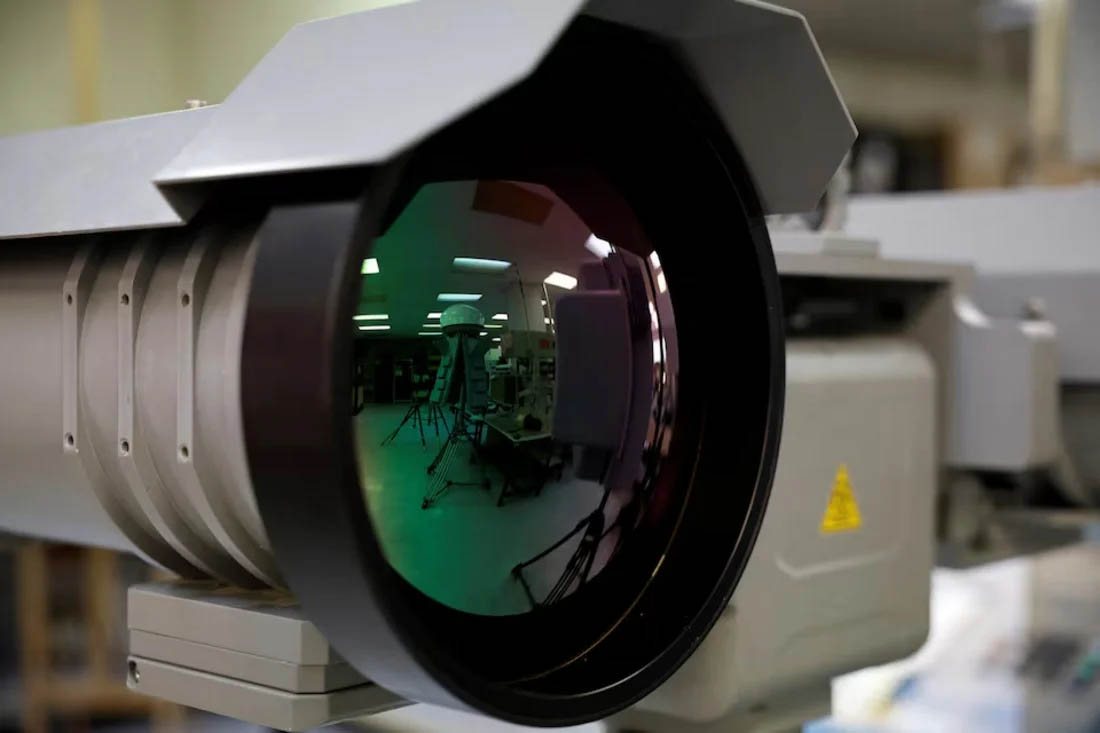 Anti-drone system Kentavros is seen at the Hellenic Aerospace Industry (HAI), in Tanagra, north of Athens
“There are two parallel articles – the European Union article and the Nato article – which means that a great deal of work, discussion and a clear roadmap are required,” he said.
The minister argued that recent crises had exposed weaknesses in Europe’s security architecture and pointed to Russia’s invasion of Ukraine and instability in the Middle East as evidence that the EU needed stronger defence capabilities.
Building a domestic defence industry
Palmas said the development of a domestic defence industry had become a strategic priority for the government, with efforts focused on integrating Cypriot companies into European defence programmes and gradually creating a local production base.
He said initiatives such as the EU’s SAFE mechanism and the national Athena 2030+ programme were intended to strengthen cooperation between the public and private sectors and link innovation with production.
According to the minister, the long-term objective was not only to develop technologies but also to enable Cypriot companies to produce systems capable of meeting some of the National Guard’s operational requirements, thereby enhancing the autonomy and resilience of the country’s defence architecture.
But Palmas said the government’s ambitions extended beyond strengthening the armed forces.
He said Cyprus hoped to gradually develop a defence sector capable of contributing to economic growth and creating a new pillar of the economy.
“The defence ministry is traditionally seen as a ministry that only consumes and costs the state money. We want it to become a ministry that also returns money to the economy,” he said.
At the same time, Palmas stressed that the government would encourage the participation of local firms in European supply chains without interfering in commercial decisions.
Syops and women in the armed forces
Turning to personnel issues, Palmas said reforms aimed at improving the status of Syop contract soldiers were already under way.
He said the first 250 contract soldiers are expected to become permanent non-commissioned officers, with examination results due before the end of the month.
He acknowledged that the loss of experienced personnel could affect operational readiness and said the issue was being continuously monitored.
The minister also conceded that voluntary military service for women had failed to produce the expected response, following only one woman volunteering.
While describing the initiative as a positive step for gender equality, he admitted participation had been considerably lower than anticipated.
At the same time, he acknowledged longstanding grievances among female non-commissioned officers and said the government was examining ways to address inequalities inherited from previous years.
