
The scientific team of the Cyprus Consulting and Researcher Company ISOTECH ltd, with Dr. Xenia Loizidou as scientific director, undertook and completed a major effort that will lead to the updating of the European Union's policy on the issue of marine pollution management.
Speaking to "F", Dr. Loizidou stressed that this is a titanic effort to capture the local reality with very specific problems and solutions, in 11 countries in Europe and in some countries of the non-European Mediterranean. We are really proud to have undertaken and are completing with great success such an innovative approach, which will lead the EU to evidence-based policies, legislation and regulations, she said.
As the leader of the effort explains, the work first included the study of the entire network of European legislation related to garbage, the identification of the gaps in the legislation that lead to bad management practices and in any case to the garbage ending up in the sea. The ISOTECH team, said Ms. Loizidou, studied over 750 relevant documents, and 22 frameworks of European legislation as well as international conventions.
For her part, Dimitra Orthodoxou, Environmental Engineer and Head of the Applied Research Sector of ISOTECH, emphasizes that after identifying the legislative and regulatory gaps, with the method of channelling (funnel approach), they went to the world that works with the sea to record their own experience.
We went to 11 countries, she explains, where with specific methods we held participatory meetings to identify local, specific problems and with specific methods suggestions for solutions were recorded.
Dr. Loizidou describes the result as impressive. More than 300 key actors involved in maritime activities participated, he emphasizes, from the gondoliers of Venice, to the fishermen of Norway, the aquaculture farmers of Croatia and the tourism operators of Marseille, from the local organizations of Skyros to the fishermen and ports of Cyprus, the coast of Syria and the protection areas on the west coast of Sweden.
The ISOTECH team applied an innovative method of effective on-the-spot identification of the problems that lead to the inadequate management of garbage that ends up in the sea. We linked all these local data to the gaps in the legislation and proceeded to the final stage of evaluating the findings, in a round table meeting with 55 selected participants from all over Europe, adds Ms. Orthodoxou.
The meeting took place last week in Venice, as part of the International Boat Show (Salone Nautica 2026) in the historic building complex of the Arsenale. During the meeting, 19 problem groups and their solutions were evaluated. These include interventions in the materials used for the production of green packaging products, promotion of specific methods and incentives to improve waste management in different countries, e.g. many countries believe that systems such as rewarding recycling would help reduce the amount of waste left freely in nature. Help for the management of fishermen's fishing gear, e.g. in several countries such as Cyprus and Croatia, there is no way to receive worn fishing gear.
So what is happening? Where does all this waste go? Dr. Loizidou wondered, adding that 57% of the solutions chosen by the participants in the round table concern prevention. This is a very important fact, to change the mentality, she said. Instead of running to pick up the problems we have created, which unfortunately in Cyprus we are still doing, there is now a clear record of a pan-European demand for measures, legislation, incentives that will create conditions for prevention.
These results will be recorded in a text of recommendations that will be delivered to the Commissioner for the Oceans, Dr. Kadis, whom we have already informed and is following the progress of our work with interest, so that they are taken into account in the updating and improvement of the relevant EU laws and regulations, he says.
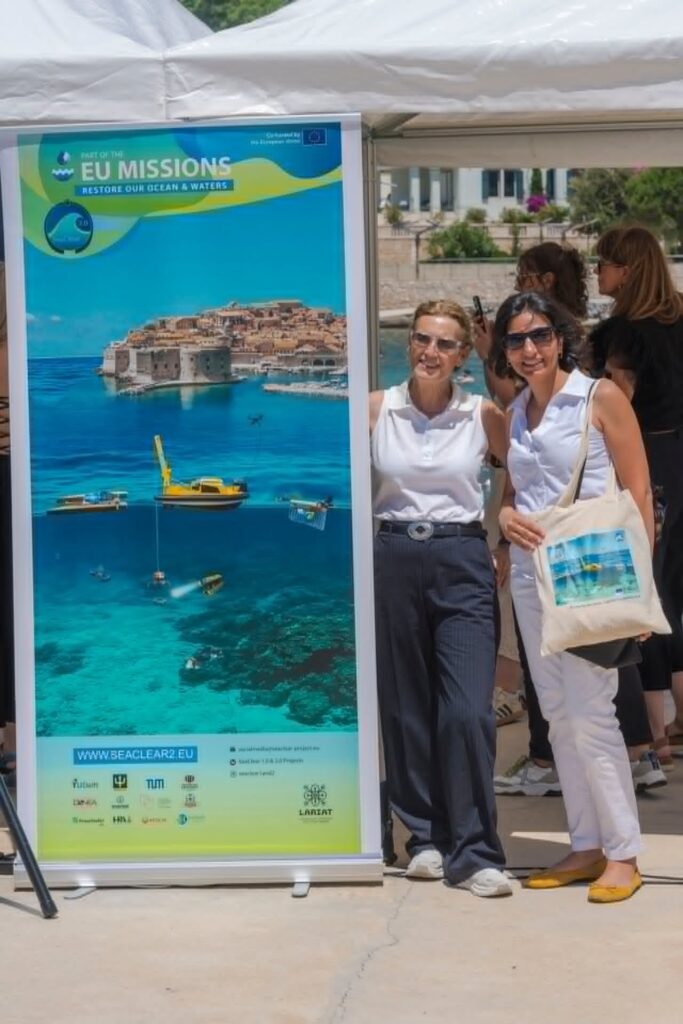
This work is part of the European Project Seaclear2.0 funded by the EU and Mission Ocean. So Europe wants these data, Dr. Loizidou emphasizes, concluding that it is clear that horizontal measures do not work because each sea, each region has its own special characteristics, its own culture, its own particular problems, which directly affect policies such as those related to garbage management.
The European Union's effort, therefore, is to include these specificities, as far as possible, in a new, revised and comprehensive policy framework, in order to address the major problem of marine pollution, which threatens our ecosystems and public health.
