
Cyprus remains in a state of constant alert regarding its water reserves, as the improvement recorded by the rainfall of the first four months of 2026 was not able to reverse the bleak picture of the prolonged drought. The country's dams remain two-thirds empty, forcing the Water Development Department (WDD) to take an extremely conservative stance on resource management.
The situation in the Unified Southern Pipeline Plan (ESNA), which is the backbone of the island's water supply, since it covers the needs of all districts except Paphos, remains critical. Occupancy is only at 35%, with the stored quantity limited to 66.3 Million Cubic Meters (CMM), despite a total inflow of 55.7 CMM since October 1st. Compared to the corresponding period last year, the situation in the dams this year is much better, where the occupancy was 22.9% or 43.3 CMM and this is due to the increased rainfall of the period January-April 2026.
Despite the improvement, according to the WDD, dams remain about 2/3 empty, while the recovery is not uniform.
In all the major dams of Cyprus, the stored quantity amounts to 114 CMM, which corresponds to an occupancy of 39.2%, with the total inflow of the year reaching 97.8 CMM.
The average water inflow to the dams amounts to 56.5 CMM. The minimum inflow was recorded in 2024 with 8.4 CMM, with the maximum inflow recorded in 2019 with 185.5 CMM.
As pointed out by the WDD, the total reserves are at the critical safety limit of 35%, underlining that their further reduction increases the risk of water scarcity for the years 2027 and 2028.
From the analysis of the water inputs to the dams and as reflected in the longitudinal graphs of the stored quantity from the WDD, the existence of a recurring hydrological cycle approximately every decade emerges. Within this cycle, there is usually a seven-year period of low inflows, during which water supplies gradually decline, followed by two to three years of increased inflows and strong fluctuations around the long-term statistical average. The WDD underlines that this finding reinforces the need to adopt conservative and preventive management of water stocks, especially in periods of temporary recovery, in order to strengthen the resilience of the system against future adverse phases of the cycle.
The WDD recommends the strict observance of all decisions and measures approved by the Council of Ministers for the management of water scarcity, with an explicit commitment of the District Local Government Organizations (HOAs) to implement the measures to reduce their losses. The WDD highlights the achievement of the water consumption reduction target approved by the Council of Ministers, as a prerequisite for maintaining safe reserves. To this end, he notes, NGOs are called upon to strengthen controls and make use of appropriate pricing tools and savings incentives.
Water consumption is increasing, deviating significantly from the target set at the beginning of the year.
While the target set is to reduce consumption by 10% horizontally, data shows that provincial compliance is moving at different speeds, with some regions recording an alarming increase rather than a decrease.
Specifically, in Paphos, the demand for water supply shows an increase of 15.8% and in Limassol 7.8%. In contrast, the rest of the districts (Nicosia, Larnaca, and Famagusta) recorded a decrease of 2.6%.
According to the WDD, if the trend continues, additional quantities of up to 17 CMM are required, with an imminent risk of depletion of stocks.
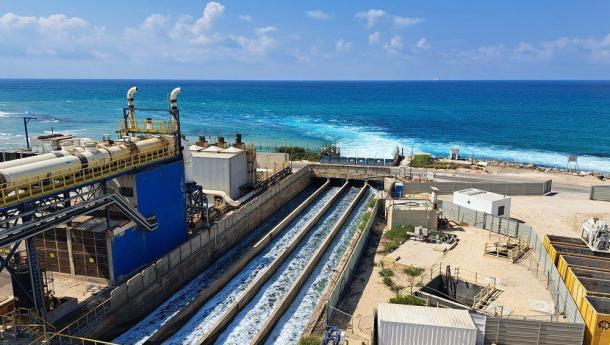
Operation of new desalination plants
Production from desalination plants for 2026 is projected to jump to 91.1 CMM (83 CMM in ESNA and 8.2 in Paphos), compared to 75.6 CMM last year. For the next two years, the contribution is expected to increase to 105.1 CMM for ESNA and 8.9 CMM for Paphos, a total of 114 CMM per year, based on the planning for the integration of new mobile units.
New mobile units are expected to be put into operation in 2026. A unit in the port of Limassol was put into operation as early as April, the fast refineries of the Garyllis River are expected to be put into operation in May, the mobile desalination plant in Episkopi in September and Vasilikos in January, each with a capacity of 10,000 cubic meters per day. The mobile desalination plant of Vasilikos will have an annual production of 3.3 CMM.
Questions also arise about the mobile desalination plant of Moni, which has been put into operation in mid-July 2025, with a maximum daily capacity of 15,000 cubic meters and a planned operating horizon until the end of 2026. However, with the data that exists today, the quantities are necessary, at least until 2029 and therefore consultations are expected to be held with the United Arab Emirates on their stay.
The floating desalination plant of Germasogeia is expected to be operational in January 2027, with a maximum daily capacity of 20,000 cubic meters, while the Mazotos desalination plant is expected to be operational in January 2027, with a maximum daily capacity of 40,000 cubic meters. Annual quantities have been estimated at 6.6 CMM for Germasogeia and 13.1 CMM for Mazoto, quantities, however, that cannot be taken for granted.
At the same time, the permanent Ayia Napa desalination plant in Ayia Thekla is expected to be put into operation in January 2029, with a maximum daily capacity of 30,000 cubic meters.
It is noted that the contract with the contractor of the Dhekelia desalination plant is completed on May 20, 2027, with the WDD being in the process of being negotiated for its extension. Therefore, the quantities calculated for 2027 and 2028 should not be taken for granted, since any non-positive conclusion of the negotiation process may create significant deficits in the water balance of the ESNA for the years 2027 and 2028.
