
Was the scale of its upgrade ever necessary and why can’t any project ever finish on time?
The upgrade of Liopetri fishing shelter (Potamos Liopetriou) isn’t the most extreme example of a scenic spot being altered – some will say destroyed – in Cyprus. It’s not even the most extreme in its area, which is also the area of Ayia Thekla and the Ayia Napa marina. Still, it’s notable for two reasons.
First, because it shows the forces at play in these situations – especially the way everyone claims to want what’s best for the area, yet development always ends up coming “in the form of concrete,” to quote Tassos Shialis of BirdLife Cyprus.
Second, because it also happens to illustrate another, unrelated scourge: the state’s apparent inability to complete any project on time, or successfully.
This kind of story usually begins with a totally unspoiled tract of land in the middle of nowhere.
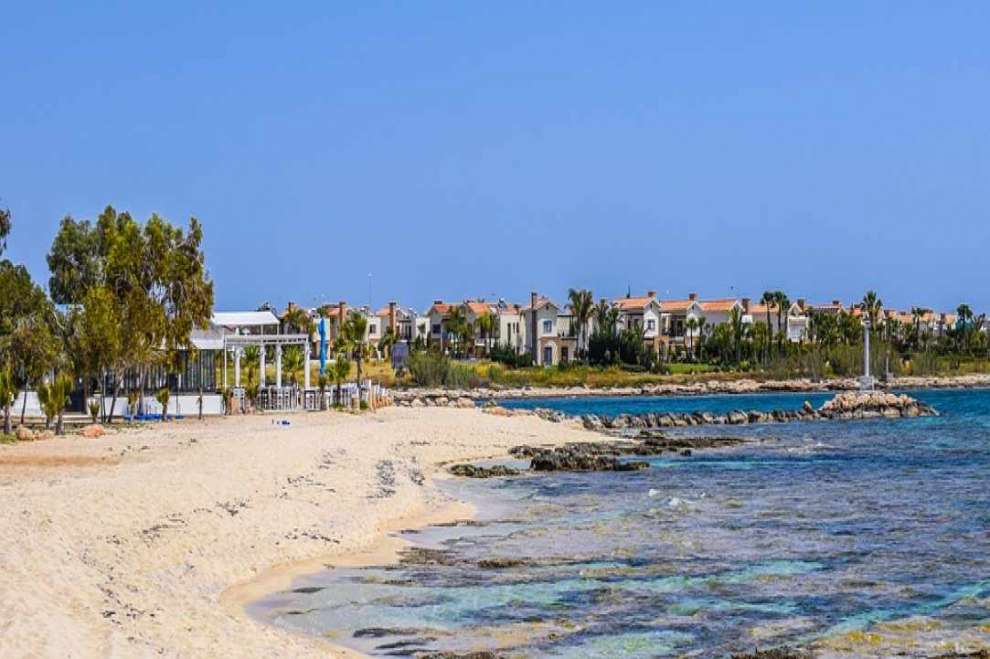 Liopetri before the facelift
In this case, however, Potamos – down the road from the village of Liopetri – was already a tourist attraction.
Potamos is a small fjord, a narrow inlet, a finger of sea forming a kind of river (‘Potamos’ means ‘river’) that’s a natural fishing shelter. Fishermen did indeed park their boats there – but the picturesque spot also attracted visitors.
It’s true there wasn’t much infrastructure. But the water was tranquil, the makeshift jetties had a certain charm, and turtles swam in profusion. There were two restaurants, Potamos and Demetriou, where locals and tourists came to dine and take in the view.
Inevitably, in 2018 – by which time the marina was being built down the coast – a proposal was made for the renovation of the shelter.
The project was approved, and then-president Nicos Anastasiades laid the foundation stone in January 2023. The cost was €8 million, co-financed by the European Maritime and Fisheries Fund 2014-2020, with 75 per cent of funding coming from EU sources. The work was due to be completed by November 2023.
The upgrade, says Shialis, involves walkways, a bridge across the estuary, a bicycle path and pedestrian path, “and there’s also a fishing education centre and multi-purpose space – which could mean a lot of things, including being used for parties and wedding receptions”, a source of income for local authorities.
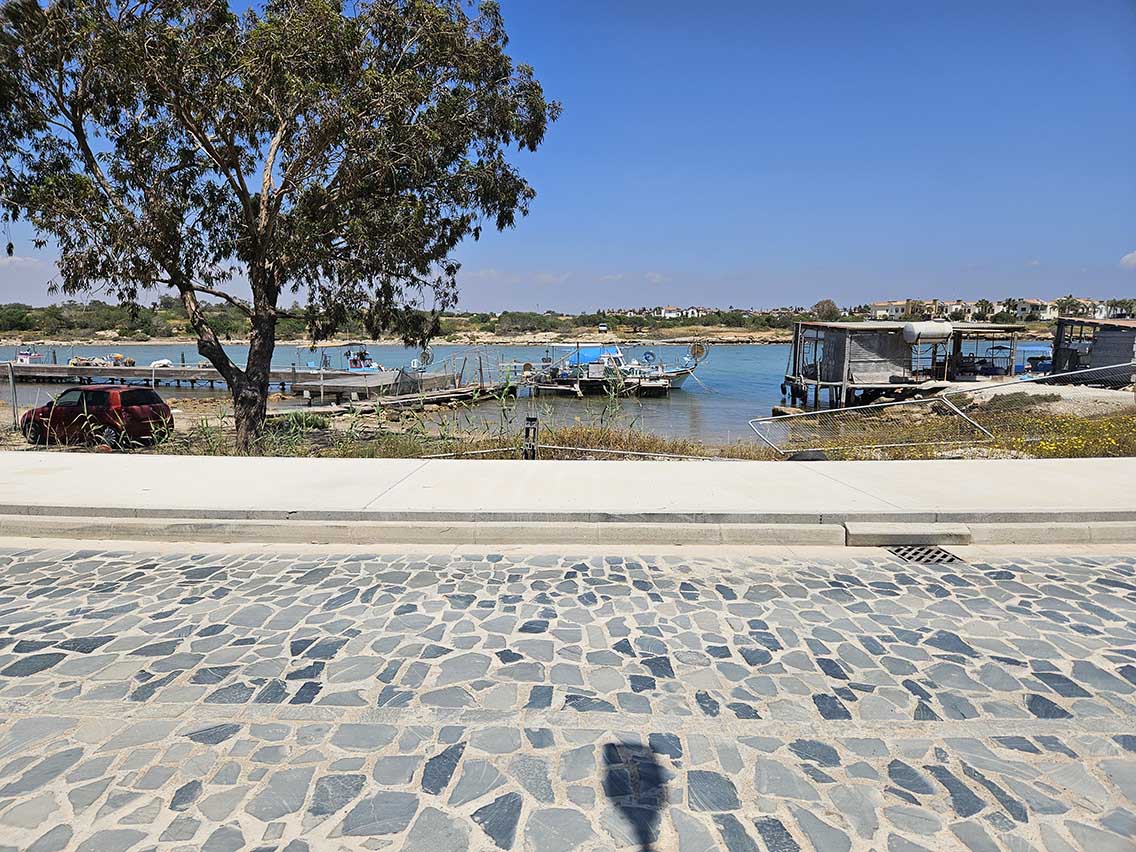 The upgrade includes walkways, a bridge across the estuary, a bicycle path and pedestrian path
Was the upgrade necessary? Wasn’t the shelter fine as it was before?
“‘As it was before’ is irrelevant – because no-one could enjoy it before,” Ayia Napa mayor Christos Zannetou (whose municipality includes Liopetri) told the Cyprus Mail. “Now, with the walkways that are being constructed, people will be able to walk around, look at the boats, the fishermen.
“It’s a functionally ergonomic project which will help immensely, and attract a lot of people to the area.”
“In our opinion no, it wasn’t necessary,” disagrees Shialis. “And our position as BirdLife is on record since 2018, when the environmental repercussions were being studied.”
Adding fuel to the fire is the fact that – despite the EU funding – the shelter, like the whole strip of coast down to the marina, is a ‘Natura 2000’ protected area. “Believe it or not,” adds Shialis grimly – and he has a point, since hardly anything remains of the original habitat.
The area was designated for the greater sand plover, a species of bird that’s rare in Europe (though not worldwide), in fact 100 per cent of its EU population is in Cyprus.
In the past 10 years, however, the plover has been squeezed out, the marina having led to pressure for “further development, like hotels and three-storey buildings”. Indeed, says Shialis, the eastern half of the strip is all but gone – which is partly why BirdLife opposed the renovation of the western half (i.e. Potamos) which, though perhaps more benign, is the final nail in the coffin.
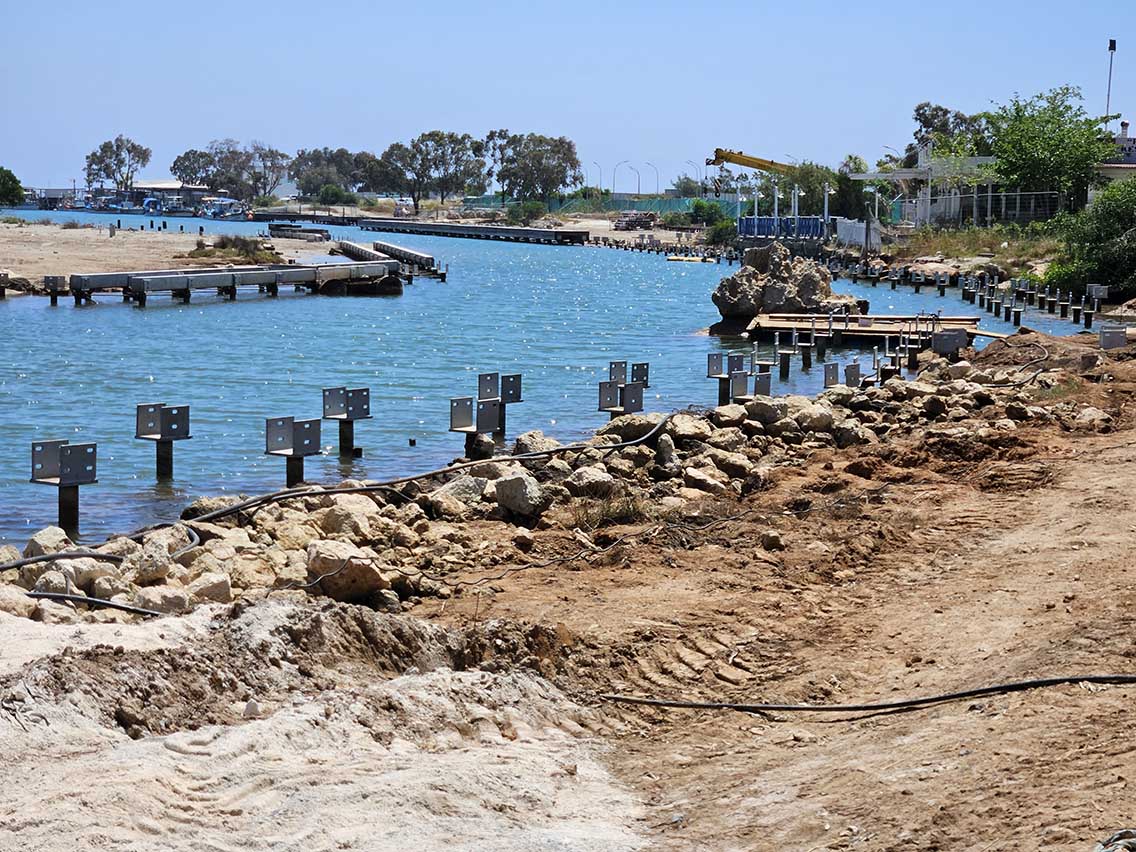 The Liopetri upgrade is way behind schedule
It’s a familiar story – one side calling for Nature to remain intact, the other arguing that visitors can’t properly ‘enjoy’ it unless they’re able to walk around, take photos and so on. Had the construction work (which began in late 2020) been done by November 2023, as promised, the whole thing might’ve flown under the radar.
Instead, the work is still going on – and seems unlikely to be completed soon, fuelling bad publicity for the whole project. “Six years, and we might have to wait six more years for it to finish,” as one Liopetri resident told the Cyprus Mail.
The original contract was scrapped in November 2024 with the project barely half-done, despite months of extensions, and the contractor alleging cashflow issues due to late payment.
By this time, one of the two restaurants had closed permanently and the flow of visitors – who, like the locals, could only access Potamos via a rugged detour through surrounding fields – had slowed to a trickle.
The project lay dormant for a year then another contract, worth €3.6 million over a 12-month period, was signed in 2025 with a new contractor to resume work – since which time, says Zannetou, “there has been no delay”. That said, some improvements have been added after consultations with local fishermen, so the 12-month period will probably be extended.
A recent visit by the Cyprus Mail didn’t exactly find a hive of activity – just the intermittent sound of a lone drill, and a glimpse of a three-man construction crew. Villagers, however, assured us that work was proceeding – or, at least, that “it’s going much better than it was,” to quote a local fisherman.
The general impression was also that Liopetri welcomes the upgrade – despite recent statements by, for instance, village community leader Marios Koumi, who told local daily Philelftheros that “the river was more beautiful as it used to be”.
“Some things will be good for fishermen,” said our source, who asked to remain anonymous. “They’re bringing power, they’re bringing water. These are benefits, we want these things…
“But maybe it won’t be the kind of development that’s ideal for everyone. Maybe it’s more ideal for tourist purposes.”
“It’s going to be completely different to how it was, and when it’s done it’s going to be a landmark,” raves the mayor, adding: “There won’t be anything like it in the whole of Cyprus”.
Shialis, unsurprisingly – speaking for himself now, not BirdLife – takes the opposite view.
“It was unique, that whole landscape,” he laments, “and we went and ruined it. And why did we ruin it? So we’ll get more income through this multi-purpose space – and because that’s how we understand ‘development’, everything has to come with concrete and easy access. That’s our entire vision in Cyprus”.
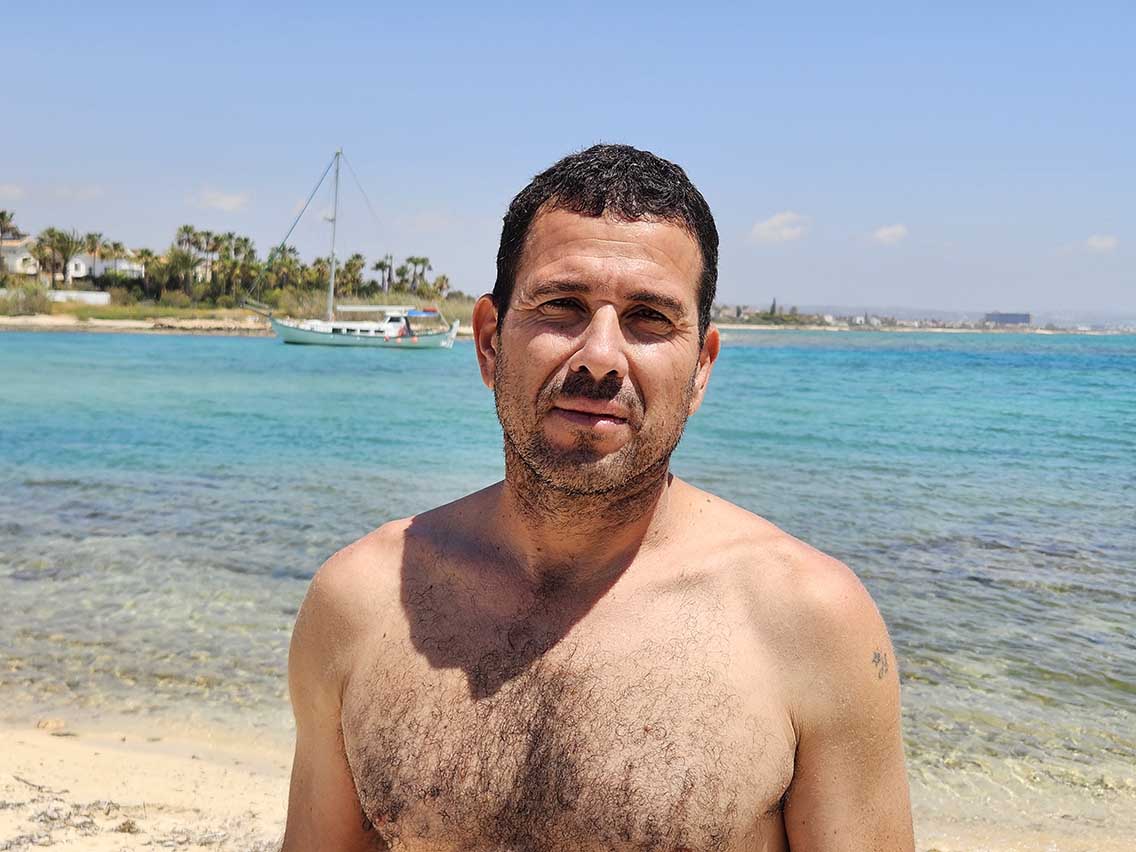 Andreas Panayiotou
The last word, however, should probably go to Andreas Panayiotou, a local who makes his living by taking tourists on his boat, and has lived by the sea – and from the sea – ever since he was a boy on his dad’s fishing skiff.
Potamos had its problems before the upgrade, he told the Cyprus Mail. Construction companies – and some locals – used the picturesque location as a dumping ground for building materials and other garbage. “Something had to be done to clean up the place.”
As for the inlet losing its character, “back in my grandpa’s day, when they’d come down and bring the flock to wash them in the sea over there [a spot he calls ‘i vromismeni’, ‘the dirty one’], the character of Potamos wasn’t like this. It was wild, it was jungle. There was wild nature here.
“Later, there were more of us. More fishermen, more people. More access – and the roads – brought all this development.”
This is the point. For those who’ve always lived here, the area has changed immeasurably anyway – so they don’t have nostalgia for that interim time when it became accessible to outsiders while remaining relatively unspoiled.
If anything, they’d prefer a wholesale transition to concrete and walkways, to avoid the mess and chaos of the in-between situation.
“The environment’s changed,” he says. “Everything changes, that’s how it is.”
