
The Cyprus Presidency of the Council of the EU aims to implement a resilient energy system, capable of withstanding external shocks, while ensuring that energy remains affordable. This was stated on Wednesday by the Minister of Energy, Commerce and Industry, Michalis Damianos, who chairs the informal Meeting of Energy Ministers at the Filoxenia Conference Center, in the framework of the Cyprus Presidency of the Council of the EU.
Mr. Damianos referred to the European Union's priority to strengthen energy security and ensure affordable energy prices for citizens, businesses and industry. He underlined that the EU is currently facing significant challenges, as the conflict in the Middle East has created new energy difficulties. Despite international crises, Europe must strengthen the Energy Union and maintain stability in the energy market.
According to Mr. Damianos, the discussions of the Meeting of Energy Ministers focus on three main topics: AccelerateEU, electricity storage and energy security, as well as the role of natural gas after 2030. The Minister pointed out the need for a coordinated and collective way of dealing with external crises, stressing that Europe must not allow international conflicts to affect its energy security.
Referring to the challenges that may arise, the Minister pointed out that the European Commission, under the guidance of Commissioner Dan Jørgensen, presented AccelerateEU, which aims to enhance energy efficiency and upgrade infrastructure. AccelerateEU calls on Member States to implement the strategy to reduce greenhouse gas emissions and promote renewable energy.
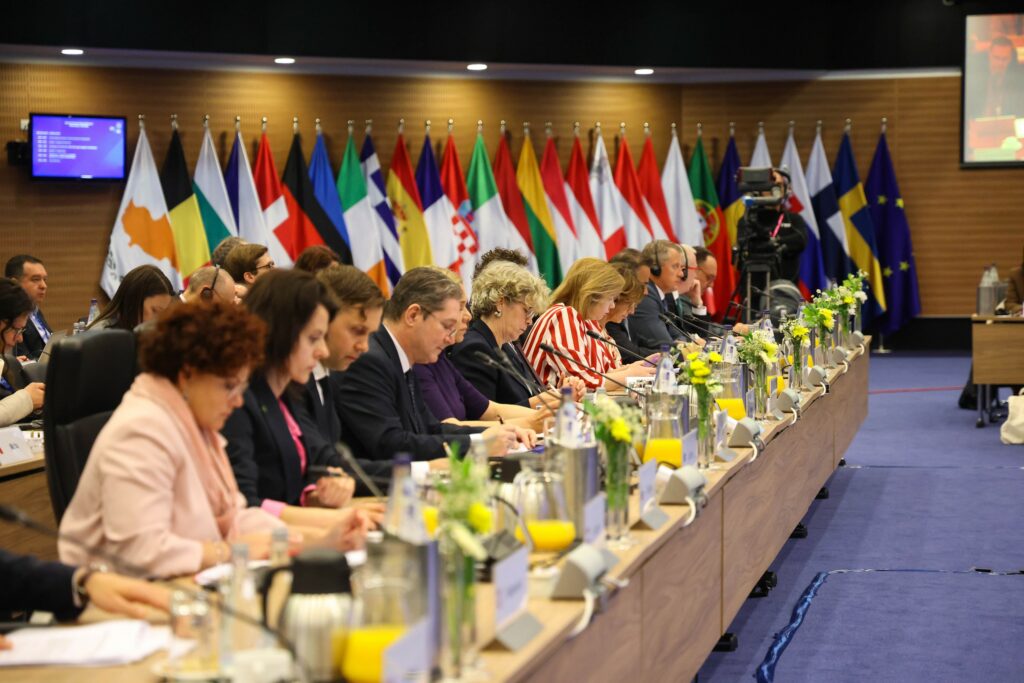
Minister of Energy – Informal meeting of EU Energy Ministers
Mr. Damianos also stressed that Europe must strengthen the utilization of natural resources and proceed with strategies for hydrogen and protection from green gas emissions. A 90% reduction in emissions is envisaged by 2040, while the EU will continue to depend on natural gas as part of the transition period until the full transition to renewables.
Referring to the conjuncture of the crisis in the Middle East, Mr. Damianos stressed the importance of energy cooperation and coordination between EU member states. He underlined that the strategy to deal with the energy crisis must be unified and based on the unity and unity of European states.
Mr. Damianos also stressed that Europe must strengthen the utilization of natural resources and proceed with strategies for hydrogen and protection from green gas emissions. A 90% reduction in emissions is envisaged by 2040, while the EU will continue to depend on natural gas as part of the transition period until the full transition to renewables.
Referring to the conjuncture of the crisis in the Middle East, Mr. Damianos stressed the importance of energy cooperation and coordination between EU member states. He underlined that the strategy to deal with the energy crisis must be unified and based on the unity and unity of European states.
