
BEACON FOR VICTIMS OF ABUSE - DOES HE CONTROL YOUR SALARY, DOES HE HIT YOU, DOES HE INSULT YOU? HELP FOR WOMEN THROUGH A PLATFORM, WHATEVER THE SIGNS OF VIOLENCE - Filenews 23/4 by Despina Psyllou
"Does he take or control your salary or income?" Has he hit you with his hands or with objects?" "Does it systematically belittle you, insult you, or humiliate you?" Is he threatening you that he will take your children?" "Does he force you to perform sexual acts?". These are just some of the signs of gender-based or domestic violence, which have been grouped and collected on the new PHAROS platform.
This is an initiative of the Mediterranean Institute for Gender Studies (MIGS), which seeks to shed light on the lives of victims, as violence and abuse are crimes that take on great proportions in Cyprus. In the two-year period 2024 – 2025, 2,098 complaints about domestic violence were recorded, while in the three-year period 2023 – 2025, 1,667 complaints about violence against women were recorded.
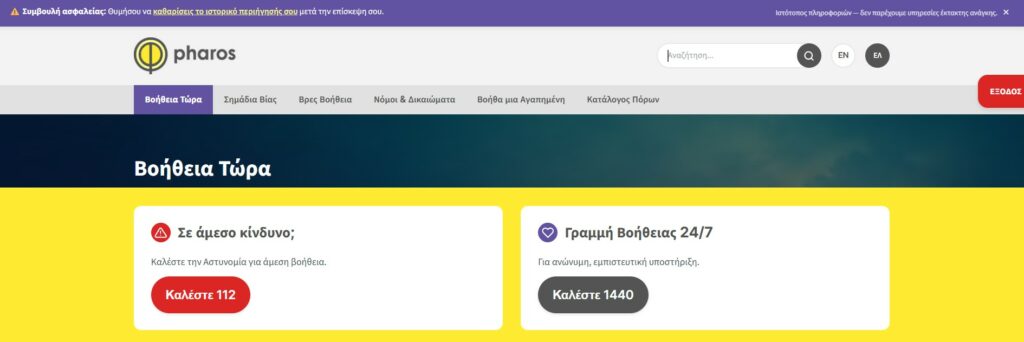
PHAROS addresses the victims having gathered all the useful telephone numbers and services to which the victims can turn, as well as the rights they have under the legislation.
The official launch of the PHAROS digital platform (www.pharos.cy) was announced today at a press conference. As mentioned, it brings together in a single and easily accessible place information on legal rights, support services and available resources for women experiencing gender-based and domestic violence in the Republic of Cyprus.
The platform, it was underlined in the presentation, was created to fill a significant gap and strengthen the right of women experiencing violence to information, as enshrined in the Istanbul Convention.
The researcher, program coordinator at the Mediterranean Institute of Gender Studies (MIGS), Daphne Demetriou presented the platform, clarifying that, for the time being, it is offered in Greek and English.
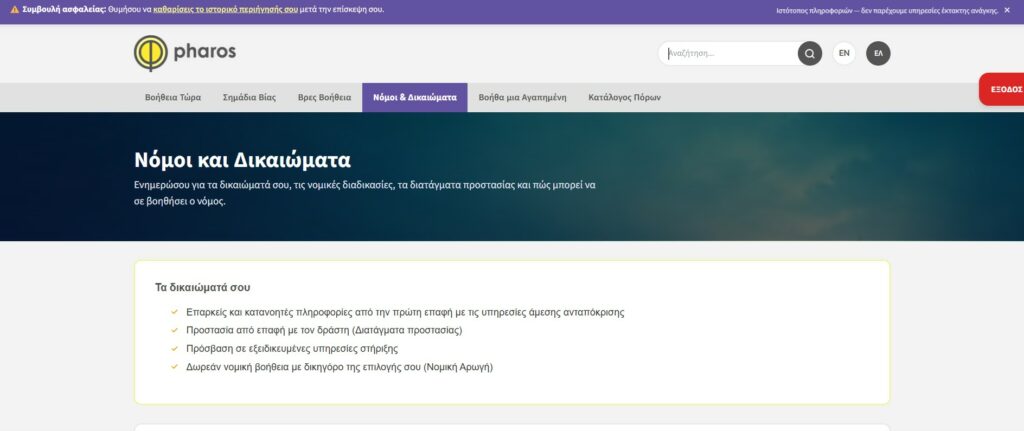
Throughout the browsing on the platform, there is an emergency exit button available, so that the abuser's use of the BEACON is not noticed. At the same time, instructions are offered for cleaning the history from the visit.
"The platform is divided into two levels. The one where someone needs help immediately and the one where someone suspects that they are in an abusive environment and are looking for information."
If the person is in immediate danger, he is offered the option of calling 112 for the Police directly at that moment or 1440 of SPAVO.
Otherwise, at the second level, he can see what the signs of violence are. "I can confirm for myself or for another person," said Ms. Demetriou.
PHAROS also provides the "find help" option which is divided into the Police, the Social Welfare Services and SPAVO.
Victims, at the same time, will also find the category list of resources, where they can see where to turn to meet their needs, in a list of 48 organizations and their contact details.
The PHAROS platform acts as an information tool for:
>> Legal rights and procedures of the justice system
>> State and non-state support services
>> Information for relevant bodies and referral services
The development of the FAROS platform was based on an extensive and systematic process of documentation and collaboration, with the aim of creating a reliable and practically useful information tool.
Prior to the official launch, the platform was piloted and evaluated by women experiencing or having experienced violence, people in their environment and frontline professionals, with feedback being incorporated into the final form of the platform.
"Gender/domestic violence deprives you of self-confidence, health, and even life. It's never your fault. The responsibility always lies with the perpetrator. You have the right to live without violence, with safety and respect," the platform states, providing psychological support to victims.
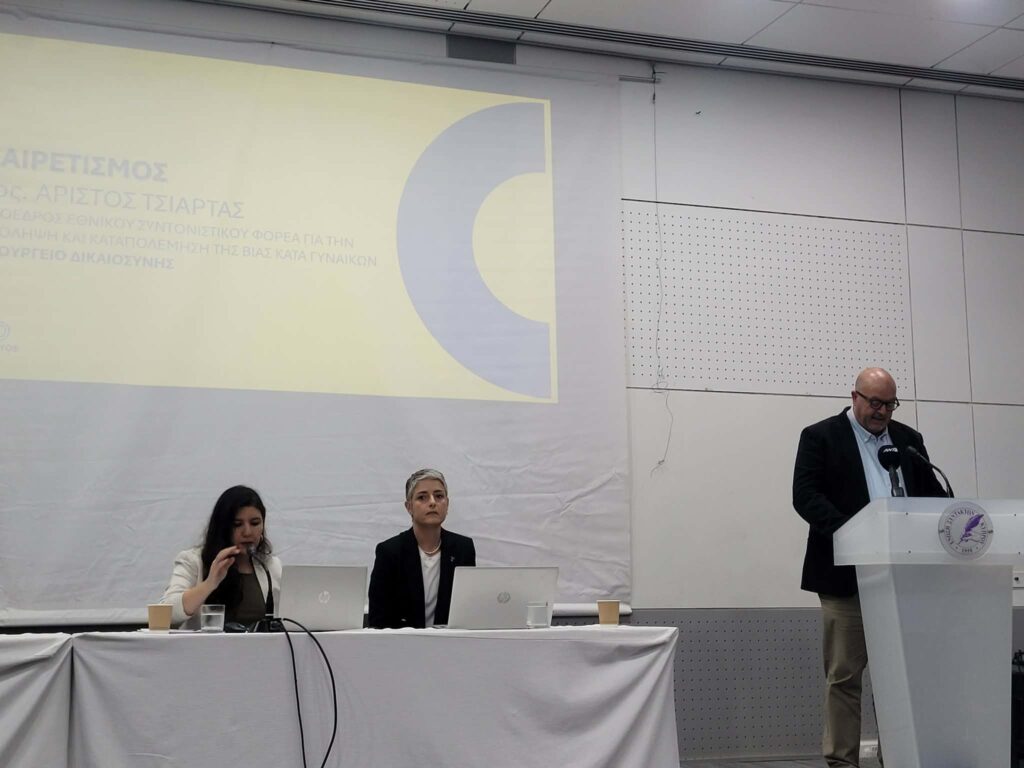
Tsiartas: A useful tool for the victims and the competent bodies
The importance of the PHAROS platform, both for the victims themselves and for the competent bodies, was pointed out by the president of the national coordinating body for the prevention and combating of violence against women of the Ministry of Justice, Aristos Tsiartas.
As he said, the PHAROS collects referral routes and advises victims to seek help. "A useful tool for state agencies as well."
The platform, he said, responds in a meaningful and practical way to one of the most critical rights of victims of gender-based violence: the right to timely, reliable and accessible information. A right that is guaranteed both by the Istanbul Convention and by our national legal framework.
"In an often complex and daunting system, the PHAROS platform acts as a point of reference. It gathers information on support services, referral pathways, and key procedures, making it easier for women experiencing gender-based violence to get proper guidance, seek help, and exercise their rights safely and with dignity. At the same time, the platform is a valuable and reliable tool for frontline professionals as well."
Preventing and combating gender-based violence is not just a legal or institutional obligation; it is primarily a matter of human rights, social justice and democracy, he concluded.
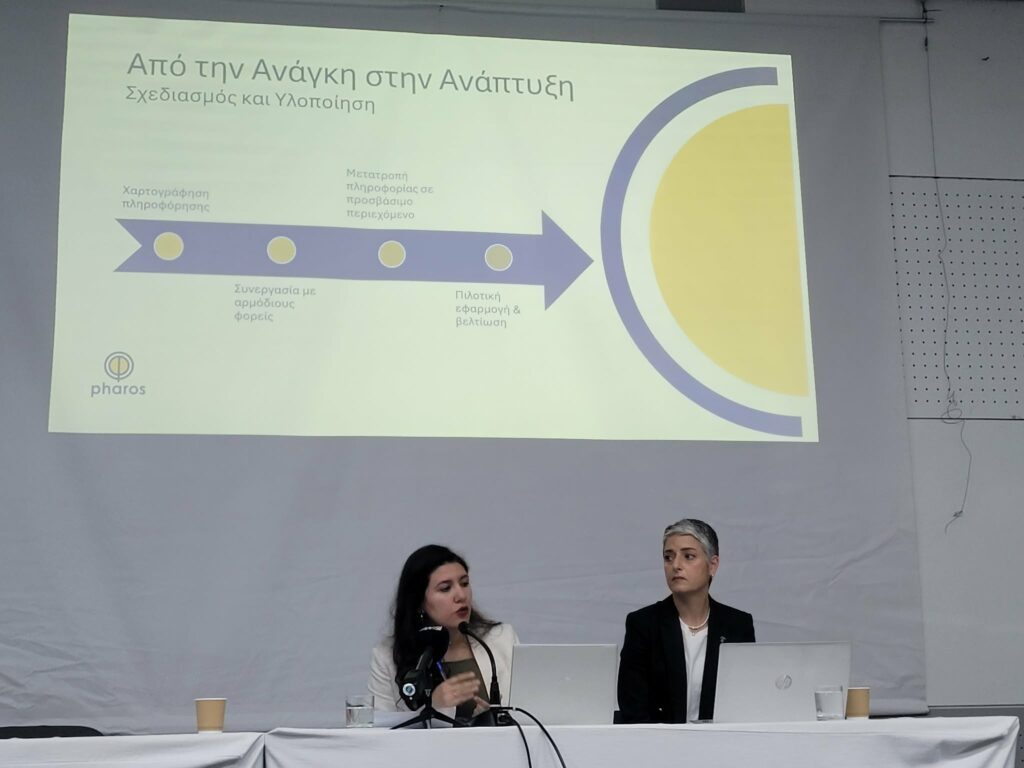
Susanna Pavlou: Access to information is a right
For us, access to information is not a luxury. It is a right. And it is a prerequisite for safety, dignity and empowerment, underlined the president of the Mediterranean Institute of Social Gender Studies (MIGS), Souzana Pavlou.
"We cannot talk about protecting women when information remains fragmented, difficult to access or unknown to those who need it most. In conditions of violence, the lack of timely and clear information can mean delay, isolation or even danger," she said.
The creation of the PHAROS comes to fill this gap and substantially strengthen women's right to information, as enshrined in both national legislation and the Istanbul Convention. At the same time, it is a clear statement that access to knowledge is a tool of power and must be available to all.
