
A defensive wall to protect Cyprus and other countries in the Eastern Mediterranean has been erected in recent days in the wider region.
European states, such as France, Spain and the Netherlands, have sent aid, while the Greek Armed Forces, which mobilized from the first hours after the strike in the Akrotiri area, have a leading role.
At the same time, Italy, Germany and the United States are considering sending additional forces, while the United Kingdom is strengthening its fleet in the region, with the aim of protecting British bases.
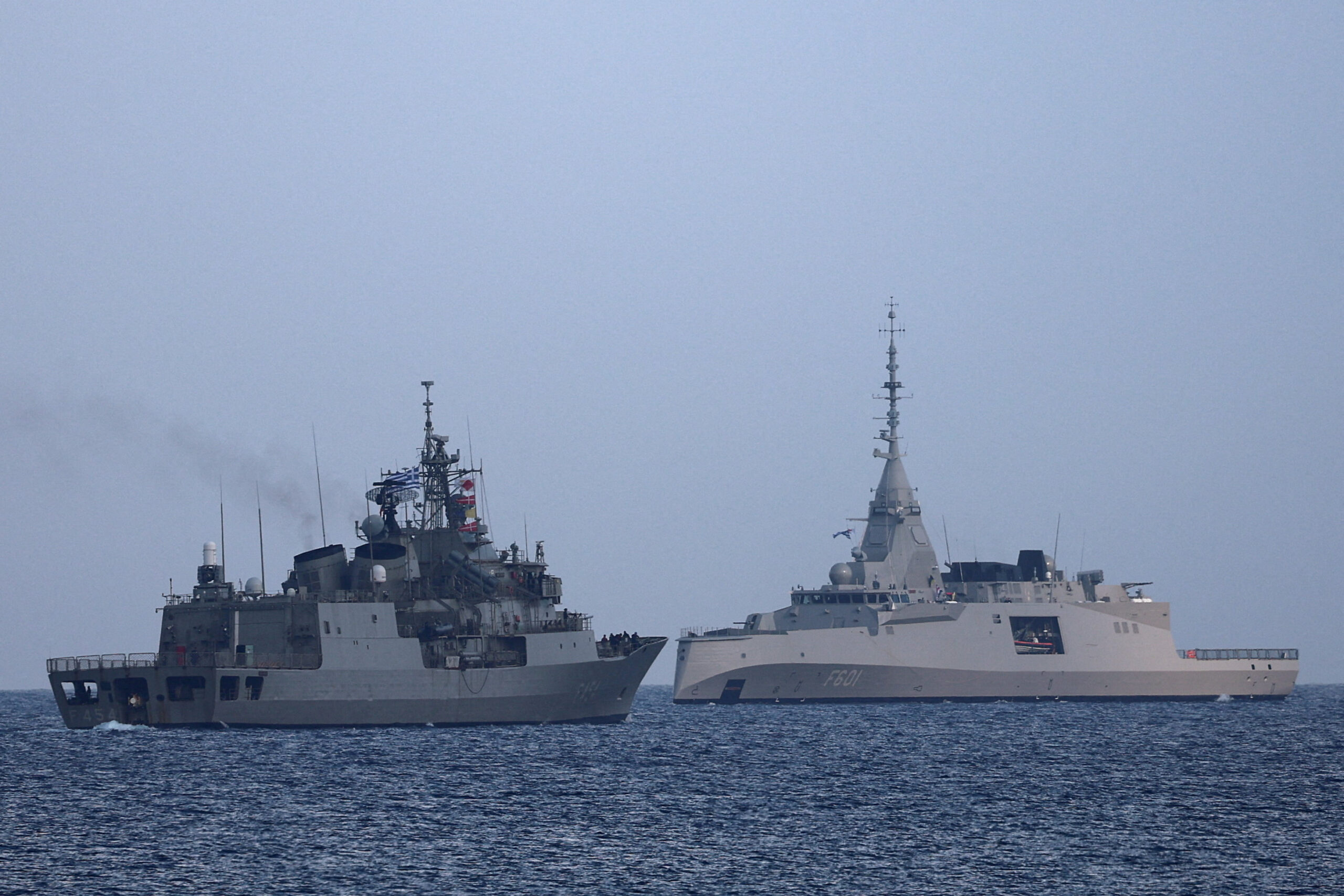
Kimonas
The frigate "Kimonas" (F601), type FDI HN (Belharra class) of the Hellenic Navy, is one of the most modern anti-aircraft platforms of the Greek fleet. It has 32 vertical launch cells for Aster 30 missiles, providing long-range area air defense.
It is equipped with the advanced Sea Fire radar of AESA technology, which allows the simultaneous monitoring of multiple aerial targets, as well as the SETIS combat management system.
Its armament includes anti-aircraft and anti-submarine systems, as well as a 76mm cannon, while it is designed to act as an air defense hub for a wider area of operations, strengthening the operational presence in the Eastern Mediterranean.
Frigate "Psara"
The MEKO 200HN-class frigate "Psara" has ESSM missiles for medium-range air defense and the Phalanx CIWS close defense system, as well as integrated surveillance radars.
A key role in its capabilities is played by the Greek-developed electronic warfare system "Kentavros", which has been integrated into units of the fleet. The system, which was developed by the Hellenic Aerospace Industry, is a "soft-kill" solution for dealing with drones, interfering with their communication and guidance signals without the use of fire.
The "Centaur" can detect and intercept enemy UAVs, neutralizing them through electronic interference. In an operational environment where drone attacks are a key feature of modern conflicts, its presence enhances the operational security of naval forces, offering immediate and low-cost response to small-footprint threats.
The Spanish frigate "Christopher Columbus"
The frigate "Chistoforos Kolovos" is the newest frigate of the Álvaro de Bazán class of the Spanish Navy and entered service in October 2012. With a displacement of 6,391 tons and a length of approximately 146 meters, it is one of the most modern warships in the Spanish fleet.
The frigate is designed for international missions, humanitarian aid operations, naval patrols, and maritime sovereignty protection missions. It can develop a speed of up to 28 knots and has a crew of about 200 people.
It is equipped with the Aegis Combat System and AN/SPY-1D(V) radar to detect and respond to air, naval and missile threats. It has 48 Mk 41 Vertical Launch System vertical launch cells for SM-2 and ESSM missiles, as well as eight Harpoon anti-ship missiles.
Its armament includes a 127mm cannon and two 25mm guns for proximity defense, while it can carry a Sikorsky SH-60 Seahawk or NHIndustries NH90 helicopter, enhancing its operational capabilities at sea and in the air.
HMS Dragon
The British destroyer HMS Dragon (D35), belonging to the Type 45 destroyer class of the Royal Navy, is characterized by high operational agility and the ability to undertake multiple missions.
In addition to its key role in air defence, it can be involved in humanitarian aid operations, dealing with natural disasters and combating drug trafficking at sea. Its crew numbers about 190–200 people, including flying personnel, weapons systems engineers, communications technicians and specialized sailors.
The ship has a displacement of about 8,000 tons and is equipped with the Sea Viper anti-aircraft missile system with Aster missiles, as well as the advanced SAMPSON radar for long-range threat detection. It specializes in countering aviation threats, such as missiles, drones, and aircraft, while often escorting aircraft carriers or protecting maritime zones of strategic importance.
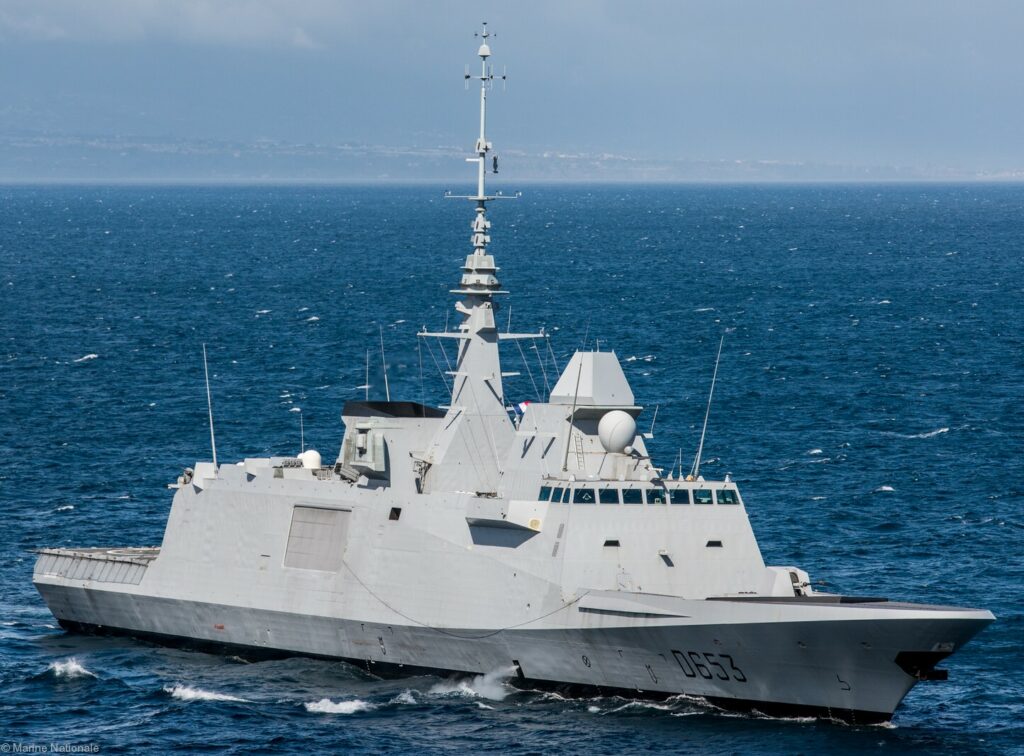
The frigate Languedoc
FS Languedoc (D653) belongs to the Aquitaine class FREMM, which is part of the Franco-Italian program for the development of modern multi-role frigates.
The frigate was built in 2011 and launched in 2014. This is an anti-submarine warfare (ASW) unit, equipped with advanced radars, anti-aircraft systems and the ability to launch MdCN cruise missiles.
In 2018, FS Languedoc (D653) recorded the first operational use of MdCN missiles by a French frigate, hitting targets in Syria as part of a joint operation with the US and UK. It is noted that an aircraft carrier "Charles de Gaulle" was ordered to sail to the Eastern Mediterranean to assist in the protection of the Gulf countries.
The Dutch HNLMS Evertsen
The Dutch frigate HNLMS Evertsen (F805) is currently operating together with the French aircraft carrier Charles de Gaulle (R91), which until recently had been deployed in the Baltic Sea. It can defend a full-fledged fleet formation and carries about 200 people, including administrative personnel.
HNLMS Evertsen (F805) is the fourth and final frigate of the Dutch Navy's De Zeven Provinciën class and is considered one of the most modern units in the fleet. It has a displacement of about 6,050 tons, a length of 144 meters and entered service in June 2005.
The ship is equipped with advanced air defense and naval defense systems, as well as the Aegis Combat System. It has 48 Mk 41 Vertical Launch System vertical launch cells for SM-2 and ESSM missiles, as well as Harpoon anti-ship missiles. Its armament is complemented by a 127mm cannon and 25mm guns for proximity defense.
The role of the F-16 Viper
The F-16V Viper fighters that have been developed are Block 72 configuration, the most modern version of the type in the Greek Air Force. They are equipped with the AN/APG-83 SABR AESA technology radar, which offers increased detection and simultaneous tracking capabilities of multiple targets.
The aircraft can use AIM-120 AMRAAM and AIM-9 Sidewinder missiles and are capable of performing interception and air patrol (Combat Air Patrol) missions. Their presence adds a mobile and flexible dimension to air defense, complementing naval units and enhancing air coverage in the wider area of operations.
The Wildcat helicopters
The Agusta Westland AW159 Wildcat are modern multi-role military helicopters, designed primarily for naval operations. They are used by the British army for surveillance, anti-submarine warfare missions.
They carry advanced radars and sensors for detecting targets at sea. At the same time, it can be equipped with Martlet and Sea Venom missiles to attack small boats and naval targets. The Wildcats are an evolution of the Westland Lynx family and are characterized by increased surveillance capabilities, speed and maneuverability, which makes them an important means of supporting modern naval operations.
