
President Donald Trump last year proceeded with what many described as a large-scale economic experiment, raising tariffs to levels not seen in nearly a century in the United States.
This policy brought him, a long-time supporter of protectionist trade policy, into direct confrontation with business owners who were directly burdened by the higher tariffs, but also with the majority of "orthodox" economists, who warned that the measure poses significant risks to economic growth and stability.
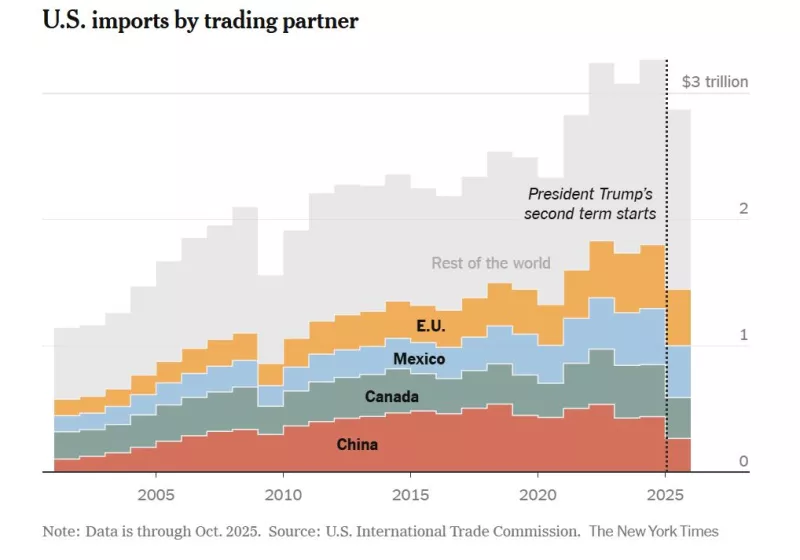
America imports trillions of dollars in foreign goods every year, and tariffs are a tax on these markets. Last year, Mr. Trump raised average U.S. tariffs to about 17 percent, the highest level since 1932, after the Smooth-Hawley Tariff Act of 1930. Trump's stated goal was to revitalize American industry and bring back jobs to the United States.
These new charges have had a significant impact. They have led businesses to speed up, delay and cancel purchases or find new countries to source products. They have generated significant revenue for the government, much of which comes from American businesses. And they have caused the U.S. trade deficit to shrink and the prices of U.S. goods to rise. At the same time, they have not yet been the panacea for the factory sector that Mr. Trump had promised.
Here are some of the impacts according to the NYT.
Explosive revenue growth
One of the most tangible effects of Mr. Trump's trade policy has been the drastic increase in the revenue the government receives from tariffs. The United States collected about $287 billion in duties, taxes, and fees last year, nearly tripling the 2024 amount.
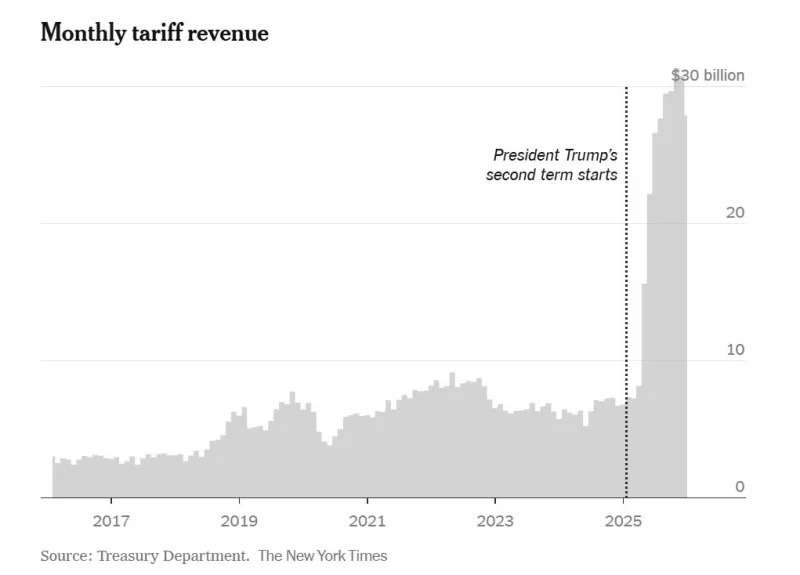
That amount is still small compared to the more than $2 trillion earned annually from income taxes, but it gives the government a significant new source of money for its spending, whether it's funding the military, Social Security, or paying interest on U.S. debt.
There is, however, an important caveat. This money was paid to the government by so-called "registered importers", most of whom are American companies.
While the Trump administration has said that foreign companies will end up paying the tariffs, most economists believe that it is American businesses and consumers who are shouldering most of the burden.
Declining trade deficit
Trump has also sought to reduce the trade deficit, which is the gap between what the United States buys and what it sells abroad. In recent months, he has succeeded. The trade deficit has narrowed significantly, reaching its lowest level since 2009 in October, although it recovered in November.
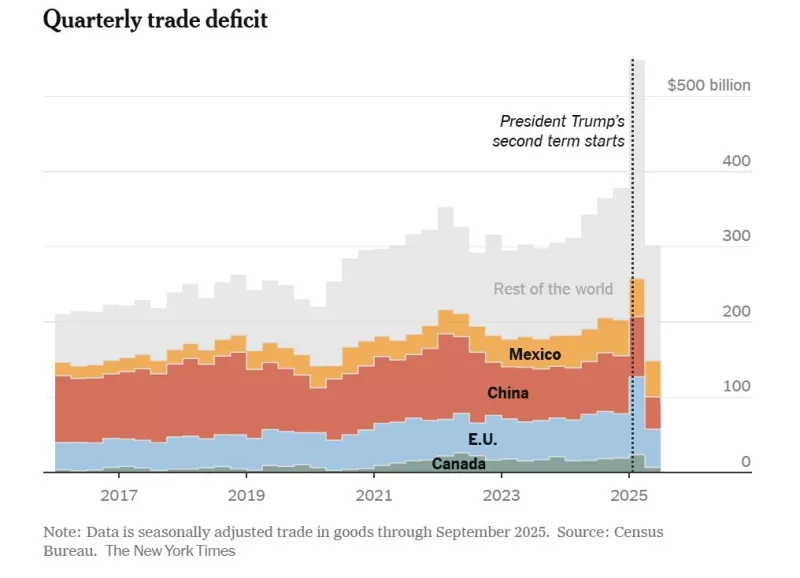
The president and his supporters see the trade deficit as a sign of economic weakness, although not all economists agree. While the trade deficit has narrowed sharply in recent months, it had risen earlier in the year as President Trump took office and businesses rushed to bring goods into the country ahead of tariffs. From January to November, the trade deficit is still up by 4.1% compared to the previous year. The question now for economists is where the trade deficit will go from now on.
Mixed results for the industrial sector
One goal that the American president has not achieved is to help the workers. Despite the tariffs, the manufacturing sector continued to lose jobs last year.
Many of Mr. Trump's supporters argue that it will take time to build factories and reverse this trend. They have pointed to recent gains in industrial production and capital expenditure to suggest that the country is on the verge of a manufacturing boom due to tariffs.
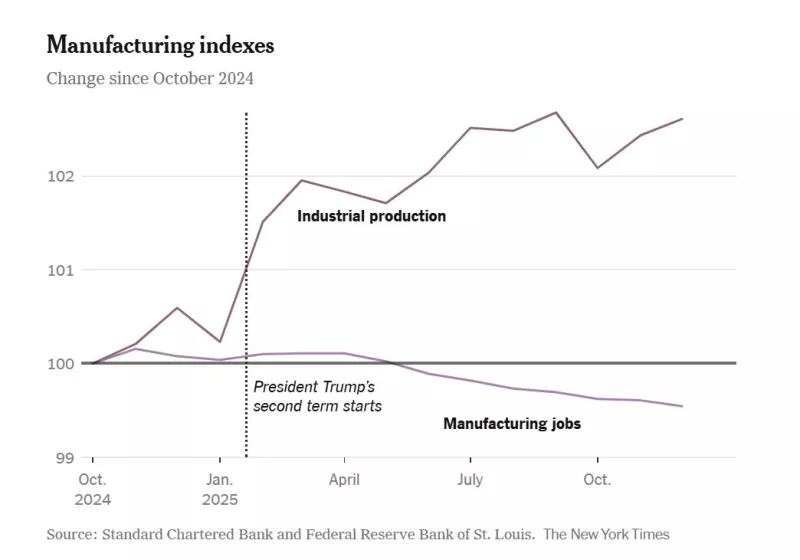
But there are reasons to be cautious. Much of the rise in industrial production is due to growth in the aerospace and electronics sectors, which are among the least burdened by tariffs. For manufacturers of cars and auto parts, which have suffered high tariffs, production fell last year. Some manufacturers say the tariffs are hurting them, increasing the cost of the metal and machinery they need to run their factories.
And while spending on building new factories is much higher than before the pandemic, it has fallen since the end of the Biden administration, when subsidies to semiconductor and battery factories encouraged construction.
There are other forces besides tariffs that may be helping industries, such as the boom in AI data center manufacturing and new tax policies that allow companies to amortize the cost of new equipment.
Tariffs have increased prices
It is not surprising that last year tariffs increased the prices of imported goods. The economic picture shows that prices have started to rise, particularly after Trump announced sweeping global tariffs in April, reversing a downward trend in prices in previous months.
However, the impact of the tariffs on prices was somewhat smaller than many initially expected, in part because companies were reluctant to raise prices for fear of losing customers.
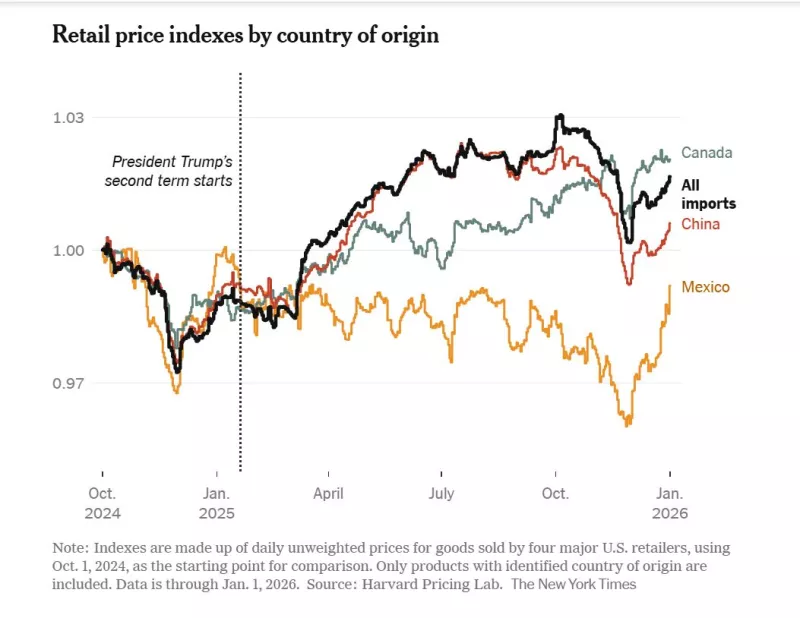
The inflation picture in the US has also improved, partly due to the gradual decline in inflation in services. However, economists say things would be better without tariffs: According to one estimate, the Consumer Price Index, which in August was 2.9%, would be 2.2% without tariffs.
Economic data aside, many Americans are still concerned about high prices and have become more wary of the US president's handling of the economy, which has traditionally been a strong point.
A poll by the New York Times and the University of Siena in January found that 54 percent of voters oppose Mr. Trump's tariffs, and 51 percent said the president's policies have made life less affordable for them.
