Filenews 8 February 2026

MYTHS & TALES OF CYPRUS
Kasteliotissa, Agiou Maronas St, Paphos Gate, Nicosia
17 January - 25 February - Wed & Fri 4-7.30pm, Sat/Sun 10am-1pm
For information, the public can contact +357 22 865889.
Well-known legendary figures from the Cypriot folk tradition such as Digenis, Sierolotta, the Goblins, Rigena come to life in the multi-thematic exhibition entitled "Myths of Cyprus", organized by the Press and Information Office in the Medieval Kasteliotissa Hall.
The exhibition takes visitors on a fascinating journey through the richness of Cypriot mythology. Through three-dimensional constructions and models, as well as the use of virtual reality, the myths are presented in a way that allows the visitor to "meet them up close".
The "Myths of Cyprus" were created out of a deep need to preserve, highlight and disseminate our cultural heritage. The myths and traditions of a place are not just narratives of the past, but living stories that unite generations, reflect the values of a people and are an integral part of its cultural identity.
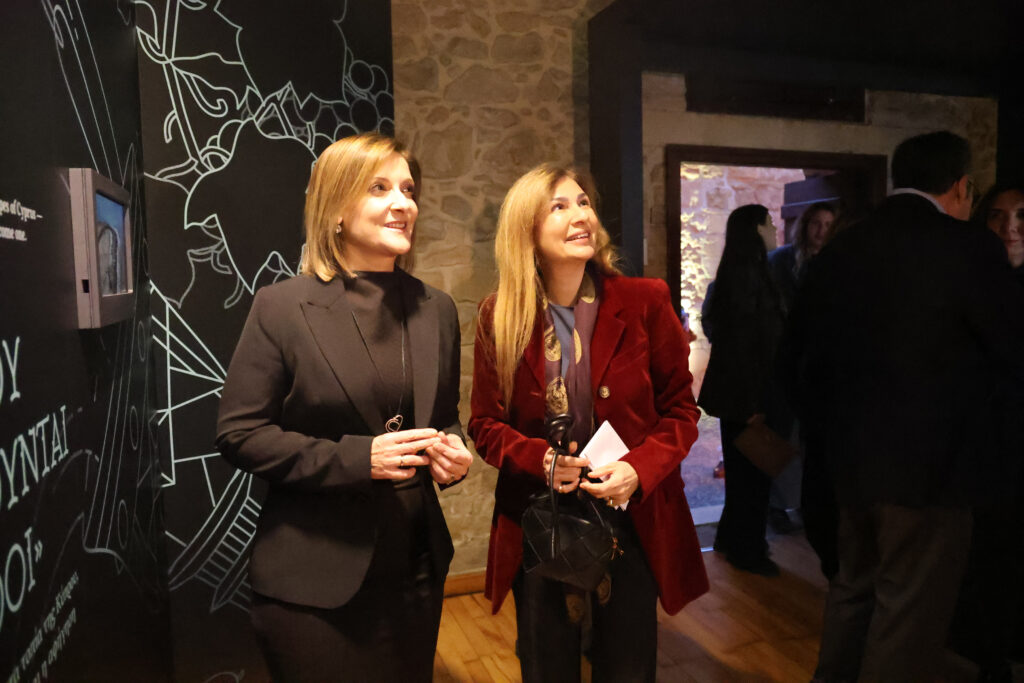
The PIO exhibition opened on Monday, February 2, 2026, at the medieval Kastelliotissa Hall in Nicosia. This historic space was transformed into an interactive environment, where popular imagination meets modern technology, offering an experiential experience for all ages. The inauguration was performed by the wife of the President, Filippa Karsera Christodoulides.
The event was honoured by the presence of the Deputy Minister of Culture, Dr. Vasiliki Kassianidou, the Deputy Minister of Social Welfare, Klea Hadjistefanou Papaellina, the President of the Nicosia District Self-Government Organization, Mr. Constantinos Yiorkadjis, the Mayor of Nicosia, Mr. Charalambos Prountzos, and the Professor of Archaeology at the University of Siena, in Italy, with a field of research in Cyprus and the Aegean Luca Bombardieri. The event was attended by Hambis Tsangaris, an emblematic figure of modern Cypriot printmaking, as well as a large number of people.
Welcoming the guests, the Director of the PIO, Mrs. Aliki Stylianou, said that "The Myths of Cyprus" emerged through the PIO's search for a new way of communication and meaningful connection with the public, through the universal language of Mythology.
In this context, she pointed out, the approach to myths was based on the Homeric concept of myth as speech, opinion and advice, and not just as a fantasy narrative. Through this process, myths emerge as an inexhaustible source of wisdom, as they capture the soul of the people who lived and created in Cyprus and are a living element of the cultural identity of the place.
Ms. Stylianou expressed warm thanks to the First Lady, who had placed under her auspices the first screening of the PIO film series "The Myths of Cyprus" in October 2024 at the Nicosia Municipal Theatre. She stressed that her long-term support was a substantial impetus for the continuation of the creative effort.
She also expressed her gratitude to the PIO staff, the contributors to the production and all those who contributed to the event. He made special mention of the engraver Hambis Tsangaris for the unique visual rendering of the goblins.
Ms. Stylianou also referred to Professor Bombardieri, noting that the presentation of the series at the University of Siena in March 2025, in the context of an agreement signing event between the PIO and the Department of History and Archaeology of the University of Siena, was the first international contact of "Myths of Cyprus" and led to close scientific cooperation.
In her greeting, Mrs. Filippa Karsera Christodoulides expressed her joy for her presence at the opening of the exhibition "The Myths of Cyprus" and her appreciation for the course of the PIO initiative, which, as she said, evolved into a multidimensional project that travelled internationally and highlighted Cyprus on the world cultural map. She stressed that the exhibition gives new life to myths through visual representations, three-dimensional constructions and virtual reality, bridging the past with the technological possibilities of the present and making their messages accessible especially to young people.
She underlined that myths have always been a mirror of human thought and one of the first ways in which man attempted to explain the great questions of existence, transmitting knowledge, experience, wisdom and imagination from generation to generation. She pointed out that especially in Cyprus, myths and legends are inextricably linked to the history, memories and experiences of the people, influenced by Greek culture, Christian tradition and the history of the island.
In conclusion, she noted that myths remain alive because they illuminate truths that are difficult to express otherwise, and continue to inspire thought and creation. She emphasized the importance of supporting such initiatives, pointing out that when art meets technology, new avenues open up for preserving cultural heritage as a living creative force. She expressed warm congratulations to the creators and thanks to the PIO and its partners, wishing the course of the Myths to continue successfully inside and outside Cyprus.
For his part, Professor Bombardieri said that at the core of the exhibition "The Myths of Cyprus" is the idea that myths are not just ancient narratives, but living stories that unite generations, transmit values and contribute to the formation of cultural identity.
He stressed that the exhibition acts as a bridge between tradition and the present. A similar "bridge", he noted, connects Cyprus with Italy through the Mediterranean, which historically did not divide peoples, but united them. "Italy looks at Cyprus and recognizes itself," he said.
Professor Bombardieri pointed out that this relationship is also reflected in the long-term archaeological research of an Italian team in Cyprus, as a sign of the ongoing commitment to the study and promotion of the island's history. Finally, he concluded by saying that the Mediterranean myths, although they are transformed over time, continue to speak a common language for all the peoples of the region.
The inauguration ceremony ended with a musical performance by ethnomusicologist Nicoletta Dimitriou.
From film series to exhibition experience
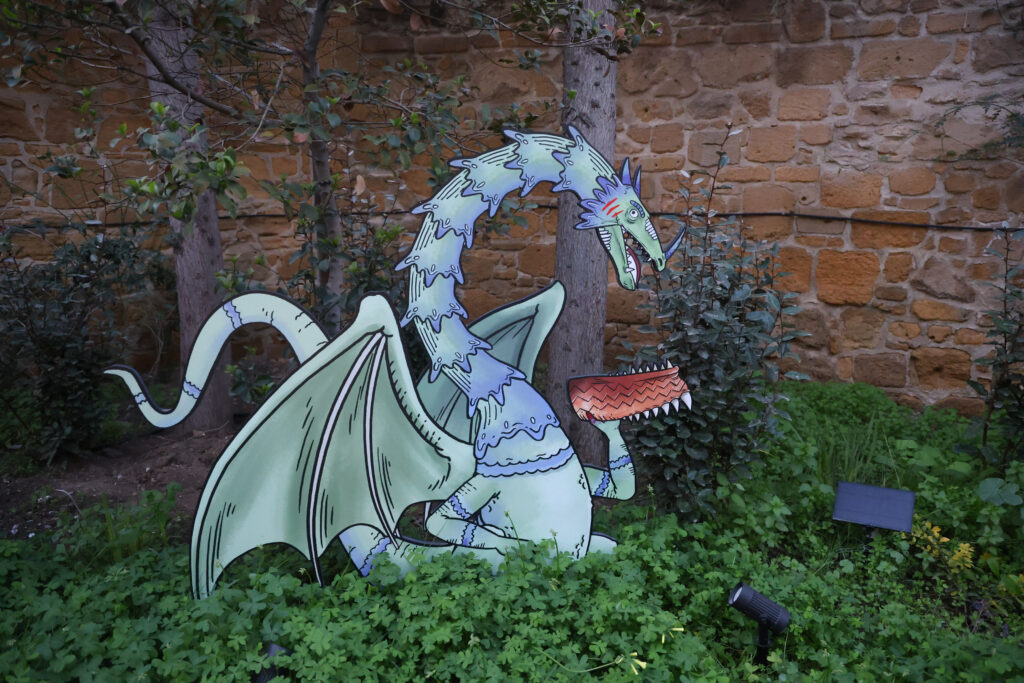
The central element of the exhibition is the three-dimensional constructions and models of mythical figures of the Cypriot tradition. Visitors have the opportunity to come "face to face" with figures such as Digenis, Sierolotta, the Goblins and Rigena. Figures that for centuries survived only through oral histories and popular beliefs now acquire a visual and spatial substance, bridging memory with the present.
At the same time, the use of virtual reality (VR) enhances the experiential character of the experience. The visitor is not limited to the role of an observer, but enters the narrative environment, experiencing the atmosphere and symbolic power of myths.
The exhibition is a continuation of the short film series "The Myths of Cyprus", also produced by PIO. The series, available online, from 2025, features fourteen stories selected from the richness of Cypriot folklore and combines cinematic storytelling with elements of animation.
Behind the creative project, which bears the directorial signature of Markos Kassinos, are, among others, the researcher, writer and presenter Iosif Hadjikyriakos, the anthropologist Ioanna Panteli and the cartoonist Ioannis Filiatidis. Their goal was to preserve and promote cultural heritage through a modern, accessible and visually appealing approach.
Beyond its spectacular element, the event underscores the power of the narrative of Myths as a means of connection in an era of information overload and fragmentation.
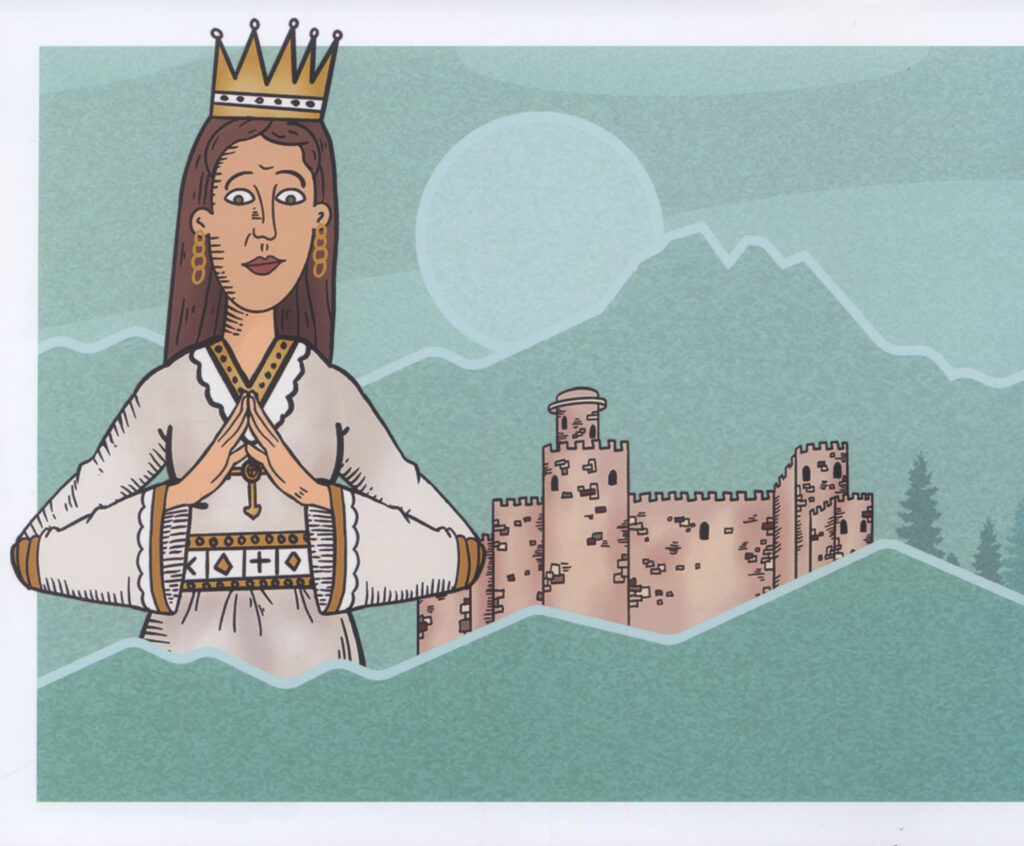
The castles of Rigena
According to legend, the workers worked day and night to build the castles of Rigena with her supervising their every move. When the work was completed and he did not need them, he invited them to the basement rooms promising to offer them treasures. Instead, they never got out of there. In the incessant search for treasures, they say that every Easter, when the priest chants "Christ is Risen", a secret door opens. Whoever finds it will also discover the hidden treasures. The moment the chanting ends, the doors are sealed and whoever stays inside is lost forever. Anyone who wants to know if someone has tried to find the mythical treasures and if they succeeded, there is the possibility of scanning to find out.
The stones of Digenis
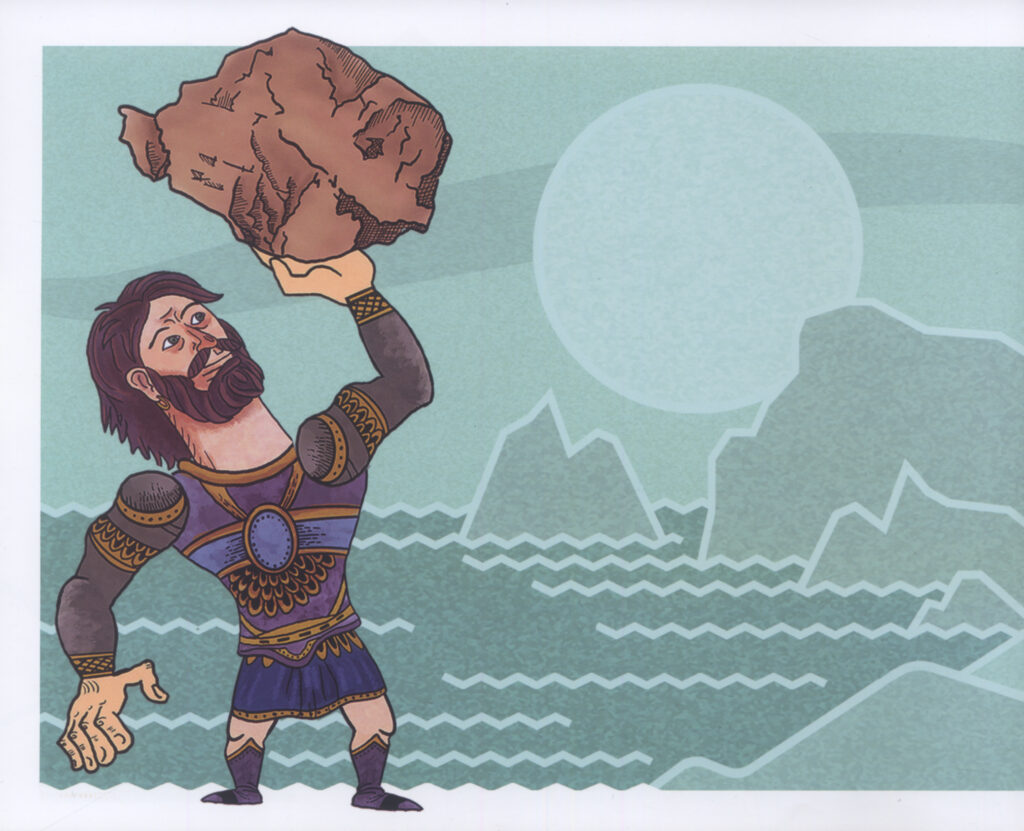
The myth concerns Digenis Akritas, the legendary hero of enormous dimensions, with the power of a lion, who with one jump crossed rivers and with a stroke of his sword cut down trees. When the pirates approached Cyprus, he was not afraid of anything. He would bend over, grab a boulder and throw it on their ships, forcing them to flee...
Sierolotta
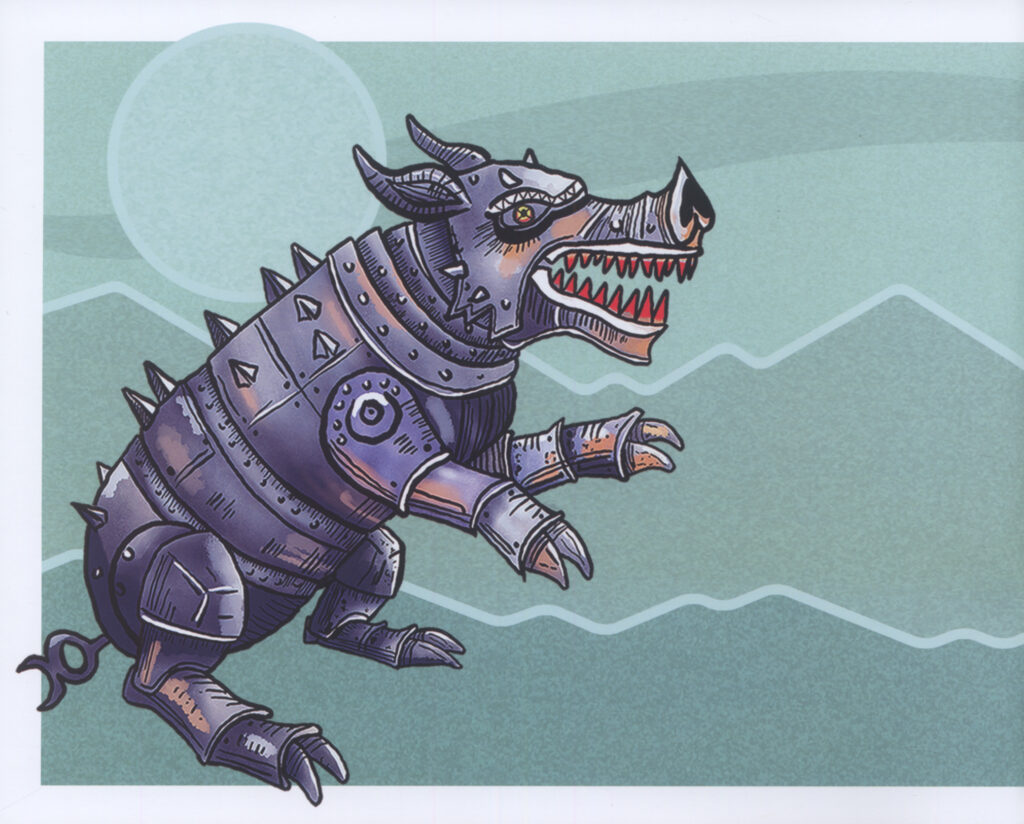
The legend is about an iron pig, which terrified the inhabitants of the village of Doros. Her fur was transforming into snakes and the ground trembled under her hooves. One day a monk arrived in the village. He was so calm that he didn't even move his little finger when Sierolotta rushed at him. Did he manage to defeat the beast? The answer is given to those who scan the code of the myth.
Stories of Salt
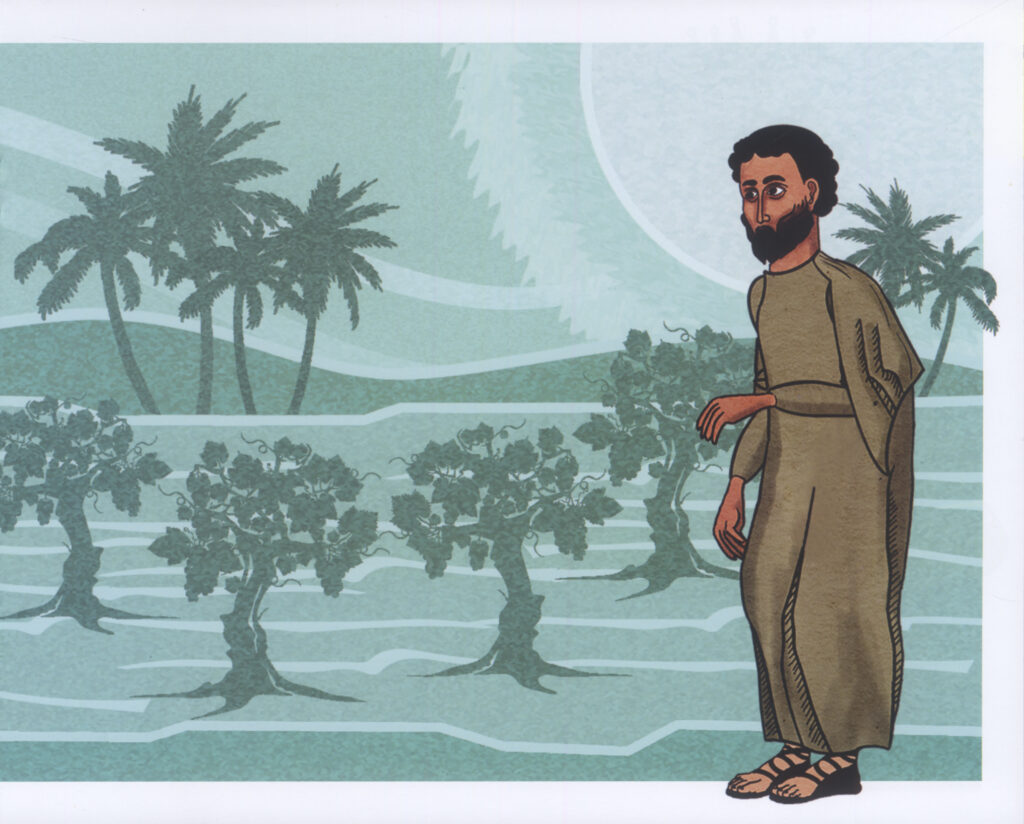
The story concerns the Larnaca Salt Lake and more specifically how it was created in this area. Tradition says that when Saint Lazarus arrived in Larnaca he was hungry and thirsty. He asked for a bunch of grapes. The woman who took care of the vineyards refused to offer him and he said that everything would be turned into salt. The answer to what happened to the salt and what followed for the inhabitants of the city is given to those who scan the code of the myth.
