Filenews 15 February 2026
Interview of Alexis Charalambidis, Chairman of the Board of Directors Charalambidis Christis in Oikonomikos Phileleftheros on Sunday, 15/2/2026.
With consumers increasingly seeking new flavours and specialized nutritional solutions, the dairy industry is evolving, incorporating innovative options while keeping the value of traditional products unchanged.
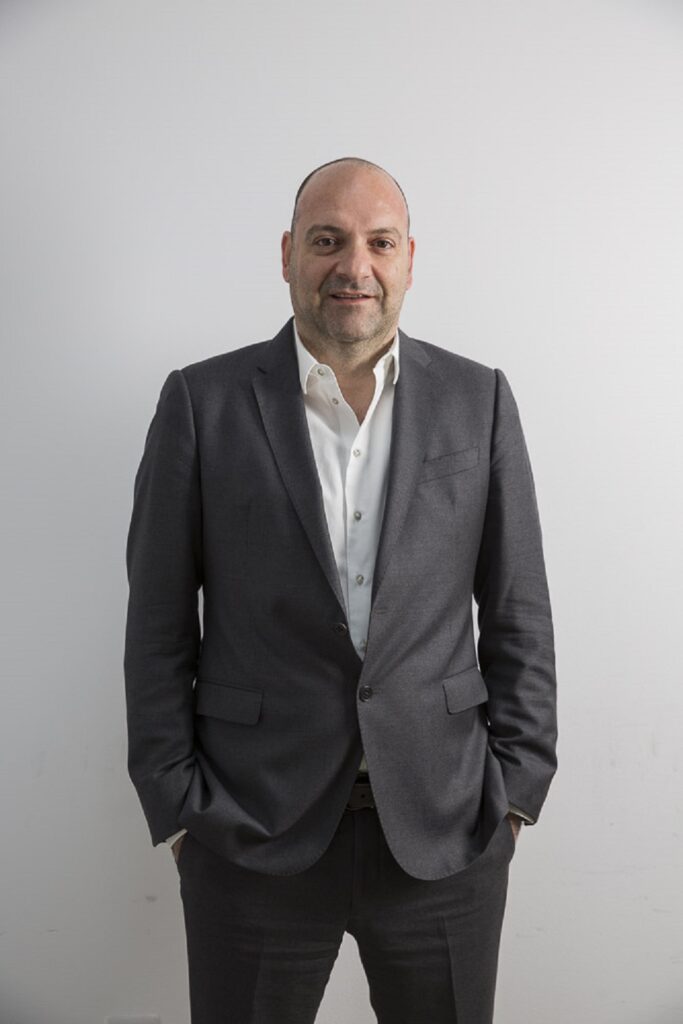
Carrying the knowledge and experience of a long family tradition in the industry, Alexis Charalambides, Chairman of the Board of Directors of Charalambides Christis, the largest dairy company in Cyprus, in an interview with "F", talks about the company's increasing investments in equipment, top international accreditations, but also qualified staff, so that consumers always find the quality and high nutritional value they are looking for.
He also records the great prospects for the expansion of halloumi exports, the contribution of which reaches 2% of GDP, but also the proposals of Charalambides Christis, who currently exports to 37 countries, to shield this traditional product.
In addition, Mr. Charalambidis refers to the long-standing social work of the company and in particular to the "NO ONE WITHOUT MILK" program, which is implemented in collaboration with the Welfare Benefits Management Service. It is an initiative that ensures certified milk to more than 6,000 people of all ages every day.
You are the head of the largest dairy industry in Cyprus, with a history of more than eighty years. What principles have determined this long course?
Our course is a long history of continuous development, with the main characteristic being the adoption of the most modern market trends, without ever losing our commitment to the value of the raw material, the quality and the support of local production.
In 2008, the two largest dairy companies in Cyprus, Charalambides Dairies Ltd and Christis Dairies Ltd, joined forces under the Charalambides Christis joint scheme, which since 2014 is entirely in Cypriot hands. These two names remain particularly strong in the consumer's consciousness, having been identified over time with trust, safety and reliability.
At the core of our philosophy always remains hard work in order to maintain the quality excellence of our products, which have made us leaders in the field of food production and distribution. At the same time, we focus on the practical support of both Cypriot society, through an extensive program of corporate social responsibility actions, and the productive forces, decisively strengthening the primary sector: every day we work closely with dozens of Cypriot suppliers of raw materials, with our relevant purchases exceeding €70 million in value annually and with a total of 30 exclusively our own cow farmers and more than 170 sheep and goat farmers.
You recently announced the expansion of the "No Child Without Milk" action, which you are implementing in collaboration with YDEP. Is there still a need for free milk in Cyprus in 2026?
Social responsibility has always been part of our corporate culture. Since 2013, listening to the very intense social needs due to the economic crisis, we have been implementing a decisive Corporate Social Responsibility program with a wide range of actions that have a substantial footprint. At the same time, we invest in strategic partnerships with institutions and social groups, ensuring that the final benefit returns many times over to society itself. The conditions are obviously better than during the period of the great economic crisis, but needs will never cease to exist and it is important to identify them and intervene before they swell.
For us, milk is not just a product, but the symbol of care, health. It is a daily dignity and that is why we believe that it should not be missing from any table and home. With this in mind, we launched a few months ago the "No Child Without Milk" program, in collaboration with the Welfare Benefits Management Service – YDEP, in order to ensure that no child will lack milk. Seeing the great response to this project, we decided, with the cooperation of the state, to give new momentum to the program, embracing vulnerable people of all ages. Under the title "NO ONE WITHOUT MILK", this initiative ensures daily certified milk to more than 6,000 beneficiaries who benefit from the provision of free milk, contributing substantially to the coverage of basic nutritional needs.
In a technologically evolving industry, where have you focused your investment plan in terms of innovation and quality assurance of your products?
The state-of-the-art technological infrastructure of our factory is particularly important to us. About 650 physicochemical and microbiological analyses are carried out daily on our products, which include the control of the receipt of raw materials and the intermediate stages, the surrounding area and the final product. We invest in international quality standards, such as AIB International, which we recently renewed, but also the Animal Welfare standard, in order to ensure that we offer consumers dairy products of the highest quality and nutritional value. Furthermore, we have invested more than €20 million for the renewal and modernization of our factory's mechanical facilities. Within the first half of the year, we have planned the renewal of part of the milk production line with new equipment, based on the strictest technical specifications internationally. Our sector is constantly evolving with new industry and quality standards and we make sure to keep up to date with these trends, so that we focus our investments on technologies, practices and equipment accordingly.
All of the above could not work without the human factor. We systematically invest in scientific staff in all departments of the company — from production and quality control, to research and management. At the same time, we implement a collective labour agreement, which ensures stability, professionalism and a healthy working environment. We believe that quality always starts with the people who ensure it.
How are consumer preferences changing, and what are the biggest challenges for the industry in the coming years?
In recent years, we have seen an increase in interest in new flavours based on traditional ones, primarily yogurt products. At the same time, options lower in fat or products enriched with superfoods are gradually gaining their own audience. At the same time, however, traditional labels, such as fresh milk, halloumi or chocolate milk, which are among our most emblematic products, remain first in the preference of consumers. We listen to market trends in order to always offer the innovation, high quality and high nutritional value they are looking for.
What are the dynamics of Cypriot dairy products internationally and what are your goals for the further development of the company's exports?
Last year, halloumi moved very high, steadily in the first places in the exports of Cypriot products, with a contribution of about 2% to GDP and a value of up to €350 million. We believe that there is further room for growth in both existing and new markets, such as the Middle and Far East and the Americas. Our company is a leader in dairy exports, exporting halloumi and cream to 37 countries, and we have been honoured twice with the European Export Award. We are constantly participating in international exhibitions exploring new potential partnerships, as we strongly believe in the dynamics of our products. Apart from the economic aspect, dairy products are carriers of tradition, they represent Cypriot gastronomy internationally as they are produced entirely with raw materials of our country, which is why our goal is to further contribute to this effort to promote Cypriot products in new markets. At the same time, Charalambides Christis has proposed and supported ideas for the preservation of our national product, halloumi, through a framework of cooperation for a possible consortium similar to the one established in Italy for Parmesan Reggiano cheese, thus enhancing the prospects and strengthening of the industry. We believe that by shielding this food treasure, we can further strengthen its dynamics and the future of all those involved in its production and ultimately exports.
