Filenews 24 January 2026 - by Despina Psyllou

The mercury plummeted to -30 degrees Celsius. He had to consume frozen food that was even 20 years old. He cared for patients with minimal equipment. He saw penguins approaching him. See absolute white in a vast snow desert in the "End of the World" area. This is the fascinating story of Vassilis Mavratsas, a Cypriot doctor specializing in General Internal Medicine and Space Medicine, who a few days ago returned to his base in Texas, after a two-month stay in Antarctica and the South Pole. The 32-year-old scientist offered medical care "in areas of adverse conditions", such as space, as he follows in his own unique way, his childhood dream of becoming an astronaut.
The 32-year-old doctor was born in Larnaca and grew up in Nicosia with his mother's stories about the man's first step in Selini. "I was in the operating room bed for tonsil removal at the age of 4. Shortly before the anaesthesia worked, the nurse asked me, what I would like to be when I grow up. I answered her astronaut."
In the years that followed, his childhood desire to approach space faded, until he moved to America, the country that offers dreams. At the urging of his mother, he went to study in Texas, where he also has relatives. "My mother is Greek-American and my father was an Armenian Cypriot refugee from Famagusta," he explained.
"I first studied chemistry at Rice University - because you have to have an undergraduate degree - and then I entered medicine at The University of Texas Medical Branch (UTMB). Today I am in the fourth year of my specialty. The first two in General Pathology and now in Space Medicine, which is completed in five months." The university in question, he explains, is very close to NASA headquarters. "So, they have a very strong schedule and at the same time there is the opportunity to practice there, as well as Elon Musk's Space X and Jeff Bezos' Blue Origin."
Part of Vassilis Mavratsas' training was to provide medical care and care to patients "in areas of adverse conditions. That's why they send us to facilities in Antarctica and the South Pole," he said.
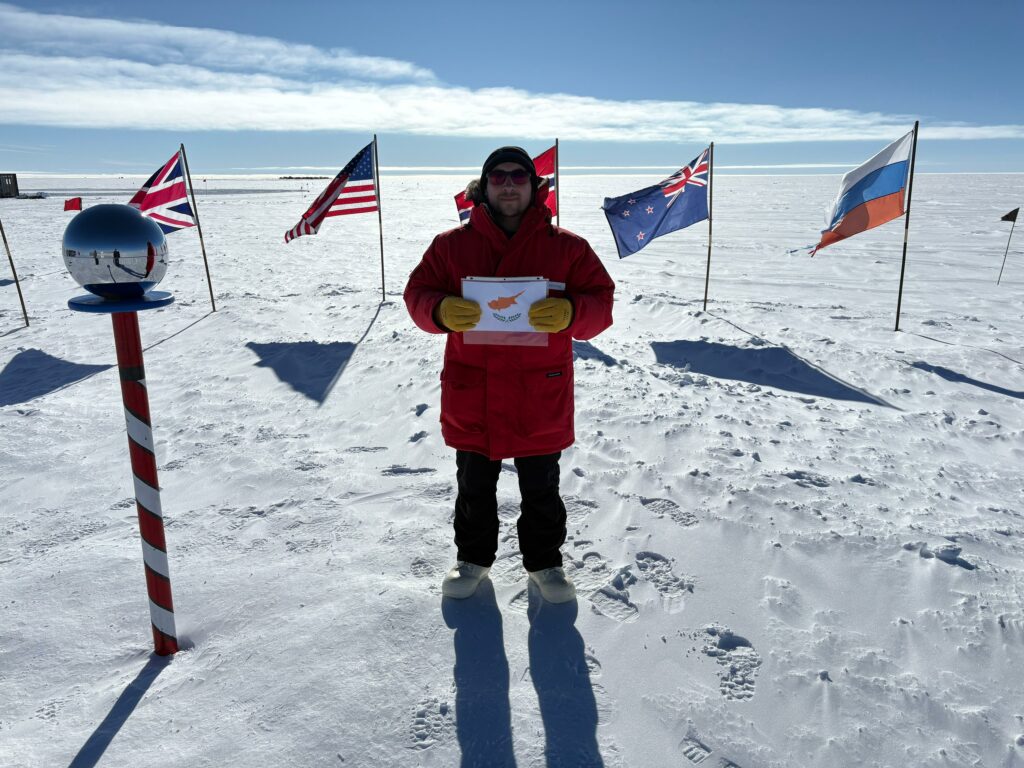
Medicine in polar conditions and penguins
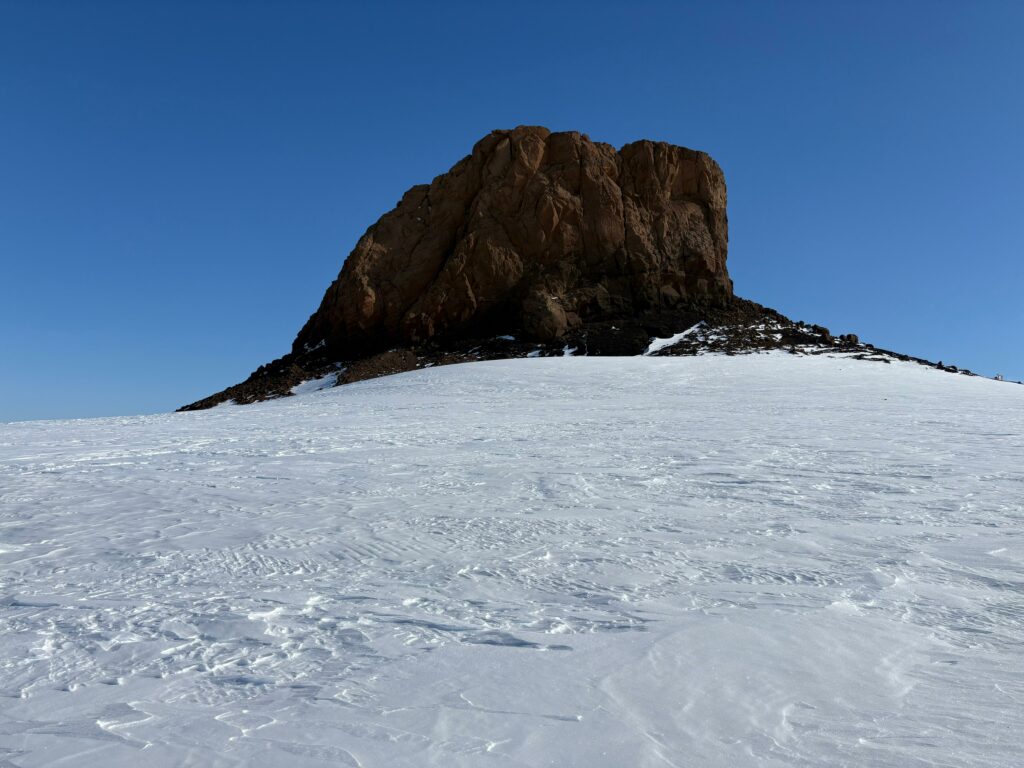
The US Antarctic program currently has three permanent research stations, noted Mr. Mavratsas and clarified that he worked for a total of seven weeks at McMurdo Station and South Pole Station.
The conditions, he notes, are very different from what we are used to, which contributes decisively to changing your approach to life.
"Our visit took place during the summer season, that is, we had light 24 hours a day. We lived in dormitories, in rooms with four or five other people and many common areas. Although we had variety in food, we ate frozen food. At the South Pole, in fact, we had 15 or even 20-year-old food. That's why what I missed the most during my stay was the fresh salads and fruits," he said and added that it is noteworthy that there were no insects.
With proper equipment and very thick clothing, they could also stay outdoors. "At 15 minutes, you feel the moisture in your nose turn into ice," but it was worth the cold. The scenery was very beautiful, and they saw seals and penguins approaching them up close.
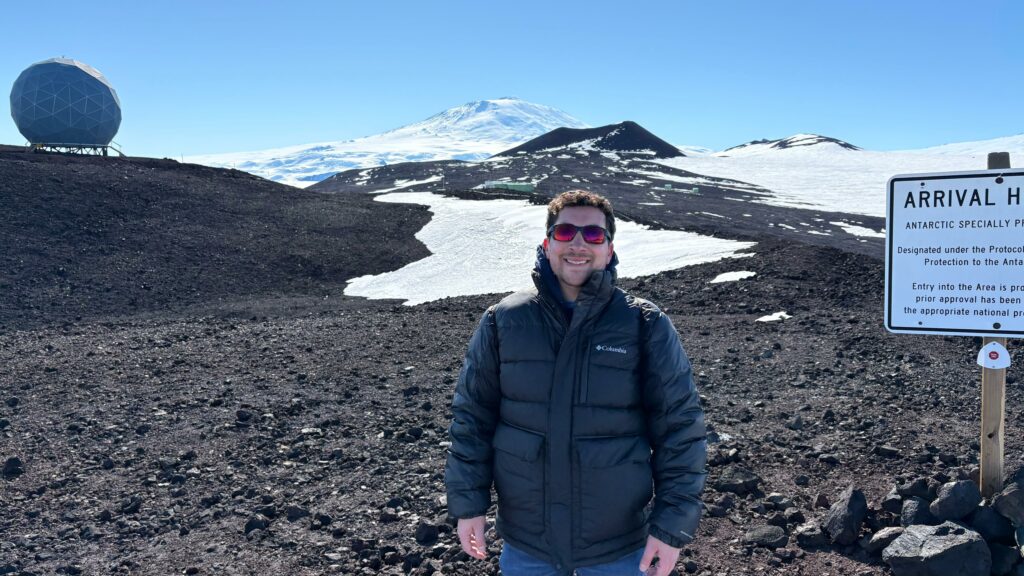
"Most of the time I stayed at the McMurdo station, in whose office we had some very basic services. About 1,000 people live in this station (in the summer) and it is a small town with scientists, researchers and other workers," he said and added that at this time when it is summer in this hemisphere, temperatures range from -5 to 3 degrees.
He then went to the South Pole Station, which is much smaller, has even more limited facilities in both the clinic and accommodation, as well as much more adverse conditions. "At this time of year the temperature ranged from -20 to -30 degrees Celsius, while in winter it even drops to -80 degrees."
At the South Pole, he notes, it is deserted. "A flat area with snow and ice. There I also visited an area called 'End of the World'."
Life in space and the challenges of doctors
Space travel holds many challenges and difficulties for the human body, especially in relation to gravity, underlines Vassilis Mavratsas.
Healthcare professionals specializing in space medicine take part in all stages of a mission, he explains. They first check the health status of the astronauts to see if they meet the medical standards to travel.
"The missions, today, concern the stay on the International Space Station, which takes place from 6 to 12 months. During this trip, the space doctors hold telesessions with the astronauts and remotely check their condition."
They face various issues in their bodies, he underlined, such as Space Motion Sickness syndrome, disorientation, etc. "The first thing that happens is that all the body fluids, due to the lack of gravity, go upwards. They experience congestion and swelling. Also, bones and muscles are weakened, which is why they exercise every day for two hours," he said.
Of course, medical care continues after their landing, as the body needs to adapt again. "Most return with hypotension and lose consciousness."
However, Mr. Mavratsas denies the rumours that want astronauts to be fed with pills and supplements. "They have a pretty rich menu on the Space Station, which will change when we go to the moon and Mars."
