Filenews 11 January 2026 - by Dora Christodoulou

The Paphos countryside, in addition to its picturesqueness and authenticity, retains to this day another special characteristic: A large number of chapels that, following the fate of its small villages, were also left in oblivion, most of them being at the point of collapse or desolation. This situation has begun to reverse drastically in recent years. The importance that is now attributed by private entities and ordinary citizens for the promotion of tradition, culture and the natural beauty of the countryside, has had as a positive consequence the restoration of these small and forgotten places of worship one after the other.
This year's Christmas celebrations brought a large number of visitors to Paphos to areas of the countryside where after many years places of worship were restored. Officials of small and remote communities speak of an unexpected flow of visitors to these villages, from our compatriots who take advantage of the holidays and go for pilgrimage to these places.
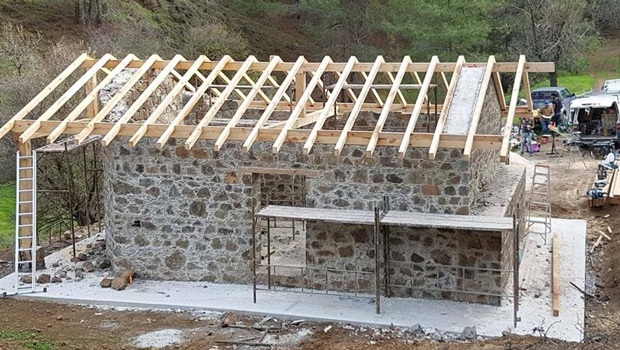
The most characteristic restoration and reopening of a place of worship took place in the mountainous community of Asprogia, in the apartment of Panagia. The restoration of the ruined church of Agios Sozons, which is now back in a working condition, was done thanks to the initiative of a single man, the well-known Paphos educator Nikos Opsimos, who had both the initiative and the practical involvement in this restoration.
The Holy child martyr Sozon came from Asprogia. He was martyred by the Arabs in the 7th century, when they arrived on the island. According to the sources, when the Arabs burned the holy icon of the Virgin Mary that was in the Holy Monastery, they then persecuted Saint Sozon, who was grazing his flock along with other children of his age, until they reached a cave opposite the current community of Asprogia and there they received a martyr's death by fire from the Arabs. The inhabitants then built a church and there they placed the holy relics of the martyrs through whom many miracles were performed.
Until recently, the cave where Saint Sozon was martyred with the other anonymous child martyrs was preserved, as well as the foundations of the ruined church. Now, the restoration of this chapel has been completed and his memory is honoured every year on September 7.
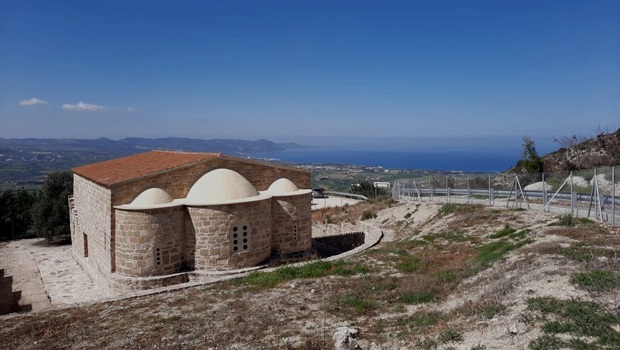
A few kilometers to the east, in the heart of the Paphos Forest, another chapel was restored. And in fact, with particular importance, since it is the oldest place of worship in the province of Paphos: In the community of Steni, the monastery of Panagia Chrysolakourna, the oldest monastery in the province, reopened.
The monastery of Panagia Chrysolakourna was renovated and made safe again for use by the faithful. This monastery also hosts an exact copy of the icon of the Virgin Mary dating back to the distant 1703.
The chapel is located two kilometers north of the community, with a panoramic view of the Gulf of Chrysochous. It was built in the 12th century and is the oldest monastery in the province of Paphos. It was a male monastery until 1821, when Abbot Sylvester was hanged by the Turks and the monastery was looted. During the Venetian occupation it was the seat of the Metropolis of Paphos.
The monastery and Steni have had a common course through the centuries until today. According to tradition, there was a golden trough in the area, although "lakourna" comes from the Latin "lacus", which means lake. The temple suffered many damages, mainly from earthquakes. In 1952 the roof of the church fell due to the great earthquake of Paphos. In 1974 the roof was reconstructed and in the last three years the Department of Antiquities, with financial assistance mainly from the Leventis Foundation, has made the church safe for the public.
Inside the church there is a faithful copy of the icon of the Virgin Mary of 1703 that was saved before the monastery was looted. The church is celebrated every August 15th, November 21st and Easter Tuesday. The road from Steni to the church is in excellent condition.
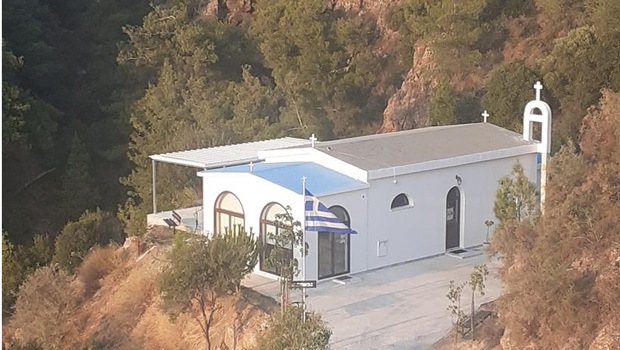
The trio of the most recent restorations and re-operations of the "forgotten" chapels of the province of Paphos, is completed by the church of Agios Ioannis Lampadistis in Pachyammos, Tylliria, which was restored after dozens of years. With contributions from residents of the community and other believers, the restoration of the church was achieved and so after many years Divine Liturgies are now performed in it.
The beginning of the reopening of the church took place on the day of the feast of the Saint and since then residents of the area and visitors have been experiencing the sacred feeling in the renovated chapel, in an idyllic natural environment.
