Filenews 4 December 2025

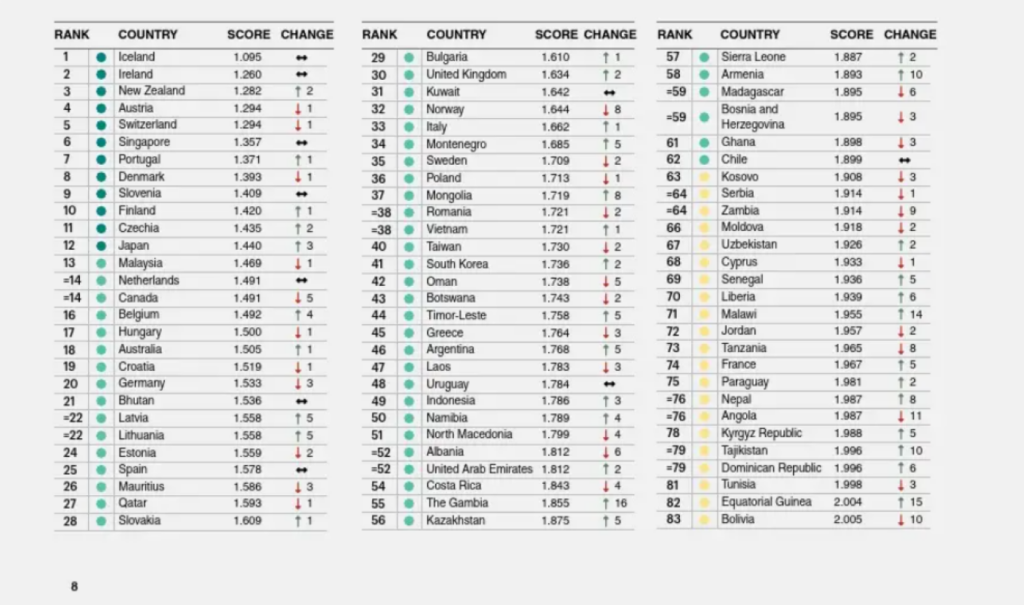
Small and stable states such as Iceland, with 400,000 inhabitants, remain high in the Global Peace Index, as the safest countries in the world for 2025, with Cyprus in 68th place and Greece in 45th place.
2025 is recorded as a year of war, trade tensions and intense militarization. According to the Global Peace Index (GPI), the number of state conflicts is at its highest level since World War II, with three new conflicts breaking out this year alone. In this environment, peace is emerging as a particularly valuable commodity, with several countries continuing to make it an absolute priority.
The World Peace Index is compiled by the Institute of Economics and Peace and is based on 23 individual criteria, which reflect the level of security and stability in each country. The criteria include, among others, citizens' sense of security, crime rates, access to weapons, internal and international conflicts, the degree of militarization, as well as the impact of all these on society and the economy. The lower a country's GPI score, the safer it is considered.

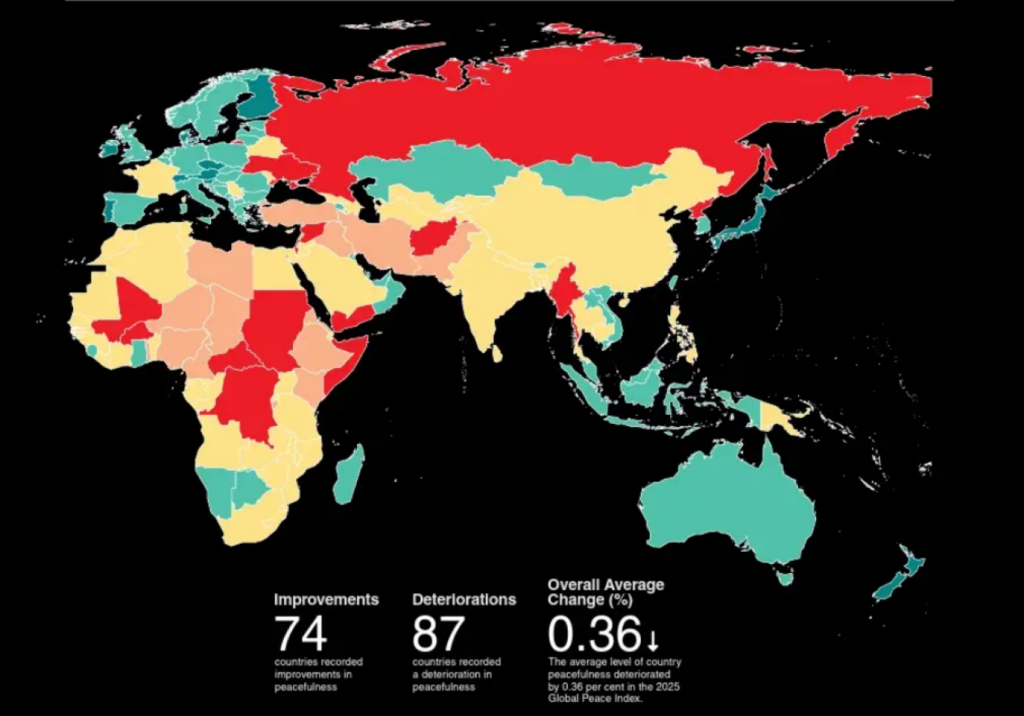
But which are the safest and most dangerous countries in the world and what is the position of Cyprus.
According to the Index, for 2025 in the top five, the safest countries are:
- Iceland
- Ireland
- New Zealand
- Austria
- Switzerland
Our country is in 68th place above Senegal, the Republic of Liberia and Malawi and below Uzbekistan, Moldova and Zambia.
On the other hand, Russia is in last place, below Ukraine, Sudan, Congo, Yemen and Afghanistan.

Countries that have been consistently at the top of the index for decades are highlighting, according to the data, the benefits of peaceful policies in the long run. Iceland has been at the top of the list continuously since 2008, recording the best performance in all three key areas of the criteria: security and security, ongoing conflicts and degree of militarization. In fact, this year it marks an additional improvement of 2%, which strengthens the image of a particularly effective state operation. Despite the often extreme and dangerous weather conditions, Icelandic society manages to maintain a universal sense of security.
In second place is Ireland, a country that has experienced a multitude of conflicts in the 20th century, but in recent decades has set peace and social cohesion as central priorities. The low intensity of conflict, the strengthening of social security and the systematic fight against crime are reflected in its high position in the index.
The top ten is completed by New Zealand, Austria, Switzerland, Singapore, Portugal, Denmark and Slovenia. The common denominator for these states is stable and effective institutions, low levels of violence, distancing themselves from armed conflicts and the existence of a strong welfare state. Factors that are directly linked to a high quality of life, a sense of security and political stability.
On the other hand, at the "bottom" of the list, the title of the least safe country in the world for 2025 is attributed to Russia. They are followed by Ukraine, Sudan and Congo, countries facing a combination of intense internal and international conflicts, a high degree of militarization and serious social and humanitarian crises. Violence, instability, refugee flows and widespread violations of humanitarian rules have a decisive impact on their position in the index.
Cyprus ranks 68th globally this year, down one place from 2024.
