Filenews 21 December 2025 - by Marios Demetriou

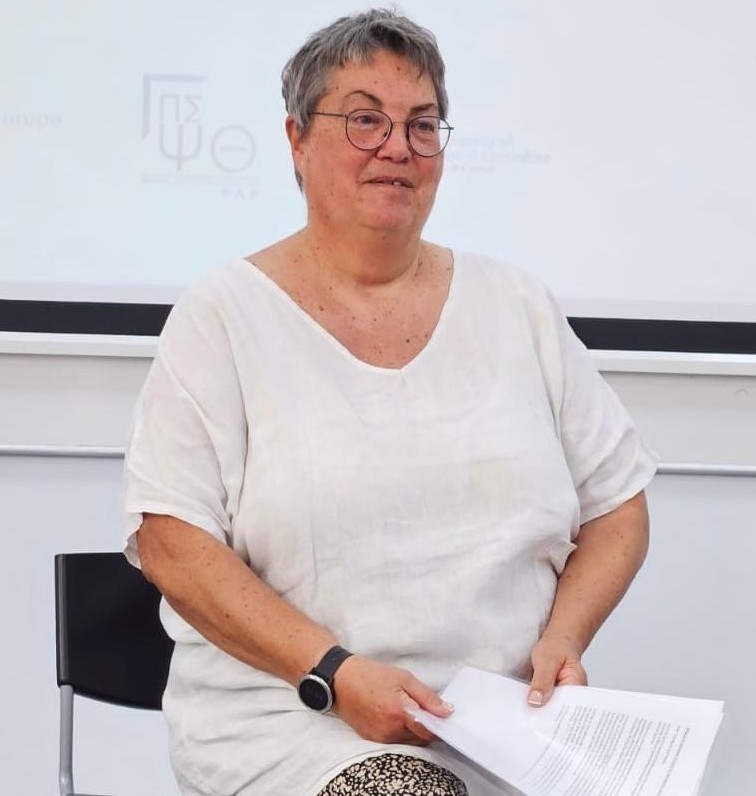
"It is a fundamental need for the state and the Ministry of Health of the Republic of Cyprus to regulate and legally consolidate psychotherapy and the profession of psychotherapist, because there is no health without mental health and because psychotherapy is not a luxury, it is a necessary health service," the president of the Pancyprian Association of Psychotherapists (PSPTH), a person-centered psychotherapist-supervisor and sociologist, told "F"Fotini Demetriou-Ipsmiller.
"The members of the Pancyprian Association of Psychotherapists declare our readiness to work and cooperate with the Ministry of Health and with all competent bodies, with the aim of forming a comprehensive legal framework for psychotherapy, for the benefit of the public and the public interest in our country," said Ms. Demetriou-Ipsmiller in an interview with our newspaper on the occasion of the upcoming general assembly of the Association to be held on 3 February 2026 at the University of Cyprus in Nicosia. "The state - he underlined - has a responsibility towards citizens, vulnerable groups of society, those who need and seek psychological support. And it is finally time for Cyprus to start keeping up with and complying with European levels and standards, so that it can cope with the demands and growing mental health needs of its people.
In Cyprus, it is estimated based on the available demographic and epidemiological data, that tens of thousands of citizens face mental health problems and a significant percentage of them may need psychotherapeutic support. At the same time, the country ranks low in terms of the adequacy of psychosocial care at the European level, which highlights the need for strengthening and institutional organization of the relevant services. The PSDTH has already handed over its positions to the Minister of Health, accompanied by documented data and information on the situation in Cyprus and the urgent necessary legislation. A National Strategy concerning mental health cannot be designed, but the recognition and consolidation of a profession, with a substantial contribution to general social health and well-being, can be neglected or even overlooked. Today in Cyprus it is not always clear who is really a trained psychotherapist and who is just... declares that it is. This results from the lack of a regulatory legislative framework, resulting in confusion and in many cases dangerous misinformation and inadequate protection of the public."
A collaborative process of dialogue and search
"Psychotherapy – the president of PSPSF told us – is a collaborative process of dialogue and search with a specialist who has been trained to help people understand what is happening to them and find ways to deal with their difficulties. It is not a simple "conversation", nor advice from a friend. It is a treatment based on the knowledge and experience of a sufficiently qualified professional and a stable professional therapeutic relationship."
-Why do you insist on the issue of legal consolidation?
-So that the citizen knows that when he goes to a psychotherapist, he has studied seriously, has been properly trained and follows rules. Without the law, anyone can use the title, even if they do not have the proper training.
-So today there is no control?
-Very limited. There are professionals with high education and ethics, but the problem is that there is no single framework for everyone. This leaves the public exposed, especially people who are in a difficult mental state.
-Who is most at risk?
-People who are going through crises, mourning, intense anxiety or depression. When someone is vulnerable, they can easily trust the wrong person. And then, instead of being helped, it can turn out worse.
-What would change if there was a legal regulation?
-There would be clear rules. Who can be called a psychotherapist, what training does he need, who controls him and where can the citizen turn if something goes wrong. This means more security for everyone.
-Is there no way that psychotherapy costs much more financially if it is organized as you ask?
-Not necessarily. On the contrary, when psychotherapy is properly organized, it reduces other expenses, i.e. it means fewer medications, fewer hospitalizations, fewer absences from work. In the long run, it is more economical to take care of mental health than to ignore it. So the state and the Ministry of Health must make the decision and move on. Mental health is a public matter, not a private matter. Just as there are rules for doctors and nurses, so there must be rules for psychotherapists. Psychotherapy is valuable and necessary, but above all it is the right of every citizen, regardless of social class, age, sexual orientation, ethnic origin or physical or mental disability. We want a society where mental health is taken seriously, openly, without fear and without stigma, and where people have access to quality and reliable services.
The objectives and the general assembly of PSDTH
-What are the main goals of the Pancyprian Association of Psychotherapists?
-Our main goal is simple: We strive to contribute to the awareness of mental health issues and the improvement of the quality of psychotherapeutic services in Cyprus. Our main concern is also to ensure that anyone who asks for support and help receives it from properly trained professionals. At the same time, however, we want psychotherapy to become more accessible and more understandable for the whole society.
-What does "professionalism" mean in practice in psychotherapy?
-"It means clear rules and frameworks, proper education, continuous training and respect for ethical principles. The Association wants to ensure that psychotherapists work responsibly and with quality, so that the citizen feels safe."
-What are you doing for the training of psychotherapists?
-We place great emphasis on continuous education. We organize seminars, workshops and conferences so that psychotherapists are informed about new methods and research. Learning and practical training never stops in this profession . Our members are committed to Continuous Professional Development.
-Is there cooperation between psychotherapists?
-Of course. The exchange of experiences and support between colleagues is very important. The Association creates spaces and opportunities for networking, so that professionals do not work in isolation.
-How is the quality of psychotherapy ensured?
-Through specific quality standards, mandatory supervision and evaluation procedures. We want the therapeutic process to be effective and safe. Quality is not something theoretical, but it concerns the daily practice and the result for the person who asks for help.
-How important is it to inform people about mental health?
-It is crucial. Bearing in mind that Cyprus is a small area, we recognize that many people are afraid or ashamed to ask for help. We want to talk openly about mental health, explain what psychotherapy is and reduce the stigma that accompanies it. In addition, it is important to have the appropriate trust in the profession and the professionals who practice it.
-Does the Association also have a role at a political level?
-Yes. We represent both professionals and citizens who receive psychotherapy. We participate in the dialogue with the state and the competent bodies, so that psychotherapy is recognized as an autonomous profession with a regulatory legal framework and becomes an important factor in dealing with mental health.
-What is the goal of this year's general assembly of the Association?
-At this year's General Assembly, the Pancyprian Association of Psychotherapists gives a strong sign of its existence and work and is designed as an informative-interconnection event. Our guests are the Minister of Health, the Attorney General, officials of ministries and mental health committees and other political officials. We will also be joined by officials and members of organisations representing the breadth of the mental health community and context, and representatives of Universities and the media of Cyprus.
Psychotherapy according to European levels
As the president of the Pancyprian Association of Psychotherapists told us in conclusion, "at a time of increasing mental health needs, the adequacy and quality of psychotherapeutic services must be ensured. With the demands of modern life constantly increasing, stress, as well as the social, economic, and political pressures that accompany it, pose constant challenges to our mental balance. The need for psychological support is driving more and more people to seek specialized help. This shift today highlights the urgent need for an organized, reliable and regulated mental health framework, which ensures the quality and effectiveness of the services provided, in all areas.
An integral part of this effort is the legislative consolidation of the profession of psychotherapist, as it is a fundamental need that will ensure the protection of clients, but also of professionals in the field. The legal regulation of the profession of psychotherapy and the protection of the professional title are necessary measures both for the protection of professionals and for the protection of the public. The responsibility for this institutional arrangement lies primarily with the Ministry of Health and is directly linked to the public interest. Psychotherapy, as a key pillar of a modern health system, can contribute substantially to prevention, care and social cohesion, reducing the cost of care in the long term and enhancing the quality of life of citizens.
In a modern European state, institutional provision for psychotherapy cannot be neglected. The Cyprus Association of Psychotherapists, as the approved and appointed National Umbrella Organisation and National Awarding Organisation by the European Association of Psychotherapy (EAP), has undertaken the responsibility to promote the development of psychotherapy in accordance with European standards. We assure the professionals of the sector and all the competent bodies that we will continue the effort we are making. However, cooperation with the Ministry of Health is the "key" to be able to ensure the adoption of a modern, comprehensive and effective legal framework, which will put mental health and the protection of citizens as a priority. Only in this way will we truly ensure quality psychotherapy services and the strengthening of the role of professional psychotherapists. We therefore continue our effort, responsibly and constructively, for the institutional shielding of psychotherapy, which is vital for the promotion of mental health in Cyprus."
Freud and the European Certificate of Psychotherapy
The president of the Pancyprian Association of Psychotherapists stated that "psychotherapy is a therapeutic method based on dialectical communication and cooperation between the patient and the therapist. Its goal – he added – is to offer support and assistance to the patient, so that he can develop the ability to deal with his psychosocial and emotional peculiarities or difficulties, to be relieved of unpleasant psychological symptoms, to be able to increase his self-awareness, as well as to adapt and manage in his own best way, the conditions of his life.
From the beginning of the 20th century, with the contribution of the "father" of psychoanalysis Sigmund Freud, psychotherapy emerged as an independent profession, to be followed in 1990 by the Strasbourg Declaration, which laid the foundations for the establishment of the European Association of Psychotherapy (EAP) in 1991. This manifesto has been signed by 40 national councils and is to this day the cornerstone of the European Association of Psychotherapy, which represents 128 professional psychotherapy organizations from 41 countries and a total of 120,000 psychotherapists.
There are international standards of training for psychotherapists. At the European level, training in psychotherapy is of a higher level, starts after academic training and lasts at least 4 years. It includes theoretical training, personal therapeutic experience, and extensive supervised internships. This is not a short seminar, but a serious and demanding training. The European Psychotherapy Association (EAP) has established the European Psychotherapy Certificate (ECP), which acts as a guarantee of quality and professional competence. Cyprus currently has 48 ECP holders, of which 37 are members of our Association."
