
Alphabet Inc.'s Google has announced that it is working on creating two different categories of AI glasses, which will compete with existing models from Meta Platforms Inc. next year: one category will feature displays, while the other will focus on audio.
The first AI glasses Google is working on will be released sometime in 2026, according to a blog post on the company on Monday. Samsung Electronics Co., Warby Parker, and Gentle Monster are among the company's early hardware partners, but the companies have yet to unveil final plans.
Google also introduced several software improvements that will be incorporated into Samsung's Galaxy XR headset, including a travel mode that will allow the mixed reality device to be used in cars and airplanes.
A new market has been created and Meta is leading the way
Competition is intensifying in the emerging category of artificial intelligence and augmented reality, or AR, glasses. Meta is the most prolific. It sells reasonably priced glasses under the Ray-Ban and Oakley brands, which have received positive reviews and have seen satisfactory sales, and recently introduced a more expensive pair with a built-in display.
Snap Inc.'s first consumer AR glasses are also expected to debut next year, while Apple Inc. plans to enter the market around the same time.
For Google, the new products — and the new Android XR operating system — represent a more refined and thoughtful approach to smart glasses.
At least compared to Google Glass, a product that was ahead of its time but failed to win over consumers a decade ago due to its odd design, low battery life, and privacy concerns.
The smartphone will do the hard work
During a demonstration at one of Google's offices in New York, Bloomberg's tech editor had the opportunity to test out various prototype AI glasses, as well as an early sample of glasses that the search giant is developing in collaboration with Xreal, codenamed Project Aura.
Like Meta's popular Ray-Bans, most of these glasses connect wirelessly to a smartphone and rely on the mobile to process requests, whether it's asking Google's Gemini AI assistant to play a song from YouTube Music or analyzing the ingredients in front of you to suggest a recipe.
The fact that the phone takes on most of the heavy lifting is what allows these glasses to be thin and light enough to pass for regular glasses.
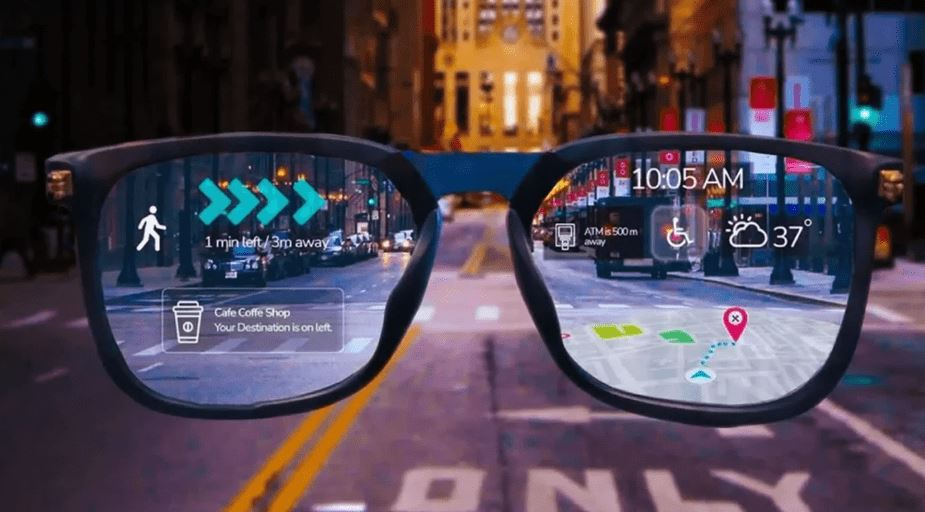
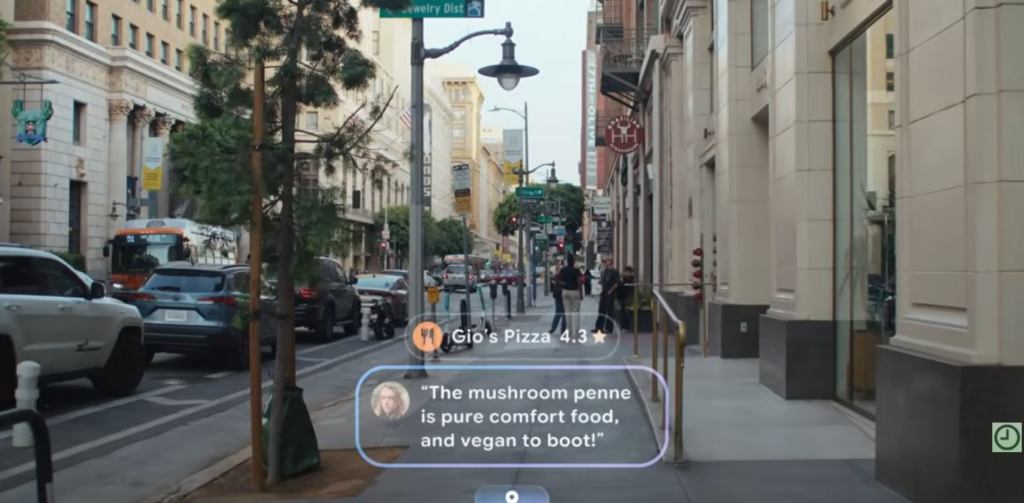
Of the glasses he tested, one was monocular, meaning it had a single screen built into the right lens, and the other was binocular, with one screen for each eye. Both types support augmented reality overlays for apps like Google Maps and Google Meet, but the binocular design offers a larger virtual display.
Google's goal is to create software for both types of glasses
"We want to give you the freedom to choose the right balance between weight, style, and immersion according to your needs," the company said in a blog post.
The company's goal is to make as many software experiences as possible work well in both formats. In the demo, there was a real-time translation function that could display the subtitled conversation on the screen, but the user can turn off the screen and focus on the translation heard from the speakers.
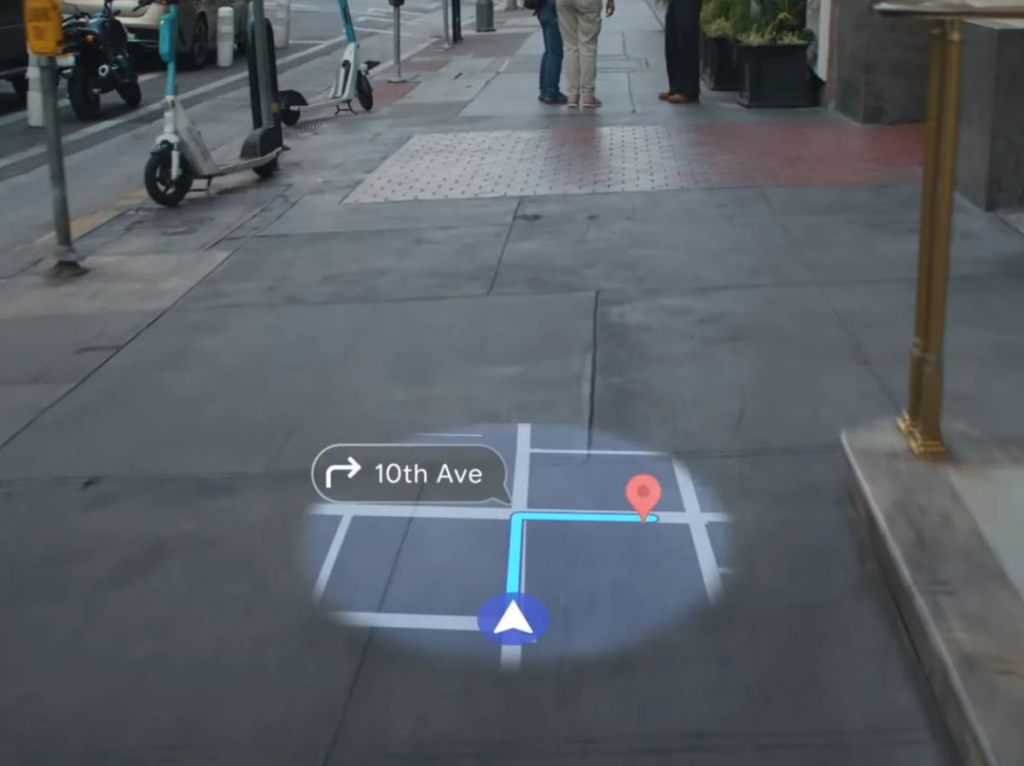
The display has its advantages. When using Google Maps, the features go far beyond augmented turn-by-turn directions. Looking down, the user sees a larger map of the current location, with a compass showing the direction they are looking.
In a photo shoot, the user can ask Gemini to enhance it using Google's Nano Banana Pro generative AI model, and preview the final result without having to operate it from the smartphone.
The Case of Project Aura
Xreal glasses are unique in that they offer a standalone experience: Project Aura runs on Android XR like Samsung's bulkier headphones, but in a sleeker form factor that resembles the Chinese company's other glasses, including the One Pro. Similar to the Galaxy XR, Project Aura needs to be connected to an external battery to work.
The glasses will offer a 70-degree field of view, which is more impressive than Xreal's current lineup. Navigating Project Aura was familiar and intuitive, as it uses the same hand-tracking technology as Samsung's headset, albeit with fewer cameras.
Improvements to the Galaxy XR
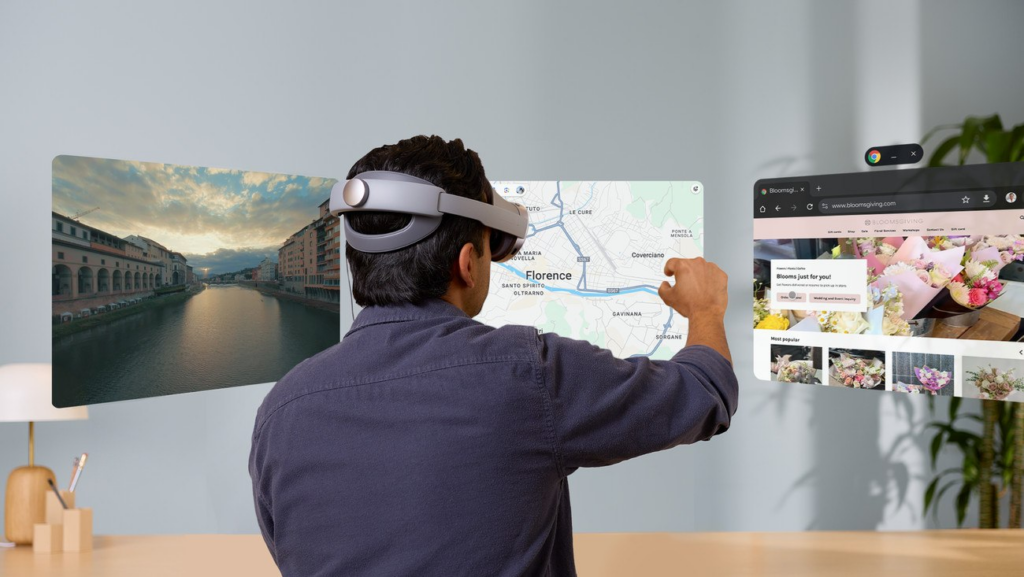
Google and Samsung are responding to initial feedback on the $1.800 Galaxy XR headset by introducing various features requested by users and critics alike. One of them is the upcoming travel mode, which makes it easier to use XR on the go.
Previously, windows would quickly pass in front of you when traveling by car or plane, which made watching a movie during the flight unnecessarily difficult.
How AI-powered glasses will... drive gamers away
Google is also releasing a PC Connect app that will allow any Windows PC to connect to the Galaxy XR and project their laptop screen into the virtual environment. The app, which is currently in the beta phase, also works for gaming, which could go a long way in increasing the appeal of the headset.
This is an improvement over the situation at launch, when customers needed one of Samsung's Galaxy Book laptops to use the virtual desktop feature. Google is also working on a version for macOS, it announced.
In addition, Google is launching a new "Likeness" avatar style that is much more realistic than Samsung's cartoonish designs. With the help of a smartphone app, Galaxy XR owners will be able to scan their face for an accurate representation of themselves in video calls.
Likenesses mimic facial movements and gestures. Like the PC Connect app, this feature is rolling out in beta. Both will be available from this week.
