in-cyprus 5 October 2025 - by Fanis Makrides

A Turkish appeals court ruling has strengthened allegations that Turkey’s National Intelligence Organisation directed migrant flows from Syria to Cyprus in recent years, following revelations about suspected MIT informants in a deadly 2018 shipwreck case that killed 19 people.
The Supreme Court in Ankara issued a verdict in late spring concerning the 18 July 2018 shipwreck off Cyprus, in which 19 people drowned, including a woman 28 weeks pregnant, according to reporting from the Turkish judicial system analysed by an experienced journalist.
The appellate court ruled that the Silifke Criminal Court in Mersin province failed to evaluate testimonies from a Turkish national and a Syrian national, both believed to be MIT agents who were called to testify before Turkish authorities investigating the maritime tragedy, according to the court documents.
Exiled journalist exposes court documents linking intelligence service to smuggling network
Exiled Turkish journalist Abdullah Bozkurt, based in Sweden, made the connection between the two individuals and Turkish intelligence services last week, citing the lower court’s conspicuous failure to examine their testimony.
Bozkurt effectively brought to the surface the content of the judicial decisions, adding to a sensitive national issue that Fileleftheros had previously covered through revelations two years ago.
At that time, whilst not disregarding the humanitarian aspect of migration, Fileleftheros had highlighted another dimension of the phenomenon: the influx of terrorist elements to Cyprus who, based on intelligence, maintain direct contact with Turkish military personnel and agents.
Writing on the Nordic Monitor website from Stockholm on 26 September, where he reportedly resides after deciding to leave Turkey, Bozkurt notes several significant points regarding the issue, specifically the testimony of two alleged MIT informants to the country’s police authorities.
“According to case materials, a Turkish man on 1 August 2018 and a Syrian man on 17 September 2018 gave statements to officers from the Anti-Smuggling and Organised Crime Department of the Provincial Gendarmerie Command in Adana. Their identities were kept confidential,” Bozkurt wrote, citing the May appeals court decision.
“Given the status and timing, they were most likely working as informants for MIT, Turkey’s main intelligence service — a possibility the trial court never examined, as it neither identified them nor called them as witnesses. Investigators also did not probe the information they provided about the network’s structure, leadership and years-long activities,” he added.
“It remains unknown whether the Silifke court will now summon the two informants or deem their statements unlikely to affect convictions and sentences,” Bozkurt wrote.
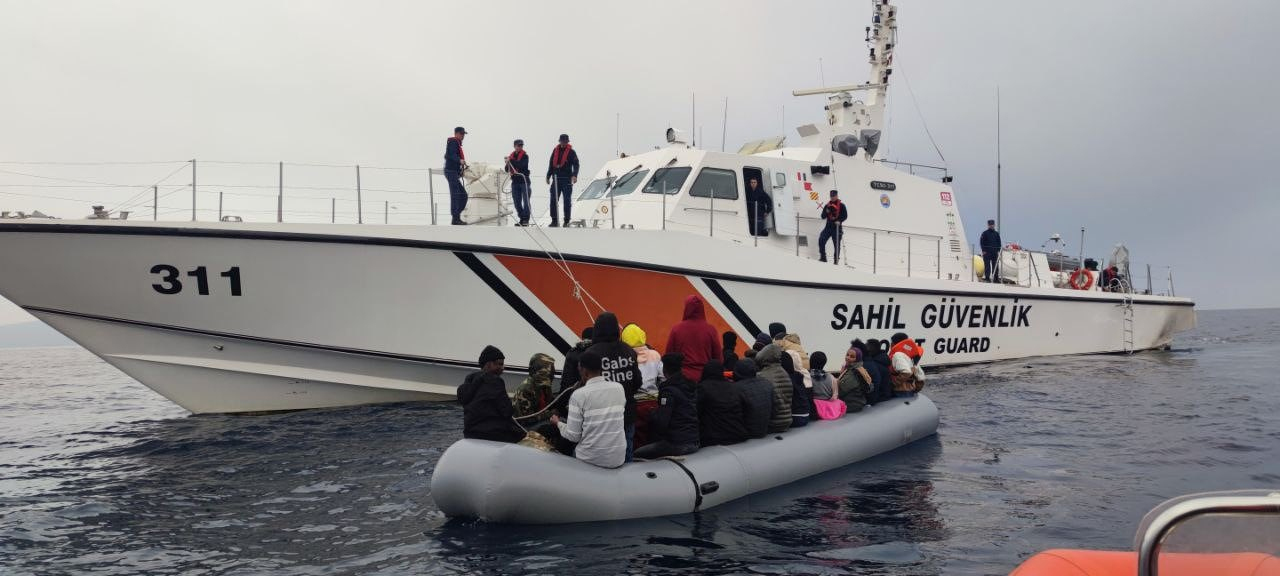
Appeals court orders investigation into testimonies from suspected Turkish intelligence informants
Bozkurt outlines the broader implications of the judicial case: “There is also a politico-judicial dimension: If the court proceeds to locate and hear the informants, the Supreme Court of Appeals may still withdraw if judges determine the process risks implicating MIT. The referral does not directly incriminate the intelligence service, but it compels courts to map the hierarchy, profits, connections and protection — precisely the axes critics say overlap with traffickers connected to intelligence services”.
“By ordering examination of who founded the group, how it profited and how defendants were connected, the supreme judges have obliged investigators to seek leadership, funding, support and protection — the same axes for which Cypriot authorities have long argued involve state-linked support,” he added.
On 17 November 2022, the Silifke court issued several convictions for charges including illegal migrant smuggling and, in one instance, manslaughter, Bozkurt explained.
On appeal, the Supreme Court of Appeals upheld some convictions but overturned others, ruling that the trial court had not fully examined whether the acts were committed as part of a profit-seeking criminal organisation or had not adequately mapped connections between defendants.
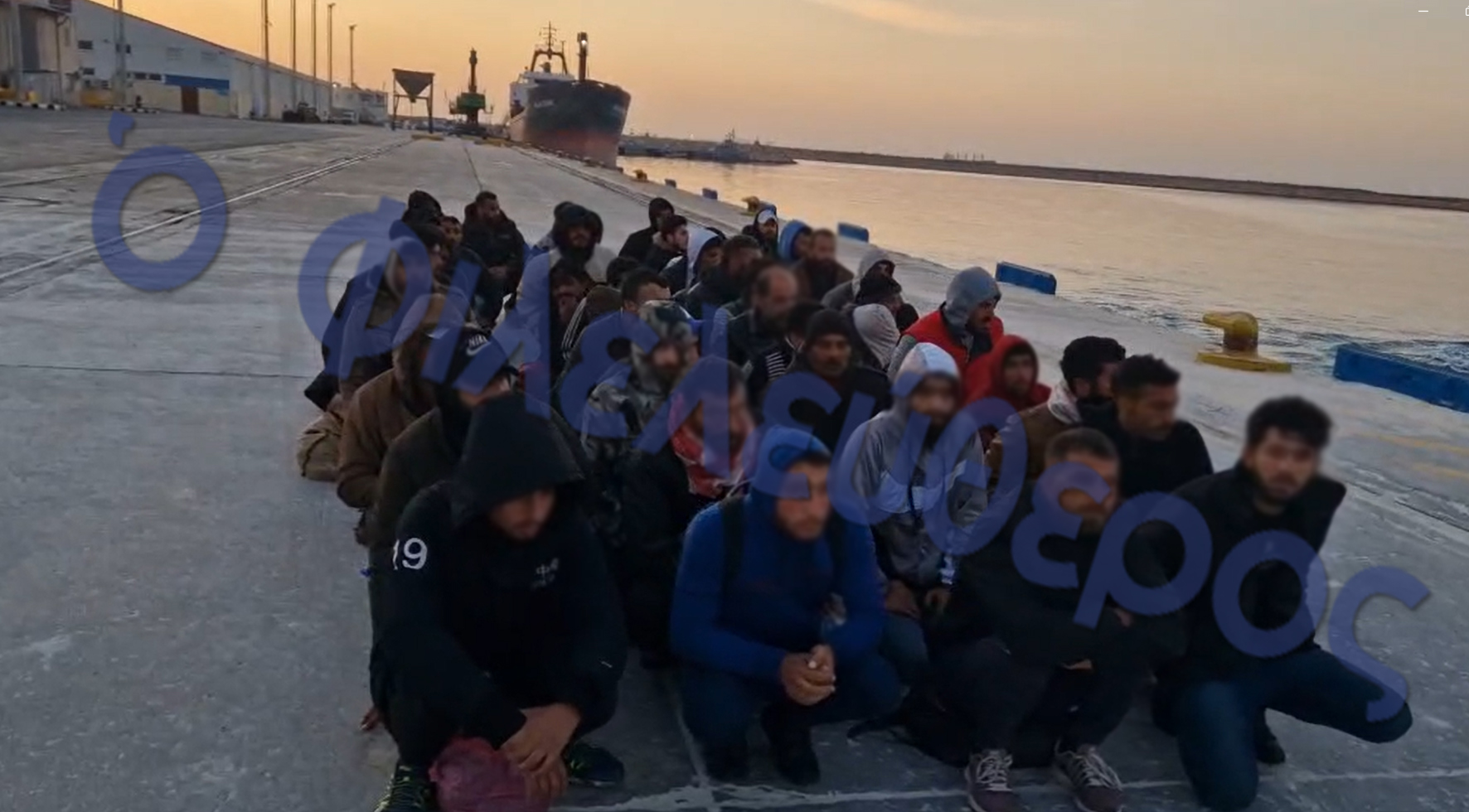
The supreme court also noted a critical omission: the lower court’s failure to examine statements from two confidential informants who had provided early detailed information about the smuggling network.
The ruling orders the trial court to locate these informants, hear their testimony, evaluate their credibility and relevance to the organised crime issue, and re-examine whether the facts support manslaughter charges rather than simple negligence and whether the act constitutes organised criminal activity.
Shipwreck killed 19 people seeking passage to Republic of Cyprus
The case arose from an incident on 18 July 2018, when Turkish Coast Guard units received a distress signal for a migrant boat carrying approximately 150 passengers taking on water about 30 kilometres north of Cyprus, Bozkurt wrote.
According to prosecutors, the smugglers had recruited mainly Syrian nationals seeking passage to the southern, Greek Cypriot side of the island, charging $2,000–2,500 per person.
The migrants were transported by road to a remote coastal location near tunnels in Mersin, southern Turkey, and then boarded a vessel that later sank in open water.
Nineteen people lost their lives, including two women, one pregnant at 28 weeks, whilst 102 migrants were rescued. The case was tried by the 1st Higher Criminal Court of Silifke.
Abdullah Bozkurt was born in 1971 in Balıkesir, Turkey. He began his journalism career at Zaman newspaper and later served as bureau chief and US representative for Zaman, before assuming similar positions at Today’s Zaman, considered connected to the Gülen movement founded by Fethullah Gülen, who died in exile in the United States on 24 October 2024.
After the failed coup attempt in Turkey in 2016, Bozkurt left the country and now lives abroad, founding and directing the Nordic Research & Monitoring Network in Sweden and connecting with the Stockholm Center for Freedom, a press freedom and human rights organisation established in 2017 in response to Turkey’s post-2016 press freedom crackdown.
Cyprus maintains surveillance of suspected terror-linked migrants with Turkish connections
In 2023, Fileleftheros revealed the existence of a unified list of approximately 500 suspicious foreign persons compiled by Cypriot security authorities.
The list contains numerous references to migrants who sought asylum in Cyprus but simultaneously, according to intelligence and international databases, maintain contacts with Turkey’s National Intelligence Organisation or Turkish military personnel.
Significant cases from the investigation include a migrant in his fourth decade residing in a coastal Cypriot town whose relative in Turkey operated a business that “in reality functions to help former fighters travel to Europe, with MIT cooperation,” according to security authorities’ records.
This individual travelled to Syria whilst residing in Cyprus and fought in the civil war with Ahrar al-Sham, one of Syria’s largest rebel organisations with thousands of fighters mainly in Idlib province that received periodic Turkish support.
Another case involved a holder of subsidiary protection who illegally travelled to Turkey via occupied territories whilst residing in the Republic, presented a false passport upon return through Larnaca airport via a European capital, and communicated with a Turkish telephone number registered in international databases as connected to terrorism issues.
One migrant posted extreme content on social media calling on Cyprus’s president (then Nicos Anastasiades) to remain uninvolved in efforts to obstruct Islam and not provoke Erdogan, as “the Turks can occupy the island in 24 hours”.
He was arrested following a coordinated operation and detention and deportation orders were issued against him.
Other cases include individuals found with false Syrian passports whilst holding Turkish residence permits, asylum seekers who arrived via Turkey and occupied territories with Turkish telephone contacts, a migrant with contacts to Turkish military personnel who allegedly possessed video showing him beheading a Syrian army soldier before Bashar al-Assad’s fall, and an asylum seeker who told Republic authorities he was arrested in the pseudo-state, sent to Mersin, Turkey, from where he eventually reached the Republic of Cyprus.
Migration statistics underscore Cyprus’s disproportionate burden
Turkish journalist Abdullah Bozkurt attempts to demonstrate the side effects migration had on Cyprus in previous years. In his analysis, concluding that Erdogan’s Turkey weaponised migration through MIT, he states: “The statistical framework underscores why migration matters to Cyprus. From 2016, asylum applications in Cyprus had increased dramatically, from 2,871 to 7,761 in 2018, already making the island the per capita champion in the EU”.
“In 2019, applications soared to approximately 13,000, fell to 6,651 in 2020 during the pandemic, then rebounded to approximately 13,235 in 2021. Applications reached a high of 20,593 in 2022 before declining to 11,617 in 2023 and approximately 8,664 in 2024. So far in 2025 they remain below the 2022 peak, but Cyprus continues to record one of the highest migrant arrival rates per capita in the EU. Many migrants use Turkey as a transit point to reach Cyprus, either by sea or by air via Turkish-controlled northern Cyprus,” Bozkurt wrote.
In November 2021, the role of a Turkish national who resided between Larnaca and occupied territories was highlighted.
The 39-year-old individual, known to those covering police reporting, allegedly had involvement in smuggling approximately 15 African migrants discovered in Peristerona, reportedly serving as the “executive arm” of a network based in occupied territories.
Cyprus Police, according to official statements to Fileleftheros in September 2023 when the newspaper revealed the surveillance mechanism for terrorism-suspect foreigners, established an “Assessment Team for Suspect Foreigners on Terrorism Issues” in December 2019.
The team comprises representatives from police services under the chairmanship of the Assistant Chief for Crime Prevention and Combating, convening at regular intervals to evaluate available information.
A list was compiled containing details of suspect persons discussed and evaluated by the team, with each case receiving appropriate classification as persons with serious indications, moderate indications, or reduced indications, depending on information and data provided by each service for each suspect.
A competent state service produces a detailed report every three months on terrorism, re-examining the data.
