Filenews 28 February 2024

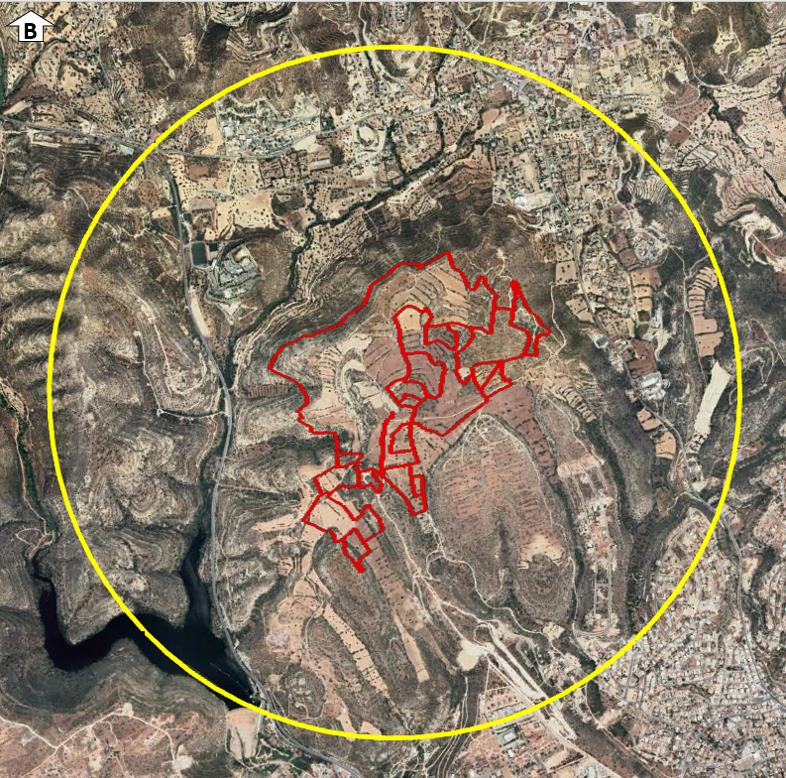
At a meeting of the Environmental Impact Assessment Committee to be held next Tuesday, the Environmental Impact Assessment Study (EIA) for the construction and operation of a consolidated development of large and complex uses in the parish of Agia Fyla in the Limassol district will be discussed. This is a major investment covering the health and education sectors by Rofeno Properties Limited, while the cost of the project has been preliminarily estimated at €856 million.
The development creates a mixed-use environment consisting of world-class educational facilities, industry-leading business park infrastructure with the aim of creating a successful innovation environment, all integrated into an integrated and integrated residential development surrounded by green parks and supporting social, recreational and spatial infrastructure.
In general, the proposed spatial plan covers a land area of 949.916 m2 and includes the following main uses with a total buildable area of 350.785 m2: • Private school • Medical institution – European Branded rehabilitation center that will support a series of assisted living units • Research and innovation center • Business park • Sports facilities – organized multi-activity sports center • Private space • Integrated and organized residential development that will include basic commercial and recreational infrastructure (to serve the development itself).
The construction of the proposed project is expected to take place gradually. The strategic uses will likely be constructed in two consecutive stages, while the remaining buildings will follow in five stages, with about two years for each Phase and some key overlaps. Therefore, construction is expected to be completed by 2030. The school will be built in two phases.
The plots of the proposed development are located on the east side of the motorway under construction that will connect Limassol with Moniatis, and slightly southeast of the Heritage Private School.
The business park, on the ground floor of these buildings, will host the mixed-use infrastructure of the development, e.g. commerce, catering and leisure and hotel. Private greenery of the business park, where the central green heart of the development will consist of extensive green spaces with pedestrian and bicycle paths. Installation of a research and development unit for a starter plant and an incubator, mainly aimed at the high-tech, biotechnology and energy sectors.
The sports facilities consist of a football field with 600 seats and main support areas, a tennis academy with eight tennis courts, a volleyball/basketball court without seats, an Olympic-size swimming pool without seats, and an ice rink that will allow ice hockey games to be held. The facilities will be developed on land of 70,000 m2 and have a building factor of 10,500 m2, with a program that covers a football field with surrounding track, tennis courts and a gym with an Olympic pool area.
The medical institution / rehabilitation center includes a variety of medical facilities and a rehabilitation center (not including an emergency department).
The residential development will include 1,752 units of various sizes (1 to 4 bedroom apartments, 3 bedroom houses and 4 bedroom villas).
The private school includes about 13,000 m2 for dormitories and 23,500 m2 for educational purposes. The school will have kindergarten, primary and secondary education with a total capacity of 2,000 students. It will have a total of 256 staff (of which 56 will be administrative and support). There will be a "diversity factor" for academic staff, meaning not everyone will be at school at the same time.
Based on Chapter 24 of the Limassol Local Plan, the authorities will request certain "supporting facilities and/or projects" (culture and environment), which may include, on the one hand, small cultural institutions (museum, art gallery, conference centre, as well as performing arts centre and/or amphitheatre (indoor or outdoor)) and, on the other hand, environmental enrichment projects (these may include open green areas, pedestrian and bike paths, as well as flower parks).
It is worth mentioning that the development is expected to include the following artificial water elements in total: • 1 x Olympic size swimming pool (part of the sports complex) • 2 x swimming pools (part of the private school) • Water elements (part of the landscaping of the development) [work in progress].
676 trees cut down, measures to protect the beetle
For the needs of the development, it is proposed to affect a large number of locust beans and the Department of Forests asked the designers of the project to refer to the possibility of affecting the protected species Propomacrus bimucronatus cypriacus, namely the Cypriot Propomacrus, a large and impressive beetle.
According to the topographic survey, it is estimated that approximately 260 locust bean (Ceratonia siliqua) plants can be cut off during the construction period of the proposed project. Therefore, according to the researchers, it is expected that the influence of the species Propomacrus bimucronatus cypriacus will be inevitable in case there is the presence of beetle individuals in these trees.
In order to minimize the negative effects that may be caused to the species Propomacrus bimucronatus cypriacus by cutting off locust beans, it is proposed to use other carob plant individuals surrounding the growth area from the existing population of Propomacrus bimucronatus cypriacus. Furthermore, in case there is the presence of the species Propomacrus bimucronatus cypriacus in carob trees that may be cut down, it is proposed to uproot and replant these plant individuals in the green areas and landscaped areas that will be landscaped.
In addition, it is proposed to plant young locust beans to compensate for the large number of locust beans that can be cut off. According to the researchers, the implementation of the proposed measures is expected to ensure the greatest possible survival of the Cyprus beetle in the study area. It is noted that for the purposes of the development, a total of 676 trees will be affected and 2,500 new trees are expected to be planted to offset the environmental footprint. In addition to the 260 carob trees, 90 calf trees and 325 olives will be cut off. In the area there are olive trees that are more than 200 years old.
At the same time, the designers of the project are in consultation with the Department of Antiquities since in parts of the development area of the proposed project the declared Ancient Monument B 'Table, which concerns the site and the remains of a medieval settlement at the site of Agios Tychikos.
To this end, the designers of the project informed the Department of Antiquities that the general spatial plan will be modified according to the limits of forced expropriation for archaeological purposes. Furthermore, in order to expedite archaeological research, the development company proceeded, in accordance with the instructions of the Department of Antiquities, to the recruitment of staff as specified.
